




Orthopathos in Worship: Between Catholic Solemnity and Pentecostal Exuberance
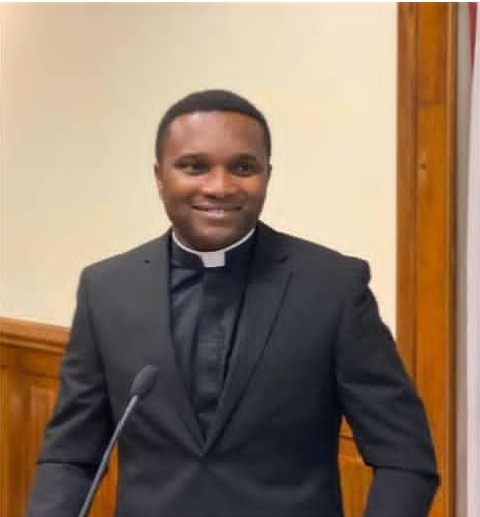
Fr George Adimike
True worship of God must engage the entirety of the human person, encompassing the rational, physical, and affective dimensions.
Orthopathos (right feeling or passion) rightfully claims its place within Christian worship; however, for it to be effectively integrated, it must harmonise with orthodoxy (right belief or faith) and energise orthopraxis (right practice or moral action).
While various Christian traditions and their adherents may emphasise one of these three aspects, often at the expense of the others, authentic worship demands the involvement of the whole self.
This reveals that worship transcends mere bodily expression; it is a deeply personal language. Since we are embodied beings, Christian worship must also be embodied.
Our embodiment makes us sensual beings, relying on our senses and, consequently, rendering us affective and sentimental beings. Yet humanity is not solely physical; we are also rational and spiritual creatures.
Therefore, genuine engagement with human beings must account for our sentimental, rational, and spiritual faculties. We operate simultaneously through reason, emotion, and action, each contributing to the fullness of Christian worship.
Indeed, human acts engage the intellectual, affective, and psychomotor dimensions of the person.
In both prayer and worship, broadly conceived, these dimensions are intentionally engaged to lead the assembly into the presence of God.
Over the centuries, different patterns of worship have developed within the various Christian traditions: the solemnity of Catholic liturgy, the contemplative silence of the Quakers, and the exuberant fervour of Pentecostal worship, among others. While these forms share certain functional similarities and aim to facilitate an encounter with God, they produce different experiential effects.
Over time, the effectiveness of any worship pattern may be measured by its fidelity to, and alignment with, the truth of the human person and the reality of his or her context.
The Catholic liturgy, for instance, achieves part of its distinctive value through solemnity—a solemnity that serves as an overture to, a stretching towards, and a guarantee of orthopathos.
This approach seeks to integrate the affective within the rational sphere, thereby safeguarding the essential place of both emotion and reason in true worship.
When the Catholic liturgy, which compensates for, or rather expresses, the affective dimension through solemnity, loses that solemnity, it risks becoming impoverished and susceptible to becoming overly ritualistic or mechanical.
This perceived deficiency may lead some to seek fulfilment in the vibrant expressiveness of Pentecostal, noise-oriented worship. In doing so, appreciation of Catholic liturgy can become entangled in confusion and aberration.
Such shifts may leave responses to Catholic liturgy oscillating uncertainly between innovation and regression, exposing a lack of sound appreciation or a well-articulated rationale for the act of worship.
Established patterns of worship are necessary because Christian liturgy is inherently communal and social.
To sustain the doxological quality, depth, and impact of communal celebration, its sociological expression must be thoroughly informed by a robust anthropological perspective and anchored in sound theological and intellectual foundations.
Precisely, in the context of the absence or weakness of the affective dimension in Catholic worship, the ideal lies between the extremes of Pentecostal exuberant noise and diminished orthopathos: a harmonious balance.
The post-Tridentine liturgical reforms diminished certain experiential elements of worship, leaving the affective dimension of Catholic liturgy atrophied.
Consequently, the liturgy that emerged after the 1570 reforms became increasingly ritualistic and rationalistic.
Over time, it proved insufficient to fulfil the spiritual yearnings of many of the faithful.
This perceived inadequacy contributed to the emergence of the twentieth-century liturgical movement, led by figures such as Dom Lambert Beauduin, Romano Guardini, Dom Odo Casel, and Josef Andreas Jungmann, among others.
Through ressourcement, the Fathers of the Second Vatican Council sought to recover forgotten riches and forge a liturgical pattern consistent with the needs of the People of God in the contemporary world, in the spirit of aggiornamento. In this renewed vision, the role of personal experience,especially when coupled with a deeper understanding of the identity and function of the Holy Spirit in Christian life and worship—was rightly underscored.
As sentimentality has gradually been mainstreamed into Christian worship after due profiling, it still needs to be properly harmonised with the triad of orthopathos, orthodoxy, and orthopraxis for authentic divine doxology.
While Christian worship and its doctrinal development involve a return to foundational sources—the Scriptures and the Fathers—as well as discernment of the signs of the times, hesitance persists regarding the integration of personal religious experience. This hesitation is understandable because of the subjective nature of experience.
To say the least, this imposes a responsibility on ecclesial authorities to ensure that orthopathos is exercised within the framework of orthodoxy.
Thus, human experiences and feelings are not merely circumferential but central to worship; they are essential components of Christian liturgy. In sum, sentimentality, far from undermining solemnity, is intended to enrich worship. It fosters a form of Christian worship that engages the human person holistically in his or her reaching out to God.
Fr George Adimike
findfadachigozie@gmail.com