





Soludo demands reopening of Anambra Court of Appeal, says continued closure indefensible
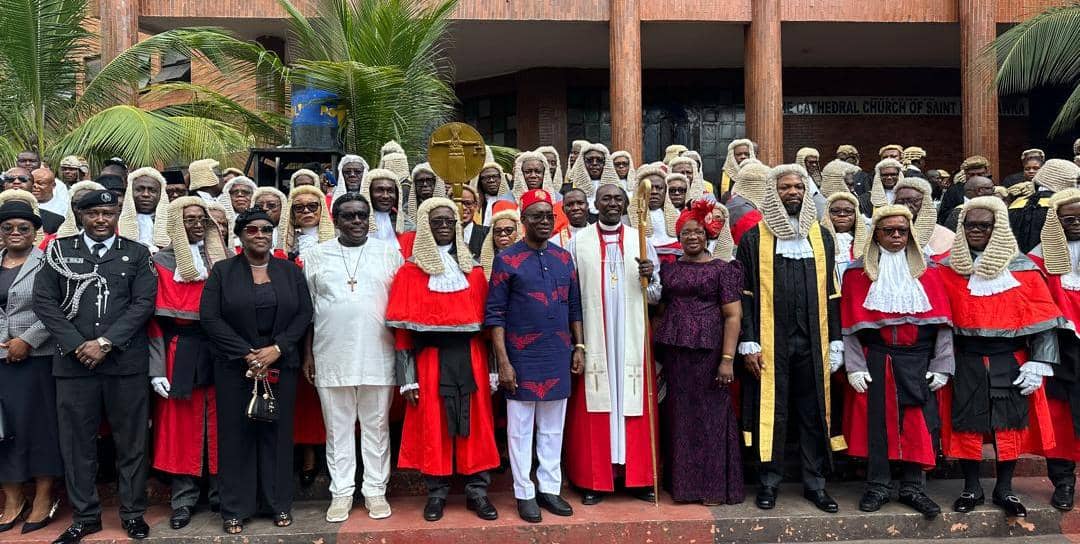
By our reporter“Governor also challenges lawyers to abandon imported wigs, gowns for locally made legal regalia”
Anambra State Governor, Prof. Chukwuma Charles Soludo, has made a passionate appeal for the immediate reopening of the Court of Appeal in Anambra State, declaring that the continued closure of the appellate court is unjustifiable in view of the state’s high volume of litigation, which he said is second only to Lagos State.
Soludo, who made the demand during a church service marking the commencement of the 2026/2027 Legal Year of the Anambra State Judiciary, insisted that Anambra deserved to have a functional Court of Appeal, given its enormous contribution to the country’s judicial caseload.
The Governor also used the occasion to challenge the Nigerian legal profession to abandon its dependence on imported wigs and gowns and embrace locally manufactured legal regalia, arguing that the continued importation of such items amounts to exporting employment opportunities and economic benefits to foreign countries at the expense of Nigeria.
The special church service, presided over by the Bishop of Aguata, Supervising Bishop of the Diocese of Awka and Coordinating Bishop of the Province on the Niger, Rt. Rev. Samuel Ezeofor, attracted top judicial officers, legal practitioners and government functionaries, who gathered to reflect on the achievements and challenges of the judiciary in the outgoing legal year and seek divine guidance for the new one.
Addressing the congregation, Soludo expressed dissatisfaction with the continued non-operation of the Court of Appeal in Anambra, maintaining that the state’s judicial importance and volume of cases made it particularly deserving of an appellate court.
“Anambra, after Lagos, generates more cases. We are more deserving to have the Court of Appeal,” the Governor declared.
He further insisted that the court’s continued closure was difficult to justify on the basis of merit, need and the interests of justice.
“The Court of Appeal in Anambra should not be closed for one day if merit and need happen to be the criteria. Come and open your court,” he appealed.
The Governor reiterated his administration’s commitment to strengthening the judiciary and improving the administration of justice in the state, describing himself as someone with a deep passion for the legal profession and the justice system.
He particularly commended the State Attorney-General for what he described as his consistent commitment to justice, noting that he was someone who “thinks and talks justice every day.”
Soludo assured judicial officers that his administration remained committed to their welfare and the provision of necessary infrastructure to enhance the effective discharge of their constitutional responsibilities.
He maintained that his government was not in the habit of making promises it could not fulfil.
He also highlighted the impact of the state’s Plea Bargain initiative, explaining that the programme had been helping to decongest correctional facilities by facilitating the resolution of appropriate cases without unnecessary prolonged trials.
In another significant intervention, the Governor called for a fundamental change in the traditional dressing of legal practitioners, urging the Nigerian Bar and the judiciary to consider replacing imported wigs and gowns with legal attire manufactured locally.
According to him, the legal profession should take the lead in promoting indigenous industries by patronising Nigerian-made products rather than sustaining a colonial-era culture that continues to benefit foreign manufacturers.
“Can we change the law regalia into what is made in Nigeria? We are creating jobs abroad by importing all the regalia you wear,” he challenged members of the legal community.
He urged Nigerians to embrace economic patriotism by consuming locally produced goods and wearing locally manufactured clothing, stressing that such a change would stimulate domestic production, create employment and strengthen the national economy.
“Let us eat what we produce and wear what we make. That is the way to help the economy. I wear Akwete to promote Made-in-Nigeria,” Soludo said, referring to his consistent patronage of the indigenous Akwete fabric as part of his campaign to promote local industries and cultural heritage.
On a lighter note, the Governor disclosed that he once had a strong desire to study law before circumstances and family considerations took him in a different academic direction.
Recounting the experience, he said he had approached his father to inform him of his intention to fill out a university admission form to study law, but quickly understood from his father’s body language that the idea did not enjoy his approval.
“The day I went to tell my dad that I was filling out the form to study law, from his body language, I knew that he did not approve,” he recalled.
He, however, described the legal profession as a glamorous and highly respected calling, suggesting that his admiration for the profession had remained despite not pursuing it as a career.
On the relationship among the three arms of government, Soludo underscored the importance of cooperation between the Executive, Legislature and Judiciary, stressing that although the arms of government have distinct constitutional responsibilities, they share a common obligation to protect the people and promote their welfare.
He credited the state’s Homeland Security Law with significantly transforming Anambra’s security architecture, saying the legislation had contributed to restoring calm and improving security across the state.
“We may have different branches of government, but we have one objective: the security and welfare of Ndi Anambra,” he stated.
The Governor also addressed the internal crisis within the Anglican Communion in Anambra State, clarifying that his administration had maintained a neutral position in the dispute.
He described the matter as a private affair of the Anglican Church in Anambra State and Nigeria, expressing the hope that the church would find an amicable resolution through God’s grace.
Soludo maintained that the responsibility of his government was to ensure that law and order prevailed, rather than interfere in the internal affairs of the religious organisation.
Earlier, the Chief Judge of Anambra State, Justice Onochie Anyachebelu, described the commencement of the new Legal Year as an important occasion for the judiciary to take stock of its performance, examine the challenges confronting the institution and identify areas requiring urgent attention.
He said the ceremony provided an opportunity for judicial officers and other stakeholders in the justice sector to reflect on the past legal year and renew their commitment to the effective administration of justice.
The Chief Judge commended Governor Soludo for what he described as the cordial working relationship between the Executive and the Judiciary, noting that the administration’s cooperation with the judicial arm had helped to strengthen institutional relations.
However, he appealed to the Governor to urgently address some of the challenges confronting the Anambra State Judiciary, stressing that the institution required additional support to discharge its constitutional responsibilities effectively.
“The Anambra State Judiciary needs help. Your presence today has given us renewed hope,” Justice Anyachebelu appealed.
He expressed confidence that sustained government support and cooperation among the various stakeholders would further strengthen the judiciary, improve justice delivery and enhance public confidence in the administration of justice in Anambra State.