



ANAMBRA’S PRIVATE TOILET REVENUE DRIVE: GOVERNMENT OVERREACH OR LAWFUL ENFORCEMENT?
By Titus Eleweke
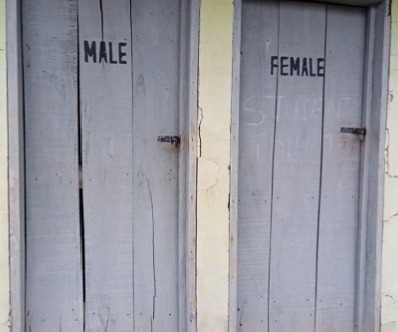
The recent invasion of a privately owned motor park belonging to Goodness and Mercy Mass Transit Limited, Upper Iweka, Onitsha, allegedly by armed personnel acting on the directive of the Anambra State Ministry of Environment, raises serious questions about the exercise of governmental authority, respect for private property, abuse of power and the growing desperation to generate revenue from every conceivable source.
It is particularly disturbing that an operation reportedly involving about 20 armed men, several vehicles and dangerous weapons could be deployed against a private business establishment over the management of a toilet facility.
Even more troubling are allegations that the toilet attendant was assaulted, stripped of her dignity, forcibly taken away and detained for several hours, while the company’s chairman, his personal assistant and other workers were allegedly beaten and intimidated.
This is not how a government should regulate private businesses. Neither is it how a government that claims to encourage investment, protect citizens and uphold the rule of law should conduct its affairs.
The fundamental question that the Anambra State Government must answer is: Why should a government that has the responsibility to provide an enabling environment for businesses be struggling to generate revenue from every available angle, including toilets in privately owned motor parks?
There is a clear distinction between public toilet facilities owned by the government and private toilet facilities established, financed and maintained by private investors.
That distinction must not be deliberately blurred in the name of revenue generation or administrative convenience.
The Commissioner for Environment, Dr Clem Aguyi, reportedly cited various provisions of state laws empowering the ministry to regulate and manage public toilet facilities.
However, the critical issue is whether those laws expressly empower the ministry to take over toilets belonging to private businesses.
The distinction is fundamental. Government’s authority to regulate sanitation, enforce environmental standards and supervise public health compliance does not automatically translate into ownership or operational control of private facilities.
If the ministry has the legal authority to regulate private toilet facilities, it should clearly identify the specific provisions of the law that confer such powers.
It must not hide behind general references to environmental regulations to justify an action that could amount to an unlawful takeover of private property.
More disturbing are reports that the commissioner acknowledged that he was not unaware that Goodness and Mercy Mass Transit Limited was a privately owned facility.
If this account is correct, it raises another serious question about the level of information available to the commissioner regarding facilities operating under his ministry’s supervision.
How could a commissioner responsible for an entire ministry preside over an operation involving the takeover of a facility without first establishing whether the property belonged to the government or a private individual?
If the commissioner genuinely did not know the ownership status of the facility, the appropriate response should be an apology, a review of the action and an immediate effort to correct any wrongdoing.
It is unacceptable to respond to such a serious allegation by insinuating that some cabal has taken over toilet management in the state.
The issue is not whether there are cabals in the management of public toilets. The issue is whether the government has the legal right to seize and manage a facility that belongs to a private investor.
The Anambra State Government must not suffocate private businesses and ordinary citizens simply because it wants to generate revenue at all costs.
Revenue generation cannot be pursued at the expense of fundamental rights, human dignity, private property and the rule of law.
The circumstances surrounding the incident at Goodness and Mercy Mass Transit Limited make the matter even more disturbing.
On last week Tuesday afternoon, a group of armed men, reportedly numbering about 20, stormed the company’s private motor park at Upper Iweka, Onitsha.
The men allegedly assaulted the female toilet attendant, took her away against her will and subsequently locked up the toilet facility.
The company’s chairman, Mr Uchenna Egboluche, and his personal assistant were also allegedly assaulted during the operation.
Our investigation revealed that when the chairman heard the commotion within the premises, he immediately rushed out to ascertain what was happening. Rather than explain the purpose of their operation, the armed men allegedly descended on him, pushing and beating him.
When his personal assistant attempted to demand an explanation for their actions, about eight of the armed men reportedly pounced on him and manhandled him, leaving him with injuries.
Narrating their ordeal, the General Manager of Goodness and Mercy Mass Transit Limited, Mr Vincent Okwuoma, maintained that the motor park was privately owned by Mr Uchenna Egboluche and was not a government facility.
According to him, shortly after 4pm on Tuesday, a group of armed men carrying dangerous weapons invaded the company’s toilet section, where a woman and her four children were managing the facility.
He alleged that the men assaulted the woman, tore her clothes and forcibly took her away to an undisclosed detention facility, where she remained until about 9pm.
Okwuoma said that when the company’s chairman came out to find out what was happening, the armed men began pushing and slapping him.
“When some workers wanted to intervene, they were also beaten. The armed men even started cocking their guns.
“There was nothing we could do because they were carrying sophisticated weapons, including AK-47 rifles, sticks, axes and other dangerous weapons.
“We later found out that one man called Iseke, who led the operation, claimed that the Anambra State Ministry of Environment had directed him to take over the toilet in our park. This is a private park, not a government park.
“You know that before the Ministry of Transport gives you approval to operate a motor park, it provides a list of facilities you must make available, including toilets, a terminal and other necessary infrastructure. If these facilities are not provided, the ministry will not grant approval,” he said.
According to Okwuoma, when the chairman attempted to speak with the armed men, they cock their guns and threaten him, making it practically impossible for him to challenge their actions.
He further alleged that the men did not present any formal notice of intention, written directive or prior communication to the company before carrying out the operation. Neither, he said, did they provide any explanation for their actions.
Another staff member of the company, Obi Akachukwu, who also narrated his experience, said they were working within the premises when armed men arrived in about six vehicles, some of which were reportedly unmarked.
According to him, the men initially asked someone to identify the company’s toilet before proceeding directly to the facility, where they allegedly assaulted the female attendant and took her away.
“When they were taking her away, our director came out and asked them what the problem was. Instead of explaining what was happening, they started pushing and beating him.
“When they pushed him, I, as his personal assistant, asked what they were doing. They pounced on me with a big stick, while the person identified as Iseke ordered them to beat everybody in the park.
“They then started beating people mercilessly, and some workers had to run away,” he said.
The account paints a disturbing picture of an operation in which those who sought explanations were allegedly treated as enemies rather than citizens entitled to know why armed personnel had invaded their workplace.
The most disturbing aspect of the incident is the account given by the female toilet attendant, Chikwe Ifeyinwa, who said she was subjected to physical assault, humiliation and unlawful detention.
Recounting her ordeal, Ifeyinwa said the men arrived at the toilet facility and introduced themselves as officials of the Ministry of Environment.
She explained that as she attempted to establish why they had come, she repeatedly heard the name Iseke being mentioned.
“They dragged me out and started beating me. As they were dragging me into their vehicle, my oga came out and wanted to know what the problem was. While my oga was trying to find out what was happening, they also started beating him.
“They tore my shirt and forcefully dragged me into their vehicle,” she said.
Ifeyinwa said nobody informed her of any offence she had committed before the assault and her subsequent removal from the premises.
“They came to where I was working and asked whether I was the person working in the toilet. I said yes, and they immediately pounced on me and dragged me into their vehicle without telling me anything,” she added.
She further alleged that the N130,000 she had in her pocket went missing during the assault and struggle.
“They took the money, threw away my phone, and somebody later picked it up for me,” she said.
According to her, the men first took her towards the Head Bridge area, stopped at another motor park and picked up two other persons before taking them to an office located beneath a flyover.
She insisted that the place was not a police station.
“They took us to an office beneath the flyover. It was not a police station. There is a place where they have offices, and that was where they kept me. They released me at about 9pm.
“They picked me up from here at about 4pm. When we got there, they asked me to produce papers authorising me to work in the toilet. I told them they should ask my oga and not me. I am a mother of four children,” she said.
Her account raises fundamental questions about the identity and authority of the men, the legality of the detention, the whereabouts of the two other persons allegedly picked up and the circumstances surrounding the missing N130,000.
A government agency cannot operate outside the law simply because its officials claim to be enforcing environmental regulations.
If there was an offence, the appropriate procedure should have been followed.
Physical assault, intimidation, forced removal and detention cannot be substitutes for lawful enforcement.
Interestingly, documents obtained by our reporter provide further insight into the circumstances surrounding the controversy.
In a letter dated October 14, 2026, signed by the Commissioner for Environment, Dr Clem Aguyi, and titled “To Whom It May Concern: Notification of Revocation of Management of Public Toilet Facilities”, the ministry announced the immediate revocation of the management of toilet facilities listed in the document.
The notice, which described the affected facilities as 11 public toilets, included the Goodness and Mercy Mass Transit Limited Park, Upper Iweka, Onitsha.
The facilities listed in the notice included Ogbunike Tollgate Toilet, Nwaagu Park, Port Harcourt Road Toilet, Obodoukwu Road Toilet, Ochanja Market Toilet, Head Bridge, Asaba Park Toilet, Garden Toilet, Upper Iweka/Ose Market Toilet, Main Market Toilet (Young Shall Grow Park), Goodness and Mercy Mass Transit Limited Park, Upper Iweka, Terminal Park, Upper Iweka, and Obosi Park, Owerri Park Road.
It is noteworthy that the notice described the facilities as 11, although the enumeration in the document appears to contain more entries, depending on how the Upper Iweka/Ose Market listing is interpreted.
The ministry should clarify this discrepancy.
The letter stated:
“Notice is hereby given of the immediate revocation of the management of the following public toilets…”
It further stated that, to avoid disruption of services and ensure public sanitation, hygiene and public health safety, Messrs Callidimma Ventures Nigeria Limited was provisionally appointed to recover and oversee the management of the affected facilities pending the constitution of a new management structure.
The ministry directed all affected persons and companies to hand over the facilities and all government properties in their custody forthwith.
However, the critical question remains: were all the facilities listed in the revocation notice actually owned by the Anambra State Government?
The inclusion of Goodness and Mercy Mass Transit Limited, which the company insists is privately owned, raises serious concerns about the basis upon which the ministry classified the facility as a public toilet under its ownership or management.
The controversy becomes even more interesting when viewed alongside another letter obtained by our reporter.
In a separate letter addressed to the Managing Director of Messrs Callidimma Ventures Nigeria Limited, No. 6 Ikenga Street, Umuanyanwu Layout, Ozo Iseke, Anambra State, and titled “Letter of Approval for the Management, Administration and Maintenance of Public Toilets in Anambra State”, the Commissioner for Environment conveyed the ministry’s approval for the company’s engagement as facility manager.
The letter stated that the ministry had considered and reviewed the company’s antecedents, capacity and undertaking to ensure operational efficiency in line with the ministry’s policy directives.
According to the document, the scope of the engagement included the management, administration, cleaning, maintenance, staffing and monitoring of all existing public toilets owned by the Anambra State Government under the purview of the Ministry of Environment.
It also urged the company to establish new public toilet facilities where required and approved by the ministry to meet public sanitation needs.
Furthermore, the ministry directed the company to operate transparently and ensure that government did not suffer any revenue loss.
The letter specifically stated that all internally generated revenue accruing from the facilities must be paid directly and in full into the Anambra State Internal Revenue Service (AIRS) consolidated account, with evidence of payment submitted to the ministry.
It also directed the company to submit monthly reports covering its activities, revenue, maintenance records and operational challenges to the ministry not later than the fifth day of the succeeding month.
These provisions make the controversy even more difficult to understand.
The approval letter expressly refers to public toilets owned by the Anambra State Government. It does not, from the wording contained in the document, expressly extend the company’s authority to take over privately owned toilet facilities merely because they are located within motor parks in the state.
If the ministry intended to include privately owned facilities in the arrangement, it should have clearly stated the legal basis, scope and conditions governing such an intervention.
It is not enough to issue a letter appointing a private company to manage government-owned facilities and subsequently assume that the appointment gives the company or its agents unrestricted authority over every toilet facility within the state.
Government must distinguish between facilities it owns and those belonging to private investors.
A lawyer, Mike Udeagha, has argued that while the government has the authority to supervise the operations of both public and private motor parks, it cannot assume ownership or operational control of toilet facilities belonging to privately owned parks.
According to him, the toilet facility in question belongs to the owner of the private motor park, not the state government.
He maintained that the government cannot simply send another company or its agents to take over and manage property that does not belong to it.
Udeagha further pointed out that even the letters of revocation and appointment issued by the Ministry of Environment expressly referred to public toilets owned by the Anambra State Government, rather than privately owned toilet facilities located within the state.
His position underscores the central legal and administrative question that the ministry must address: where does the government’s regulatory authority end and the private property rights of citizens begin?
There is no argument that government must ensure that public toilets are clean, hygienic, properly managed and accessible. There is equally no argument that private businesses must comply with environmental, sanitation and public health regulations.
However, compliance with regulations is not the same thing as surrendering ownership or management of private property to government-appointed contractors.
If a private motor park obtains the necessary approval from the relevant authorities, provides a toilet facility, employs workers and maintains the infrastructure at its own expense, what legal justification exists for the government to take over that facility and hand it to another private company?
If the government believes that a privately owned toilet is being operated in violation of environmental standards, it should issue the appropriate notice, identify the violation and follow the established legal procedure. It cannot substitute intimidation and force for due process.
The Soludo administration must be careful not to create the impression that private investments are vulnerable to arbitrary government interference.
Private investors commit enormous resources to establishing businesses, creating employment and providing services that government may otherwise struggle to provide.
They should not be made to operate under the fear that government officials or individuals claiming to act on government directives could arrive at their premises with armed personnel and take over their facilities.
The Goodness and Mercy Mass Transit Limited incident, if the allegations are established, represents a troubling example of how regulatory authority can be abused when proper procedures and respect for private property are disregarded.
It is particularly unacceptable that a female toilet attendant, whose responsibility is simply to manage a facility, could allegedly be beaten, have her clothes torn, lose her money and be detained for several hours without being informed of any offence.
What crime did she commit? Was she the owner of the facility? Was she responsible for determining the ownership of the motor park? Why should a low-income worker become a victim of such an operation?
The government must understand that ordinary citizens should not be made to suffer humiliation and intimidation because of administrative disagreements between government agencies, private businesses and contractors.
The alleged assault on the company’s chairman and his personal assistant is equally unacceptable. No public official or person acting under the authority of government should be permitted to intimidate citizens who demand explanations about an operation taking place on their premises.
The government cannot claim to be enforcing the law while allegedly disregarding the very principles of legality, accountability and human dignity that should guide its officials.
Dr Clem Aguyi owes the people of Anambra State a comprehensive explanation.
Who authorised the deployment of the armed men to Goodness and Mercy Mass Transit Limited?
Who is the individual identified as Iseke, and what official position or authority did he exercise during the operation?
Was the operation carried out by duly authorised environmental officials, private contractors or another group acting in the name of the ministry?
Why was a privately owned motor park included in a revocation notice concerning public toilets owned by the Anambra State Government?
On what legal grounds was the toilet facility taken over?
Why was no formal notice served on the company before the operation?
Who authorised the alleged detention of the female toilet attendant and the other persons reportedly taken away?
Where are the records of their detention, and under whose authority were they released?
These are not trivial questions that can be dismissed with general references to government policy or the existence of alleged cabals in toilet management.
The commissioner must also explain whether his ministry carried out an ownership verification exercise before revoking the management of the listed facilities and appointing Callidimma Ventures Nigeria Limited.
If the ministry’s intention was to recover government-owned public toilets, it should demonstrate that the facilities affected were indeed government property.
If Goodness and Mercy Mass Transit Limited is privately owned, as the company maintains, the ministry must explain why its toilet facility was included in the revocation exercise.
If any wrongdoing occurred during the operation, the appropriate action should be taken against those responsible, irrespective of their positions or political connections.
The Anambra State Government should immediately investigate the allegations, establish the identities of the armed men, determine the legal basis of the operation and ensure that the company and its workers receive justice if their rights were violated.
The toilet facility should not remain under the control of another party if the ministry cannot establish a lawful basis for taking it over.
Equally, the female attendant deserves an explanation, protection and appropriate redress for the alleged assault and humiliation.
Anambra State needs revenue to execute projects, provide infrastructure and deliver essential services. Nobody disputes that responsibility.
However, there must be a clear distinction between legitimate revenue generation and the pursuit of revenue at the expense of citizens’ rights and private investments.
Government should concentrate on expanding the state’s economic base, improving the business environment, blocking revenue leakages and encouraging more investors to establish businesses.
It should not create an atmosphere in which every private facility becomes a potential revenue target or an opportunity for government-appointed contractors to exercise questionable authority.
A government that wants to grow its economy must protect the people who invest in it. It cannot claim to encourage private enterprise while creating uncertainty over the ownership and control of facilities established with private funds.
The issue is bigger than a toilet at Upper Iweka. It concerns the protection of private property, the limits of governmental authority, the dignity of workers and the confidence of investors in Anambra State.
The Soludo administration must not allow the quest for internally generated revenue to become an excuse for arbitrary actions, intimidation and the alleged abuse of state authority.
The government has no business taking over what it does not own. It has every responsibility to regulate, supervise and enforce the law, but it must do so within the limits of the law.
Anambra must remain a state where private investors can operate without fear, workers can earn their living without intimidation and government officials understand that public authority is a responsibility, not a licence to intimidate citizens.
The Ministry of Environment must clarify its position, account for the circumstances surrounding the operation and demonstrate that its actions are supported by law.
No government should be so desperate for revenue that it loses sight of the people it was elected to serve.