




2 Ex- IGPs Back State Police, Call for Strong Safeguards Against Abuse
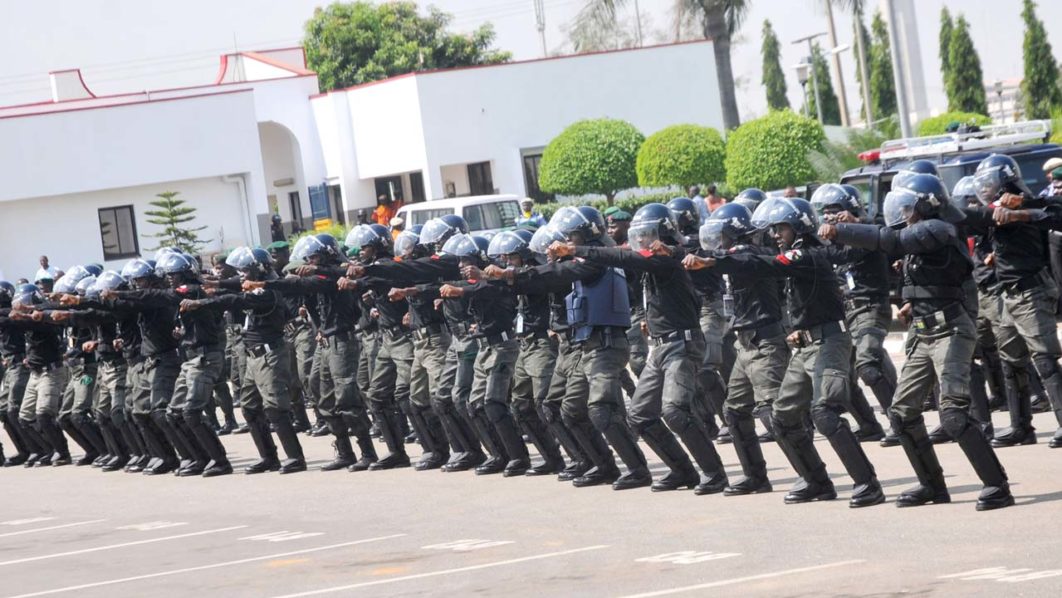
Two former Inspectors-General of Police (IGPs), Sir Mike Okiro and Suleiman Abba, have stressed the need for adequate safeguards to prevent governors from abusing state police when eventually established.
The duo, however, praised the passage of the State Police Bill, describing it as timely in view of the prevailing security challenges across the country.
Abba noted that abuse of power is not peculiar to state policing, arguing that it is also common at the national level. Nevertheless, both former police chiefs acknowledged that such abuse could become more complex at the state level if sufficient checks and balances are not put in place.
Abba said:“Both at the state and national levels, abuse is there. I can recall what I went through as Inspector-General of Police, especially during election monitoring. But all we need are the necessary safeguards.”
The Senate on Wednesday passed the Constitution Alteration (State Police) Bill, 2026, paving the way for the establishment of state police services across Nigeria under strict federal safeguards designed to prevent misuse by governors.
The amendment to Section 214 of the 1999 Constitution establishes a dual policing structure comprising a Federal Police Service for the Federation and a State Police Service for each of the 36 states that chooses to adopt it.
The bill, forwarded to the National Assembly by President Bola Tinubu, had earlier been passed by the House of Representatives.
Under the legislation, the National Assembly will prescribe national minimum standards covering recruitment, training, vetting, promotions, discipline, use of force, firearms, complaints procedures, accountability, data management, and professional conduct.
Although states may establish standards that are higher than the national benchmark, they cannot operate below the prescribed federal minimum.
The legislation expressly prohibits governors from deploying state police for “partisan, ethnic, religious, sectional, or personal purposes.”
It further provides that both the President and state governors may issue only lawful, written policy directives of a general nature. Any directive targeting named individuals, political parties, organisations, groups, or requiring the violation of fundamental rights is expressly prohibited.
Okiro and Abba agreed that the legal framework being put in place contains the necessary safeguards to prevent abuse and ensure effective policing across the country.
They also expressed their readiness to offer professional advice and support where necessary.
Speaking on the financial implications of state policing, Abba said:
“Policing is expensive because officers must be adequately equipped for effective performance. A number of countries may not have a standing army, but no country can do without the police for crime prevention and law enforcement.”
The two former IGPs also agreed that while a few states have consistently provided substantial support to security agencies and already possess structures capable of strengthening internal security, many others still lack the required capacity.
According to them, states with existing security infrastructure would transition more smoothly to state policing than those without such structures.
They specifically cited Lagos State as being well positioned for the transition.
“Lagos will not have any issue in this regard because of its security infrastructure. It already has the Rapid Response Squad with hundreds of operational vehicles, gunboats, helicopters, and a forensic laboratory of international standard.”
Okiro added:“Besides being a former Inspector-General of Police, I also served as Commissioner of Police in Lagos and can attest to the quality of the security infrastructure on the ground. This will help a great deal, and other states should emulate that.
“I am happy that the necessary checks and balances are being put in place.”
Abba further stated that the current level of insecurity in the country should compel state and local governments to take security more seriously, arguing that an over-centralised policing system cannot effectively secure every part of Nigeria.
Okiro echoed the same position, saying:
“The Federal Government cannot handle security alone. The central police system has failed because the government has failed. And because the government has failed, insecurity has succeeded in overrunning everyone. So let us unite the states.”
Under the proposed arrangement, the Federal Police Service will retain its existing federal responsibilities and may assist state police services upon request.
The Federal Police Service will be headed by an Inspector-General of Police appointed by the President on the advice of the National Police Council and subject to confirmation by the Senate.
Each State Police Service will be headed by a Commissioner of Police appointed by the governor on the recommendation of the State Police Council and confirmed by the State House of Assembly.
Both the Inspector-General of Police and state commissioners can only be removed for stated reasons, after a fair hearing, and with the approval of two-thirds of the Senate or the respective State House of Assembly.
The Federal Police Service will retain responsibility for national policing duties, including policing the Federal Capital Territory (FCT), protecting federal institutions and assets, combating terrorism, organised crime, cybercrime, border security, arms trafficking, and other interstate crimes.
The State Police Service, on the other hand, will enforce state laws, maintain public safety and order, prevent and detect crime within its jurisdiction, protect lives and property, and perform other functions as may be prescribed by state law.
However, a state police service will not be permitted to operate outside its state except with the approval of the National Assembly.
Courtesy: New Telegraph