FRSC GOES GLOBAL: HOW SHEHU MOHAMMED IS POSITIONING NIGERIA AS A LEADER IN ROAD SAFETY DIPLOMACY
By Ohaeri Osondu
When world leaders, policymakers, development partners, and road safety experts gathered at the United Nations Headquarters in New York to address one of the most persistent yet often underestimated global development challenges—road traffic deaths and injuries—Nigeria did not merely participate; it contributed meaningfully to shaping the global discourse.
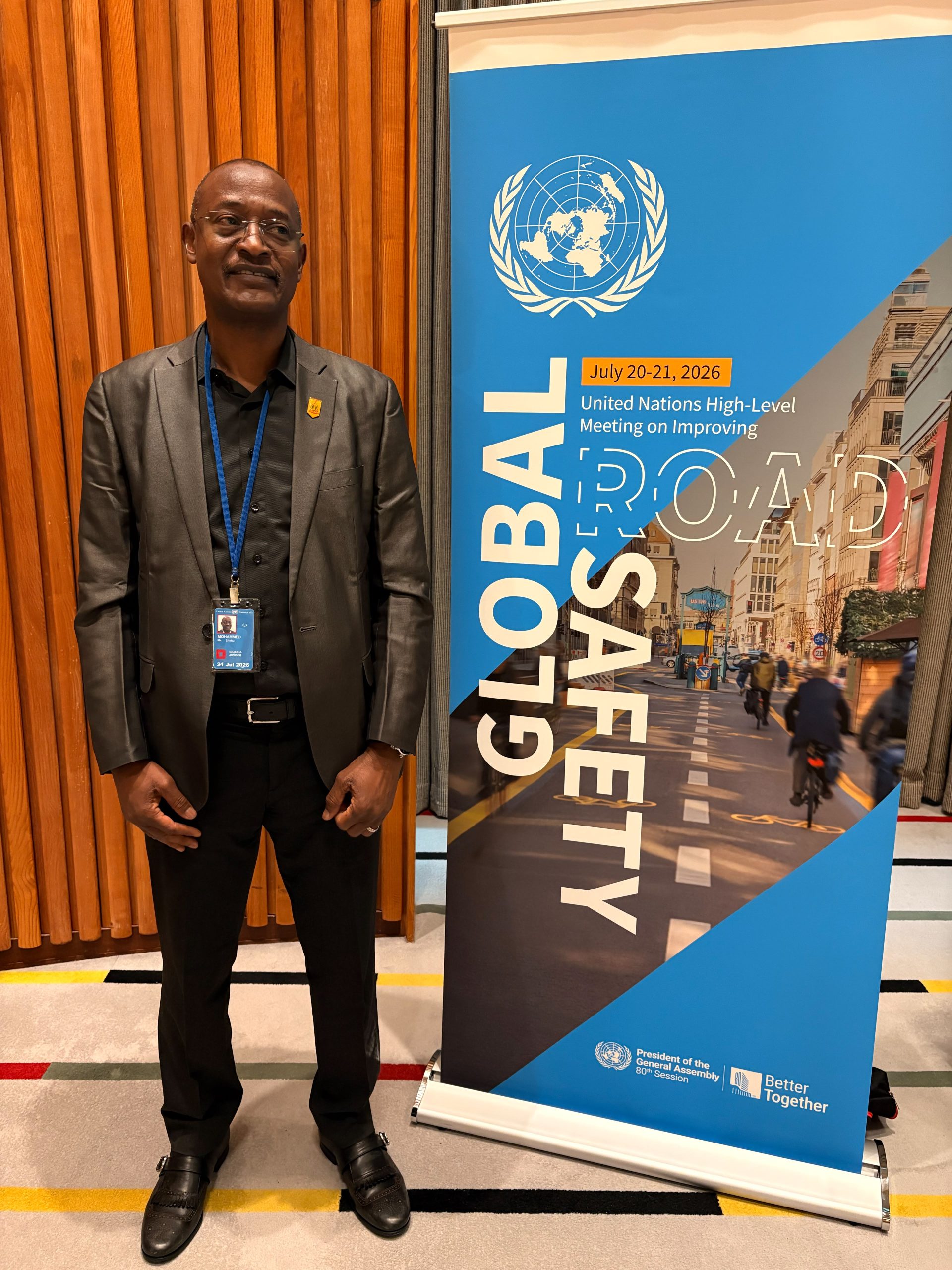
At the forefront of Nigeria’s delegation was the Corps Marshal of the Federal Road Safety Corps (FRSC), Shehu Mohammed, who led the country’s delegation to the United Nations High-Level Meeting on Improving Global Road Safety and delivered Nigeria’s national statement on behalf of President Bola Ahmed Tinubu.
The significance of this assignment extends beyond the personality of the Corps Marshal or the institution he leads. It reflects the growing international recognition that road safety is no longer simply an issue of traffic regulation and enforcement. Rather, it has evolved into a multidimensional concern encompassing public health, economic development, governance, infrastructure, sustainable mobility, environmental sustainability, and the broader global development agenda.
Held from 20 to 21 July 2026, the UN High-Level Meeting was convened under the theme: “Scaling Up and Accelerating Implementation of Commitments to Halving Road Traffic Deaths and Injuries by 2030.”
The conference brought together Heads of State and Government, ministers, legislators, international organizations, development agencies, civil society groups, private-sector stakeholders, and road safety professionals to evaluate global progress under the United Nations Decade of Action for Road Safety 2021–2030 and to accelerate implementation of agreed commitments.
From Traffic Enforcement to Global Road Safety Leadership
The participation of the FRSC Corps Marshal at one of the United Nations’ highest policy platforms represents more than diplomatic representation.
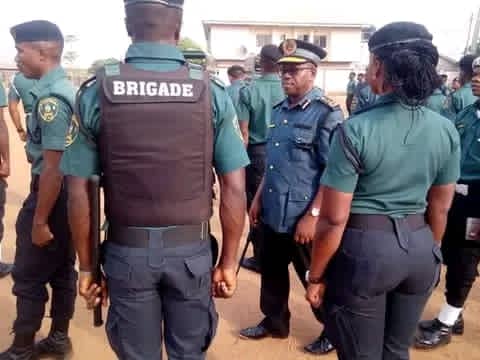
It illustrates the transformation of the Federal Road Safety Corps from a national traffic enforcement agency into a strategic institution contributing to global road safety governance.
Established primarily to address Nigeria’s road safety challenges, the FRSC has evolved considerably over the years. Its mandate now extends far beyond highway patrol and traffic control to include driver licensing and certification, public enlightenment, emergency rescue operations, crash data management, intelligent transport systems, road infrastructure safety assessments, research, policy development, and inter-agency coordination.
At the UN meeting, the Corps Marshal presented Nigeria’s experiences and reforms as part of the international search for practical solutions to a crisis that claims nearly 1.2 million lives annually and leaves tens of millions more injured worldwide. Road traffic crashes remain one of the leading causes of death among children and young adults between the ages of 5 and 29, with low- and middle-income countries bearing a disproportionate share of the burden.
Nigeria’s presentation therefore situated the country’s road safety realities within the broader context of a global challenge that transcends national borders. It underscored the need for shared knowledge, sustainable financing, innovation, technological advancement, institutional collaboration, and stronger political commitment to reduce preventable deaths and injuries on the world’s roads.
The Strategic Significance of the Corps Marshal’s Assignment
President Bola Ahmed Tinubu’s decision to designate the FRSC Corps Marshal to lead Nigeria’s delegation and present the country’s official position at such a prestigious international forum sends a strong policy signal regarding the importance the Federal Government attaches to road safety.
It also demonstrates confidence in the institutional capacity of the FRSC to represent Nigeria’s interests and articulate the country’s road safety priorities before the international community.
At a time when road traffic crashes continue to exact enormous human, social, and economic costs, the role of the FRSC has become increasingly strategic. Every crash prevented preserves not only human life but also protects families, safeguards livelihoods, reduces healthcare costs, prevents economic losses, and contributes to national productivity.
Road safety, therefore, should no longer be viewed through the narrow lens of traffic management or the traditional image of uniformed officers enforcing traffic regulations on highways.
The modern road safety institution performs multiple interconnected functions. It serves simultaneously as an enforcement agency, a public education institution, an emergency response organization, a data-driven policy institution, a regulator, a development partner, and an active participant in international road safety governance.
The FRSC’s participation at the United Nations reflects this expanded institutional identity.
A National Institution with Continental and Global Relevance
One of the strongest messages emerging from Nigeria’s presentation was that the country is increasingly positioning itself not merely as a recipient of global road safety interventions but as a contributor to international best practices and policy development.
The Corps Marshal highlighted a number of institutional reforms, including technology-driven enforcement, improved emergency response mechanisms, expanded public education campaigns, enhanced data management systems, and strategic partnerships designed to strengthen Nigeria’s road safety architecture.
He also drew attention to the Nigeria Road Assessment Programme (NigeriaRAP), developed in partnership with the International Road Assessment Programme (iRAP), as a practical demonstration of Nigeria’s adoption of the internationally recognized Safe System Approach to improving road infrastructure safety.
This initiative is particularly significant because the Safe System philosophy acknowledges that human beings are fallible and will inevitably make mistakes. However, those mistakes should not automatically result in death or life-changing injuries. Consequently, roads, vehicles, speed management, enforcement systems, and post-crash emergency care must function together as an integrated system designed to protect human life.
Within this framework, the FRSC occupies a uniquely strategic position. It provides the operational bridge between policy formulation and implementation. It witnesses firsthand the consequences of unsafe roads, defective vehicles, dangerous driving behaviours, and inadequate emergency response. More importantly, it possesses a nationwide operational presence capable of translating international commitments into practical interventions that directly improve safety on Nigerian roads.
Nigeria’s Expanding Leadership Role in Africa
Nigeria’s road safety responsibilities extend well beyond its national borders.
As host of the Secretariat of the African Association of Road Safety Lead Agencies (AARSLA), Nigeria occupies an influential position in promoting regional cooperation, institutional strengthening, and knowledge exchange among African road safety organizations.
Across the continent, many road safety agencies confront remarkably similar challenges, including inadequate funding, weak enforcement capacity, unsafe road infrastructure, limited institutional capacity, insufficient crash data, poor emergency medical services, rapid urbanization, and the emergence of new transportation technologies.
By providing a continental platform for collaboration, Nigeria is well positioned to facilitate the exchange of experiences, promote harmonized standards, strengthen institutional capacities, and encourage the development of African-led solutions to Africa’s road safety challenges.
This regional leadership further reinforces the FRSC’s strategic importance. Beyond implementing domestic road safety policies, the Corps increasingly contributes to shaping road safety administration across Africa through policy dialogue, technical cooperation, and institutional partnerships.
Technology and the Future of Safer Mobility
Another major highlight of the Corps Marshal’s presentation was the recognition that the future of road safety will be driven largely by technological innovation.
Rapid advancements in intelligent transport systems, automated enforcement technologies, artificial intelligence, connected vehicles, electric mobility, compressed natural gas (CNG)-powered transportation, and digital traffic management systems are fundamentally reshaping the global transportation landscape.
Nigeria’s transition toward cleaner and more sustainable transportation, particularly through increased adoption of electric vehicles and compressed natural gas-powered vehicles, must therefore be accompanied by corresponding investments in safety regulations, technical standards, infrastructure adaptation, driver education, and enforcement mechanisms.
This expanding transportation ecosystem inevitably broadens the strategic responsibilities of the FRSC.
The Corps must not only enforce existing traffic laws but also anticipate emerging mobility risks, contribute to regulatory reforms, strengthen institutional preparedness, and help develop safety frameworks capable of accommodating rapidly evolving transportation technologies.
Against this backdrop, the Corps Marshal’s call for stronger international cooperation in intelligent enforcement technologies, road infrastructure safety assessments, institutional capacity development, research collaboration, and technology transfer assumes even greater significance. The future of road safety will increasingly depend on how effectively nations share expertise, adopt innovation, and strengthen collective capacity to save lives.
Strengthening International Cooperation
Perhaps the most compelling message from Nigeria’s participation at the United Nations was the recognition that no nation can achieve the global road safety targets in isolation.
The ambitious goal of reducing road traffic deaths and serious injuries by at least 50 percent by 2030 demands sustained political commitment, adequate investment, stronger institutions, evidence-based policymaking, safer infrastructure, responsible road user behaviour, effective post-crash care, and continuous international collaboration.
The UN High-Level Meeting reaffirmed the importance of stronger multisectoral coordination, whole-of-government and whole-of-society approaches, sustainable financing mechanisms, institutional strengthening, and enhanced technical cooperation.
For Nigeria, this means road safety must continue to be treated as a shared national responsibility involving the Federal Government, state governments, transport regulators, road authorities, urban planners, vehicle manufacturers, professional associations, educational institutions, development partners, civil society organizations, the media, and the motoring public.
Within this broad ecosystem, the FRSC remains the country’s principal coordinating institution. Nevertheless, the enormous challenge of reducing road traffic fatalities cannot—and should not—rest solely on the shoulders of one agency.
Translating Global Commitments into Local Results
Ultimately, the true value of international conferences is measured not by the eloquence of speeches delivered or the declarations adopted, but by the tangible improvements they produce in people’s daily lives.
For Nigeria, the global commitment to halve road traffic deaths and injuries by 2030 must translate into measurable outcomes on Nigerian roads: fewer crashes, fewer fatalities, fewer life-altering injuries, safer highways, better-designed transport infrastructure, improved vehicle safety standards, more responsible driving behaviour, stronger enforcement, and faster emergency response.
The Corps Marshal’s presentation in New York provided Nigeria with an important platform to showcase ongoing reforms, articulate national priorities, attract international partnerships, and reaffirm the country’s commitment to global road safety objectives.
However, it also places an obligation on all stakeholders to sustain the momentum generated by the meeting and ensure that international commitments are converted into practical national actions that improve road safety outcomes across the country.
The strategic role of the FRSC within the global road safety architecture is therefore becoming increasingly evident. The Corps is no longer merely a national enforcement agency; it is emerging as an influential institution contributing to international policy dialogue, regional cooperation, knowledge exchange, and the implementation of globally recognized best practices.
As the international community enters the critical second half of the United Nations Decade of Action for Road Safety, Nigeria’s voice has become part of the global conversation on saving lives through safer mobility.
At the centre of that conversation stands the Federal Road Safety Corps, demonstrating that effective road safety leadership is no longer confined to Nigeria’s highways. It is increasingly exercised within international policy forums where global strategies are developed, partnerships are forged, and collective commitments are shaped.
With the numerous reforms and innovative initiatives currently being implemented by the FRSC to transform road safety management in Nigeria, the next phase of progress will depend on sustained political will, increased investment, stronger institutional capacity, modern legislative and regulatory frameworks, enhanced intergovernmental coordination, and greater public participation.
Only through a coordinated, whole-of-society approach can the commitments made in New York be translated into safer roads, fewer casualties, and a more resilient transportation system for every Nigerian.
Ohaeri Osondu, a Fellow of the Nigerian Institute of Public Relations (NIPR), is a Deputy Corps Commander and Corps Public Education Officer at the Federal Road Safety Corps National Headquarters, Abuja.