

Anambra Moves to Break Menstrual Health Barriers With New Policy
The Anambra State Government has pledged institutional support for the adoption and implementation of a state policy on Menstrual Health and Hygiene Management aimed at addressing barriers affecting girls and women across the state.
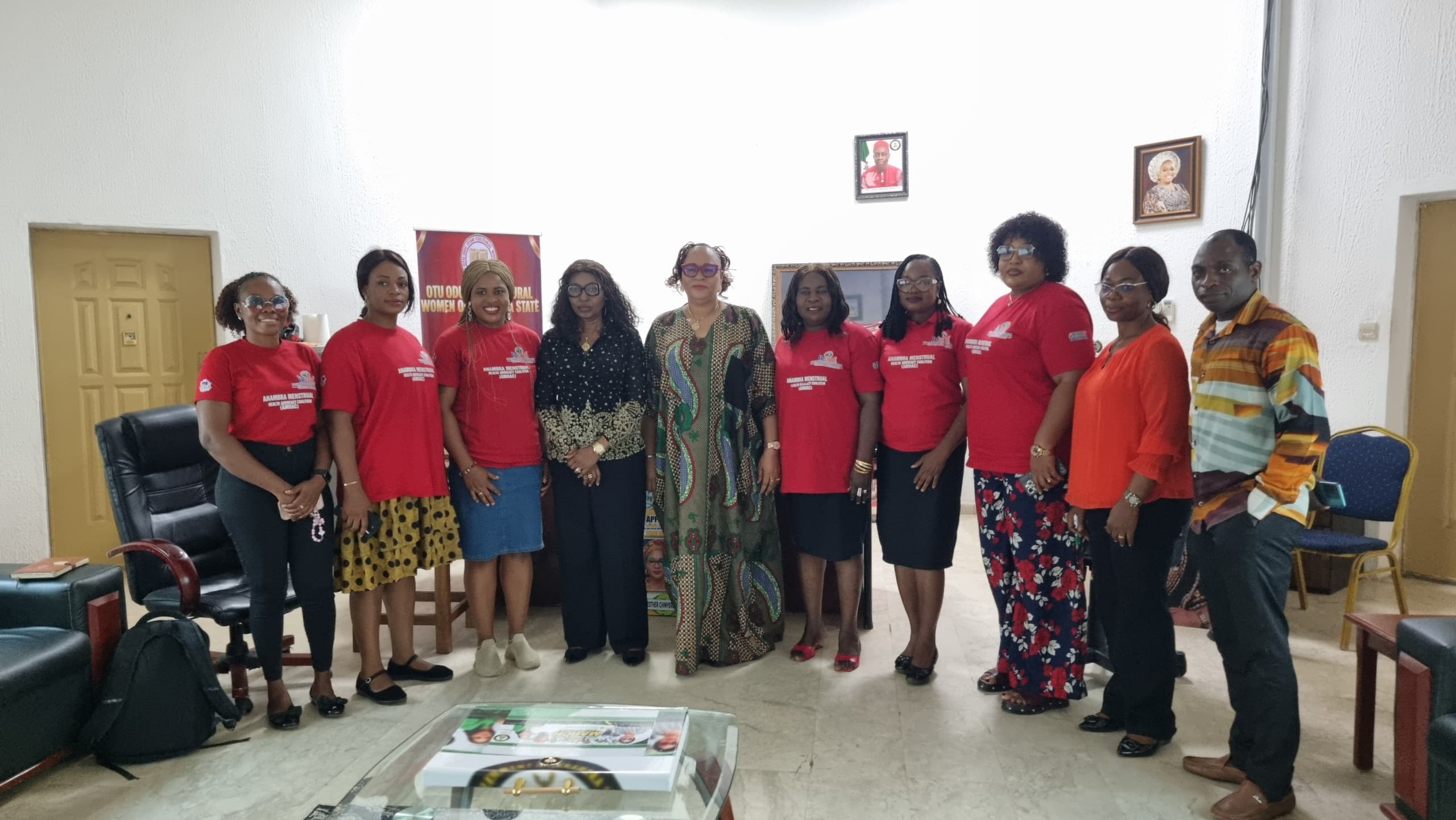
The Commissioner for Women Affairs and Social Welfare, Mrs Esther Onyekesi, gave the assurance in Awka when a delegation of the Development Centre for Orientation, Discovery and Empowerment (DeCODE), led by its Executive Director and Coordinator of the Anambra Menstrual Health Advocacy Coalition (AMHAC), Mrs Cynthia Enweonwu-Arinze, presented an advocacy brief on the proposed policy.
Describing the initiative as consistent with the ministry’s mandate, Mrs Onyekesi pledged her full support for the process and assured the delegation that relevant departments of the ministry, including the Office of the Permanent Secretary, would work with the coalition to facilitate the necessary government procedures.
“I’m already in. It’s what I want. When somebody brings something you’ve been clamouring for, what do you do? Support with 100 per cent. You have my support 100 per cent,” she said.
The Commissioner expressed optimism that the policy would eventually receive the approval of Governor Chukwuma Soludo.
The proposed policy seeks to address challenges including the high cost and limited availability of sanitary products, inadequate water, sanitation and hygiene facilities in schools, insufficient menstrual health education and the exclusion of girls with disabilities.
Presenting the advocacy brief, Mrs Enweonwu-Arinze said the policy would provide a coordinated state-level framework for translating national commitments on menstrual health into concrete interventions, with clearly defined institutional responsibilities, sustainable financing and accountability mechanisms.
She explained that the Ministry of Women Affairs and Social Welfare was expected to lead the policy adoption process, while civil society organisations would provide technical assistance and advocacy support.
According to her, the immediate priority is to work with the ministry to subject the draft policy and its implementation framework to the appropriate government review processes before presentation for the governor’s approval.
She, however, emphasised that adoption alone would not achieve the desired results without dedicated budgetary allocations to sustain menstrual health programmes.
Mrs Enweonwu-Arinze said the ultimate objective was to ensure that no girl was forced to choose between managing her menstrual period and attending school.
She cited findings from a situation assessment conducted by DeCODE under its Menstrual Ease for Girls (ME4Girls) Project across 12 public secondary schools in six local government areas, involving 1,315 students.
The assessment revealed that 25.4 per cent of the girls had missed school because of menstruation within the preceding three months, while 83.8 per cent identified free or affordable menstrual products as their most pressing need.
It also found that only two of the 12 schools had toilets rated clean and safe, while just three had functional handwashing facilities. Only four schools had formal written menstrual health policies.
Highlighting the challenges facing girls with disabilities, Mrs Enweonwu-Arinze said 78.3 per cent of students who disclosed a disability reported that their school toilets were available but unusable, compared with 36.9 per cent of students without a disclosed disability.
She said the findings reinforced the need for a comprehensive policy that would address access to menstrual products, school hygiene infrastructure, menstrual health education and the specific needs of vulnerable girls.
The advocacy process has recorded progress with the establishment of AMHAC following a stakeholder workshop convened by DeCODE on August 21, 2026, which attracted 51 participants from government institutions, civil society organisations, the media and the ME4Girls project team.
The coalition subsequently inaugurated a Technical Working Group, which met on September 11, 2026, to review the draft policy and proposed implementation framework.
The meeting examined institutional responsibilities, coordination, financing, phased implementation, monitoring and accountability, culminating in a communiqué containing recommendations for advancing the policy.
Also speaking, the project consultant, Dr Rose Amasiani, described the proposed policy as an important intervention towards addressing the silence and misconceptions surrounding menstruation and ensuring that girls and women could openly discuss their menstrual health needs.
Dr Amasiani recalled that a 2015 study in Nigeria exposed widespread ignorance and misinformation about menstruation, including instances where young girls were misled into believing that regular sexual activity could resolve menstrual problems.
She said the proposed policy would establish a framework for protecting menstrual health rights, improving access to sanitary materials and ensuring that the needs of menstruating girls and women received appropriate attention in homes, schools and government programmes.
Expressing concern over the rising cost of sanitary pads, she stressed the need for sustainable interventions to make menstrual products affordable and accessible.
Dr Amasiani commended ongoing efforts by the First Lady of Anambra State to distribute sanitary pads to secondary schoolgirls but maintained that such interventions required a sustainable government-backed framework.
The Permanent Secretary of the Ministry, Mrs Nkeiru Mokwe, and other officials were present during the advocacy visit.
