

NO MORE CAP IN HAND: EJIOFOR DEMANDS TRUE FEDERALISM AS STATES DEPEND ON ABUJA FOR SURVIVAL
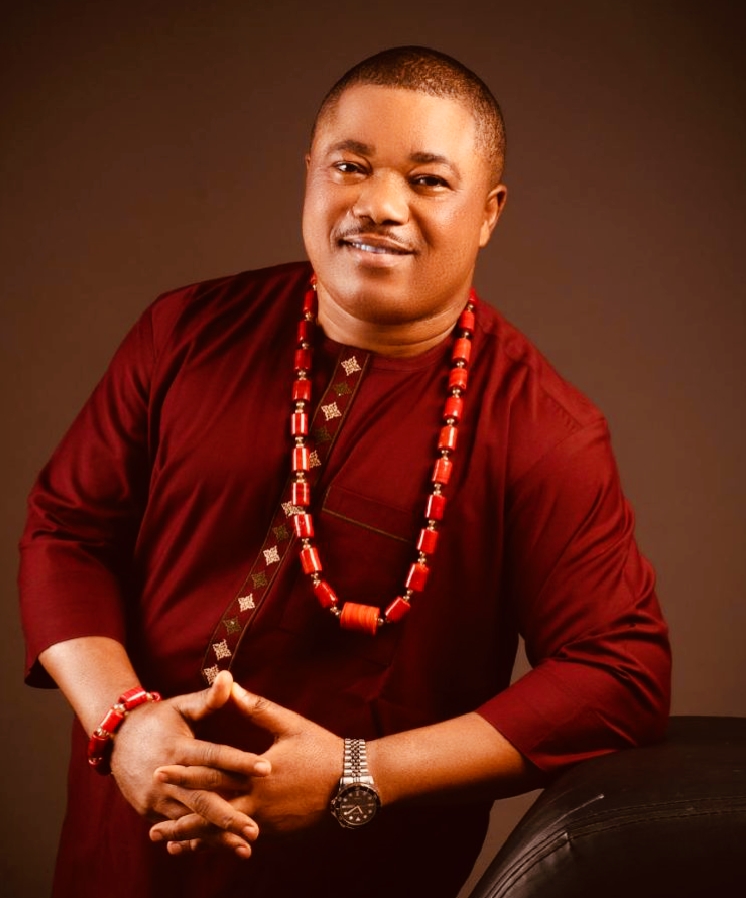
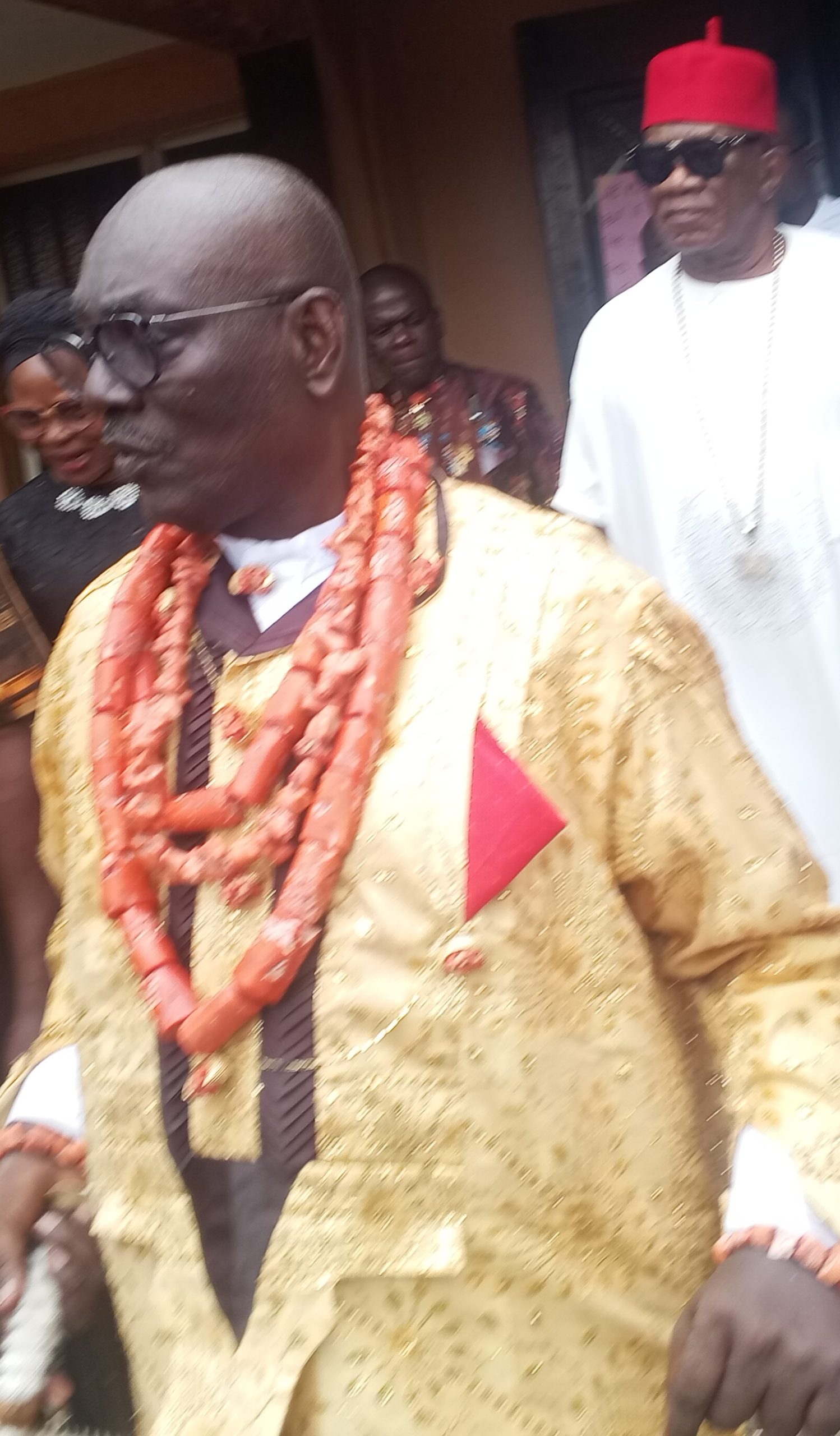
Nigerian human rights lawyer and lead counsel to the Indigenous People of Biafra (IPOB), Sir Ifeanyi Ejiofor, has called for Nigeria to return to the principles of genuine federalism, where power follows responsibility, resources follow responsibility, and accountability follows power.
According to Ejiofor, until Nigeria embraces genuine federalism, the country will continue to operate a federation in which everybody wants autonomy, but everybody also wants Abuja to pay the bills.
The human rights lawyer made the observation in his latest weekend piece titled, “WEEKEND MUSINGS: FROM ‘CAP IN HAND’ TO TRUE FEDERALISM: WHEN GOVERNORS MUST BEG ABUJA TO PAY SALARIES.”
His intervention followed President Bola Ahmed Tinubu’s recent remark that some state governors had, in the recent past, besieged the Presidency “cap in hand,” seeking assistance to meet their salary obligations.
According to Ejiofor, what may appear to be a casual presidential remark deserves far more serious national reflection than it has received.
He argued that, beyond the immediate political context in which the statement was made, it exposes a fundamental structural weakness in the Nigerian federation: a system in which sub-national governments are constitutionally recognised as governments, yet many of them remain financially dependent on Abuja even for some of the most basic obligations of governance.
Ejiofor noted that Nigeria did not begin as a federation in which virtually every major decision, resource and financial lifeline had to pass through the centre.
According to him, the historical development of Nigerian federalism, particularly during the First Republic, was substantially built around regional autonomy, fiscal responsibility and competition among the federating units.
He said the regions exercised considerable control over their resources and assumed substantial responsibility for financing their own development.
The statement reads in part:
“The logic was simple: those who govern the people should have meaningful control over the resources generated within their jurisdiction and should also bear responsibility for the consequences of their choices.
“Unfortunately, the Nigerian federation has progressively become excessively centralised. The result is a curious arrangement in which governors are elected to govern states, collect internally generated revenue and administer substantial public institutions, yet some must periodically look towards Abuja for financial salvation.
“And here comes the irony: the governor is called ‘His Excellency’ in the state, but when salaries become due, he may have to become ‘His Excellency, Please Help Us, Mr President.’
“That cannot be the ideal of federalism.
“The Federation Account was never intended to become a permanent substitute for responsible economic governance at the state level. Yet the present structure has created a culture of dependency in which some states appear to regard monthly Federation Account allocations almost as their primary economic oxygen.
“The official revenue-distribution figures themselves demonstrate the enormous scale of this intergovernmental financial dependence. States receive substantial allocations from federally collected revenues, including statutory revenue, VAT, derivation and other distributable revenues.
“There is, of course, nothing inherently wrong with revenue sharing in a federation. The problem arises when revenue sharing becomes revenue dependence.
“A state that possesses land, agriculture, commerce, industry, tourism, mineral resources, human capital and enormous economic potential should not permanently exist as a monthly petitioner before Abuja.
“The deeper question is: why should a state with enormous economic potential be perpetually poor?
“The answer cannot always be that Abuja did not give enough money.
“What we urgently require, therefore, is not merely more money from Abuja, but more responsible government away from Abuja.
“The most painful dimension of this dysfunction is that the ordinary worker and pensioner ultimately bear the burden. While workers wait for salaries and pensioners wait for their entitlements, political office holders can sometimes appear remarkably insulated from the economic consequences of governmental failure.
“President Tinubu’s ‘cap in hand’ remark should therefore not be treated merely as political banter or another presidential soundbite. It should provoke a national conversation about the kind of federation we want.
“Do we want states that are perpetually dependent on Abuja? Or do we want states sufficiently empowered, and sufficiently accountable, to stand on their own economic feet?
“Do we want governors who spend enormous political energy travelling to Abuja in search of financial intervention? Or do we want governors competing to make their states economically viable?
“The present system has produced an unfortunate paradox: we call ourselves a federation, but have constructed an economy in which the centre remains disproportionately powerful and the federating units frequently return to the centre for sustenance.
“And, above all, let us dismantle the political culture in which the monthly allocation from Abuja becomes the beginning, middle and end of economic planning.
“Because if a governor must repeatedly approach the President cap in hand merely to pay workers’ salaries, then the question is no longer whether the President is generous enough.
“The question is whether the architecture of the federation itself is working. And my answer is unequivocal.”
Ejiofor’s position ultimately raises a broader constitutional and political question about the future of Nigeria’s federal structure: can a federation genuinely function when the federating units exercise limited fiscal autonomy but retain extensive political and administrative responsibilities?
For him, the solution is not simply to increase federal allocations or repeatedly expand the financial intervention available to states. Rather, Nigeria must undertake a deeper restructuring of its federal system—one that gives states greater control over their economic resources, expands their fiscal responsibilities, strengthens local accountability and reduces the excessive concentration of political and economic power at the centre.
A sustainable federation, he argued, should not be defined by how frequently governors can secure financial assistance from Abuja, but by how effectively each federating unit can mobilise its resources, deliver public services and answer to its own citizens.
The fundamental principle should therefore be clear: where power resides, responsibility must follow; where responsibility resides, resources must follow; and where resources and power reside, accountability must follow.
Until that balance is restored, Nigeria risks remaining a federation in name but an increasingly centralised system in practice—one in which states demand autonomy while simultaneously depending on the centre for their economic survival.
The “cap in hand” phenomenon, therefore, should not merely be viewed as a question of whether individual governors are financially prudent or whether the Federal Government is sufficiently generous. It should compel Nigerians to confront the larger structural question of whether the present federal arrangement adequately serves the interests of the states, their citizens and th
e federation as a whole.
The time has come for Nigeria to move beyond a system of dependency towards a federal structure founded on fiscal autonomy, economic competition, constitutional clarity, responsible governance and genuine accountability.
Only then can federalism become more than a constitutional description and become a functioning system of governance in which every level of government is empowered to act—and held accountable for the consequences of its actions.