
Nigerian Disability Rights Advocate Joins Global Women’s Action Network On Forced Displacement
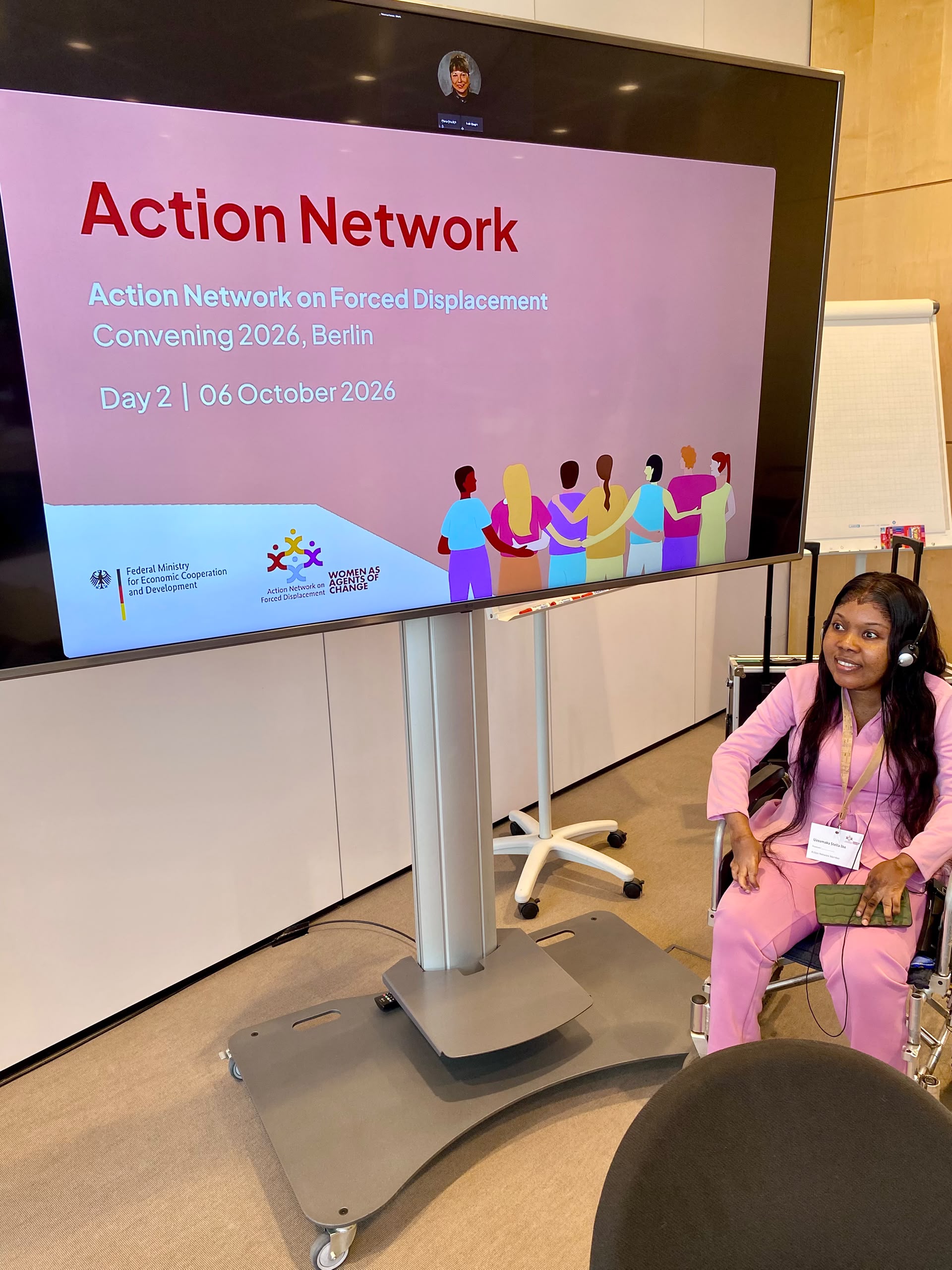
Nigerian disability rights advocate and feminist leader, Uzoamaka Stella Ike, has joined a global network working to strengthen the rights, resources and representation of women and girls affected by forced displacement.
Ike, Founder and Chief Executive Director of FalconsCare Initiative for Women with Disabilities Empowerment (FIWDE), is one of eight new members selected for the 2026 cohort of the Action Network on Forced Displacement – Women as Agents of Change.
She is also participating in the network’s 2026 convening in Berlin, Germany, where women leaders and other stakeholders are examining feminist, locally led and better-resourced approaches to addressing the challenges associated with forced displacement.
Ike is the first and only Nigerian among the eight members selected for the 2026 cohort, giving Nigeria and the wider African region representation on the global platform.
Her participation also brings a disability rights and intersectional perspective to discussions on forced displacement and women’s leadership.
Over the years, Ike has advocated for the meaningful inclusion and leadership of persons with disabilities in development, humanitarian and policy spaces.
Through her work in Nigeria and internationally, she has particularly championed the rights of women and girls with disabilities, advocating for their participation as decision-makers, leaders and partners in shaping programmes and policies that affect their lives.
At the Berlin convening, Ike is contributing to discussions on locally led development, feminist leadership, financing and disability inclusion.
She is drawing attention to the need for displaced women with disabilities to be deliberately included in responses to forced displacement, noting that their needs can be overlooked when disability is not integrated into humanitarian and development interventions.
Her advocacy emphasises the importance of ensuring that local leadership is genuinely inclusive and that resources reach organisations and communities closest to affected populations.
She is also advocating for disability inclusion to be incorporated from the beginning of programme design rather than treated as an additional consideration after interventions have been developed.
Ike’s selection provides an opportunity for the experiences and perspectives of women with disabilities in Nigeria and other parts of Africa to contribute to global conversations on forced displacement, feminist leadership and locally led development.
Her participation further underscores the importance of ensuring that women with disabilities are represented in decision-making spaces where policies and interventions affecting displaced populations are developed.