




Anambra Launches Digital ID Jackets for Park Workers, Begins Commercial Vehicle Profiling
By Our Reporter
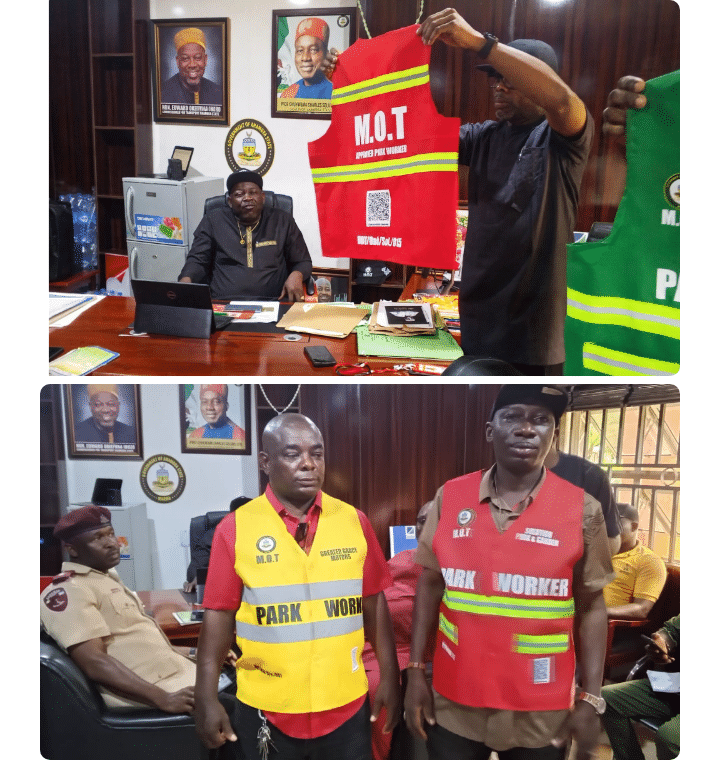
The Anambra State Government has launched digitally identifiable, Ministry of Transport-approved reflective jackets for authorised motor park workers and commenced the pilot phase of a commercial vehicle numbering and digital profiling programme aimed at strengthening security, improving accountability and restoring order in the state’s transportation sector.
The two initiatives were unveiled on Friday in Awka, the state capital, by the Commissioner for Transport, Hon. Edward Obiefuna Ibuzo, as part of the state government’s ongoing efforts to modernise transport administration through digitisation, effective regulation and improved monitoring of operators.
According to Ibuzo, the initiatives are designed to identify legitimate motor park workers, establish a reliable database of commercial vehicles and their operators, and curb impersonation, touting, illegal levies and unauthorised revenue collection.
He said the measures aligned with the administration’s determination to establish an organised, secure and digitally driven transportation system under Governor Chukwuma Charles Soludo.
The commissioner explained that the approved reflective jackets would be issued to authorised park workers operating in designated motor parks across the state’s 21 local government areas and linked to a verifiable identification and profiling system.
According to him, the initiative would enable the Ministry of Transport, security agencies, park managers and members of the public to distinguish officially recognised park workers from impostors who might exploit the transport system to extort motorists and engage in other unlawful activities.
Ibuzo stressed that the jackets were not merely uniforms but symbols of identity, responsibility, accountability and official recognition.
He warned that no individual should impersonate officials of the Ministry of Transport, wear unauthorised jackets or use the ministry’s name to intimidate drivers, extort motorists or engage in illegal revenue collection.
He further clarified that possession of an approved reflective jacket did not confer law enforcement powers on the wearer or authorise the collection of fees outside the legally approved revenue framework.
The commissioner emphasised that all park workers must operate within recognised park management structures and comply with the ministry’s rules and regulations.
Ibuzo also announced the commencement of the pilot phase of a comprehensive numbering and digital profiling programme for commercial vehicles operating within Anambra State.
He said the programme was intended to establish a reliable database containing information about commercial vehicles, their operators, approved routes and other relevant operational details to facilitate effective monitoring, security and transportation planning.
“Our objective is simple: We must know who operates our commercial vehicles, where they operate, and how to ensure their accountability, safety and security,” he said.
According to him, the initiative is expected to improve vehicle identification, strengthen passenger security, support effective route management, enhance emergency response and provide reliable data for transportation planning.
He added that the programme would help the government identify duly registered commercial transport operators, distinguish them from unauthorised operators and strengthen coordination among the ministry, security agencies and recognised transport associations.
The commissioner explained that the pilot phase would provide an opportunity to test the system, engage transport operators, identify implementation challenges and make necessary adjustments before extending the programme across the state.
He assured commercial drivers that the exercise was not intended to impose unnecessary financial burdens on them but to promote order, transparency and efficiency in the transport system.
Ibuzo, however, clarified that the ministry’s numbering and profiling initiative was an operational identification programme and would not replace statutory vehicle registration or official number plates issued by the appropriate authorities.
He maintained that the two initiatives formed part of the broader transportation reform agenda of the Soludo administration, which also included the harmonisation and coordination of commercial transport associations, rehabilitation and modernisation of designated motor parks, and the elimination of illegal loading and offloading along major roads.
Other areas of focus, he said, included the digital registration and profiling of transport operators, improved road safety and traffic management, the elimination of unauthorised revenue collection, and the development of an integrated, multimodal and investment-friendly transportation system.
The commissioner maintained that effective regulation of the transport sector depended on the proper identification, documentation and organisation of its operators.
He outlined the guiding principles of the reforms as identification, registration, digitisation, regulation, service delivery, enforcement, monitoring and accountability.
“The era of operating without accountability, impersonating government officials and exploiting commercial transport operators must give way to a more organised and responsible system,” he said.
The commissioner urged park workers to embrace the new identification system and wear their reflective jackets with dignity, stressing that the jackets must be used strictly for authorised duties.
He also appealed to commercial drivers and transport operators to cooperate with the ministry during the pilot phase of the vehicle numbering and profiling programme, noting that their participation would contribute to a more secure, orderly and predictable transport environment.
Ibuzo called on leaders of transport associations to demonstrate transparency, cooperate with the government and properly sensitise their members to the new initiatives.
He further directed motor park owners and managers to notify the ministry whenever they employed new workers or disengaged existing staff members responsible for loading activities within their parks.
He said the measure was necessary to ensure that the ministry’s records remained current and that only duly recognised personnel operated within designated motor parks.
The commissioner expressed appreciation to Governor Soludo for his commitment to transportation reforms and institutional accountability, adding that the initiatives aligned with the administration’s broader agenda of improving public service delivery and developing a modern transportation system in Anambra State.
He also commended the ministry’s management and staff, technical partners, security agencies, transport associations and other stakeholders for their contributions to the initiatives.
Ibuzo said the state government was determined to establish a new culture of identity, order, security, transparency and accountability in the transportation sector.
He expressed optimism that the initiatives would promote safety, professionalism, efficiency and sustainable transportation development across the state.
Describing transportation as a critical component of the Soludo administration’s development agenda, the commissioner said Anambra’s ambition to strengthen security, maintain order and promote harmony among stakeholders required a well-organised transport system.
He expressed confidence that the digitisation process would make substantial progress towards completion, adding that he was determined to help transform the sector into one that Anambra residents could be proud of and that other states could emulate.
“The Anambra State transport sector must be rescued, and I am prepared to make it a source of pride for the state, so that the nation can copy from us,” he said.
Speaking at the unveiling ceremony, the Commissioner for Information and Value Reformation, Dr Law Mefor, commended Ibuzo for what he described as a remarkable transformation of the state’s transportation sector.
Mefor recalled that when the transport commissioner proposed the digitisation initiative at a meeting of the Anambra State Executive Council, members welcomed the idea but wondered how it could be successfully implemented.
He said the launch had demonstrated that the proposal was achievable and represented a significant step towards improving transport administration and security in the state.
“I am a witness to the launch of this wonderful initiative, which will help promote quality security in the state. This programme is in tandem with the governance philosophy of Governor Charles Soludo,” he said.
He praised the Ministry of Transport for translating the proposal into a practical initiative, expressing confidence that the digital identification and profiling system would support the state’s wider efforts to improve governance, accountability and public safety.
During the unveiling ceremony, the Ministry of Transport demonstrated how commercial vehicles could be digitally profiled through an online platform.
According to the ministry, one of the programme’s primary objectives was to identify vehicles duly approved to operate as commercial vehicles within the state.
The ministry explained that every commercial vehicle covered by the programme would be assigned an identification number to facilitate verification and tracking.
It said the identification system would also assist security agencies in tracing vehicles and their operators whenever they were linked to criminal activities.
The ministry explained that members of the public and relevant authorities would be able to report the identification number of a vehicle suspected of involvement in a crime, enabling the appropriate agencies to use the available records to identify and trace the vehicle and its operator.
The ministry further stated that the digital profiling exercise would involve revalidating records across motor parks in Anambra State to ensure that recognised parks were properly documented and operated with heightened security consciousness.
It added that the initiative was expected to strengthen the monitoring of commercial vehicles, improve the identification of transport operators and provide a more reliable framework for coordinating activities across the state’s transportation sector.
The government expressed optimism that the combined introduction of approved identification jackets for park workers and digital profiling of commercial vehicles would strengthen public confidence, improve security and support the development of a more transparent, accountable and efficient transport system in Anambra State.
The ceremony brought together both the public and private park managers and all others stakeholders in Anambra State transport sector.