
2027: Soludo’s Tinubu Alliance Is No Betrayal, Obi’s Ambition Not Igbo Project — Anambra Commissioner
By Titus Eleweke
“Anambra Information Commissioner accuses Obi of repeatedly backing opposition candidates against APGA, warns party risks extinction if NDC takes over state“
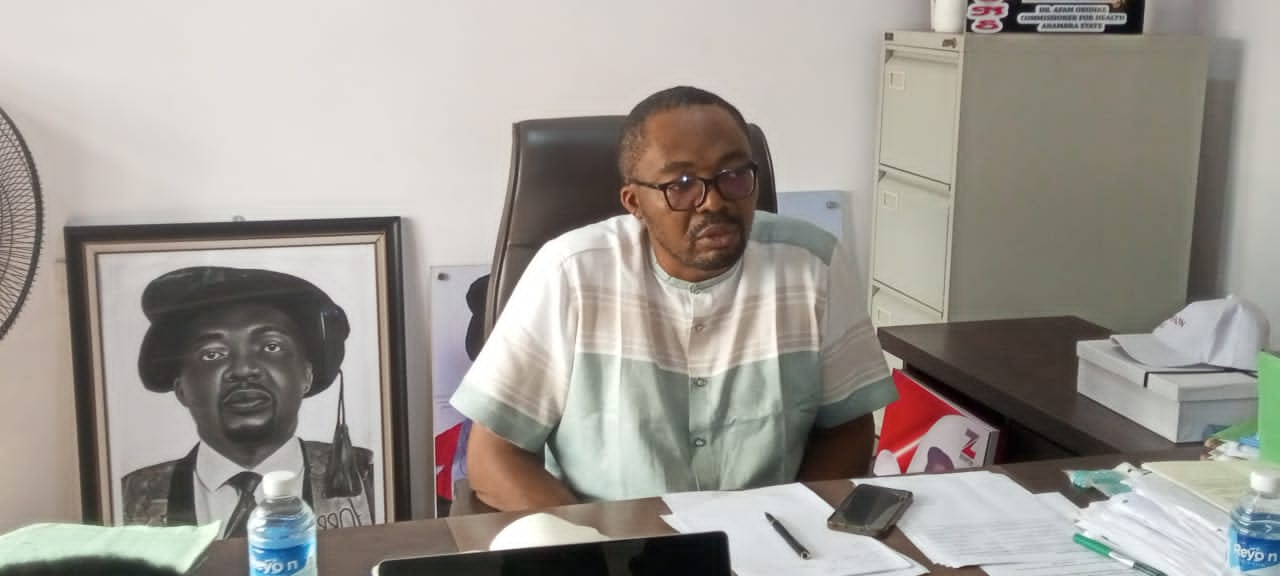
Anambra State Commissioner for Information and Value Reformation, Dr Law Mefor, has defended Governor Chukwuma Soludo’s political alliance with President Bola Tinubu ahead of the 2027 general election, insisting that former Anambra State governor Peter Obi’s presidential ambition should not be regarded as an Igbo project.
Mefor argued that the Igbo people and their political organisations were under no obligation to support Obi merely because he is of Igbo extraction, particularly as he had neither sought nor received a collective endorsement from major Igbo socio-cultural, traditional and political institutions.
He also warned that the survival of the All Progressives Grand Alliance (APGA), which produced Obi as governor of Anambra State for two terms, could be threatened if Obi’s new political platform, the Nigeria Democratic Congress (NDC), takes control of the state.
The commissioner made the arguments in an article titled, “2027: Is Peter Obi’s Presidential Ambition an Igbo Project?”, in which he maintained that political decisions should be guided by interests, strategy and the realities of multiparty democracy rather than ethnic sentiment.
According to him, Obi has consistently sought to present himself as a presidential candidate for all Nigerians rather than as a candidate representing the Igbo people, a position he said should be respected by his supporters.
“The simple answer is this: Mr Peter Obi’s presidential ambition is not an Igbo project, because Mr Peter Obi himself has never presented it as one, and does not want it to be seen as one,” Mefor stated.
He explained that Obi had repeatedly maintained that those supporting his presidential aspiration should not portray him as a candidate seeking election on the strength of his Igbo identity, but as a competent Nigerian offering himself to serve the country.
Mefor further argued that Obi had kept his distance from prominent Igbo and South-East institutions, including Ohanaeze Ndigbo, the South-East Council of Traditional Rulers and the South-East Governors’ Forum, which, he said, could have been approached for collective endorsement.
He questioned why Obi’s supporters should demand automatic loyalty from Igbo people and organisations when, according to him, the former governor had not sought their collective mandate.
“You cannot reject an endorsement and then demand loyalty on the basis of the same identity you rejected,” he said.
Mefor faulted what he described as emotional pressure from some of Obi’s supporters on Igbo people who do not support his presidential ambition, arguing that political disagreement should not be interpreted as betrayal of the ethnic group.
He maintained that politics was driven by interests and long-term strategy, adding that individuals and political organisations in the South-East had the same right to pursue their interests as Obi had to pursue his presidential ambition.
The commissioner said a presidential aspiration could only be regarded as a collective Igbo project after consultations among political, traditional and socio-cultural leaders, followed by an endorsement reflecting the collective interest of the people.
According to him, no such process has taken place in respect of Obi’s 2027 presidential ambition.
He also questioned the reported single-term, four-year commitment associated with Obi’s political arrangement with his new coalition partners, arguing that it would amount to a major concession for the South-East when other geopolitical zones had enjoyed, or were seeking, the constitutionally permitted maximum of two presidential terms.
Mefor insisted that such a commitment was a personal political arrangement rather than a mandate from the South-East or the Igbo people.
He consequently argued that neither APGA nor other political groups in Igbo land should be expected to subordinate their interests to Obi’s presidential aspiration.
The commissioner identified APGA’s survival in Anambra State as a central consideration in the debate over the party’s political alignment ahead of the 2027 elections.
He argued that the party could face an existential threat if the NDC displaced it from power in Anambra, noting that the two parties would be competing for legislative and executive positions across the state.
Mefor cited Imo State as an example of what could happen when APGA loses its political dominance, recalling that the party governed the state under former Governor Rochas Okorocha before he defected to the All Progressives Congress (APC).
He maintained that APGA had since struggled to retain its former political relevance in Imo State and warned that Anambra could face a similar situation if the party failed to protect its political base.
The commissioner also accused Obi of repeatedly supporting candidates of other political parties against APGA in successive Anambra governorship elections since leaving the party for the Peoples Democratic Party (PDP) in 2014.
He cited Obi’s support for Oseloka Obaze of the PDP in the 2017 governorship election, Valentine Ozigbo of the Labour Party in 2021 and George Moghalu of the Labour Party in the 2025 governorship election.
Mefor also referred to the 2024 Onitsha North 1 State Assembly by-election, in which he alleged that Obi backed a candidate against APGA’s Hon. Mimi Azikiwe, who eventually won the contest.
According to him, APGA repeatedly regrouped and emerged victorious despite the political challenges, culminating in the 2025 governorship election, during which he claimed Governor Soludo and APGA won 320 of Anambra’s 326 wards.
He further claimed that Obi lost all four wards in his home community of Agulu during the election.
Mefor argued that the electoral record demonstrated that Obi had consistently pursued political alternatives to APGA rather than seek an alliance with the party that had twice elected him governor and elevated him to national prominence.
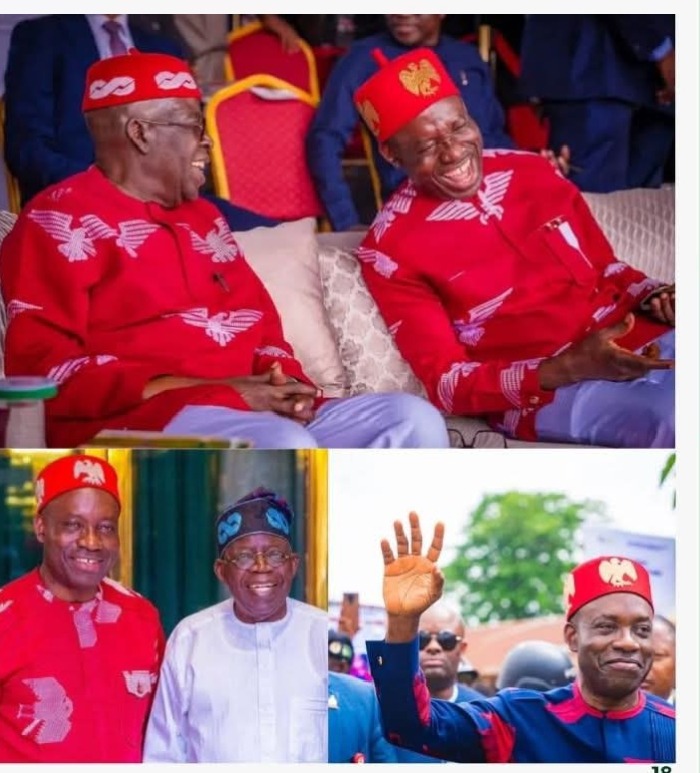
Defending Soludo’s decision to work with Tinubu ahead of the 2027 general election, Mefor described the arrangement as a continuation of APGA’s longstanding strategy of maintaining political engagement with the federal government.
He said Obi himself had adopted a similar approach while serving as APGA governor by working with former President Goodluck Jonathan, while Obi’s successor, Willie Obiano, also maintained a working relationship with former President Muhammadu Buhari.
According to Mefor, Soludo’s cooperation with Tinubu and his acceptance of the role of Anambra coordinator for the president’s re-election campaign are intended to protect APGA’s political future and sustain its relevance at the national level.
He maintained that APGA must be free to pursue strategic alliances that advance its interests rather than abandon its political calculations to demonstrate ethnic solidarity with Obi.
“To ask APGA to commit suicide in order to prove Igbo solidarity to a candidate who himself does not want to be tagged as an Igbo candidate is the height of emotional blackmail,” he said.
Mefor added that Obi was entitled to pursue his presidential ambition on his chosen political platform, just as APGA, the Igbo people and other political organisations in the South-East were entitled to make their own political choices.
He added that the disagreement should be understood within the context of democratic competition, political interests and the right of parties and individuals to determine their alliances.
“That is democracy. That is politics,” he said.