



Anosike Faults Judiciary Over Imo Senate Candidacy, Warns of Threat to Democracy
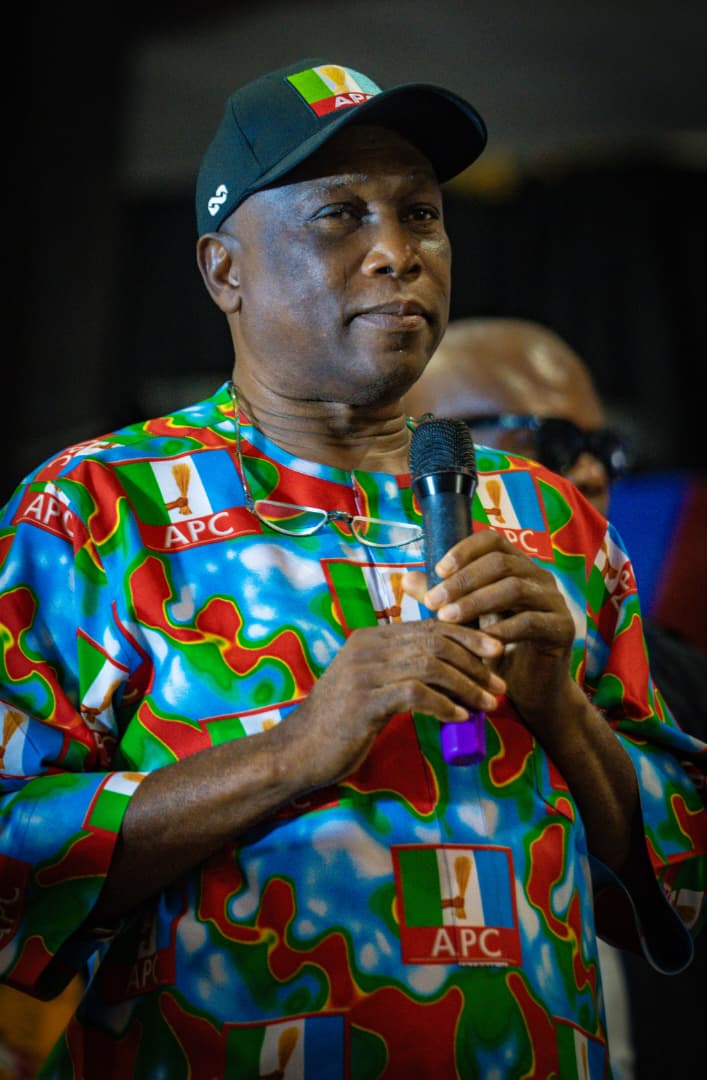
All Progressives Congress (APC) Chairman in Anambra State, Senator Emma Anosike
By Titus Eleweke
The All Progressives Congress (APC) Chairman in Anambra State, Senator Emma Anosike, has criticised the judiciary for interfering in the nomination of political party candidates, warning that such interventions undermine internal party democracy and threaten Nigeria’s democratic process.
Anosike, who spoke with journalists at his country home in Umueri, described the judgment that replaced Senator Hope Uzodimma with Rochas Okorocha as the candidate for the Imo West Senatorial District as an “imperial judgment” whose effect would be momentary.
He expressed concern that a person who did not participate in a party’s nomination process could emerge as its candidate through a court ruling, despite established procedures for screening aspirants, capturing their details and conducting primary elections.
According to him, the affected aspirant allegedly bypassed these procedures and produced his own documents, which the party subsequently reported to the police as forged.
Anosike said the police investigated the matter and confirmed the alleged forgery, adding that the documents were presented before the court.
However, he claimed that the party’s position and the police findings were disregarded.
He questioned how a candidate imposed on a political party through a court judgment could successfully contest an election without the support of the party whose platform he sought to use.
“If the person is the candidate of the party, how would the election be conducted without the party? Every election is a party. If the party turns its back on the person, that is the end of the person,” he said.
The Anambra APC chairman said the problem was not peculiar to Imo State, alleging that courts across the country had increasingly been determining who becomes a candidate for political parties, sometimes without adequate consideration of their internal nomination processes.
He warned that such interventions could create divisions within political parties, particularly when party leadership and members refused to support candidates who had not emerged through recognised internal procedures.
“How will the person campaign if he did not pass through the party process? Will you force the party members to vote for the person? You are creating more problems because the state party can issue a statement that nobody should work for or vote for the person,” he said.
Anosike appealed to the judiciary to exercise caution in political party nomination disputes, stressing that the courts remained vital to the survival of democracy but should not undermine the autonomy of political parties.
“The judiciary is key to this democracy, and political parties are also important. The rate at which the judiciary is getting involved in party nominations is negatively impacting our democracy,” he said.
He further alleged that similar cases had occurred in Anambra State, where individuals who did not participate in party nomination processes secured candidacies through court judgments.
Speaking as a state party chairman, Anosike said it was difficult to work with candidates who had not participated in the party’s internal processes, adding that such individuals often lacked the support and acceptance of party members.
Anosike also commended Imo State Governor Hope Uzodimma for what he described as significant infrastructural transformation in the state, urging residents of the South-East to appreciate and acknowledge achievements in governance.
He said improvements in road infrastructure and public buildings under Uzodimma’s administration had contributed to the state’s development, noting that journeys between Owerri and Enugu had become considerably shorter.
Anosike cited the reconstruction of roads and buildings, including police stations that had reportedly collapsed after being poorly constructed under previous administrations, as evidence of the current government’s efforts to improve infrastructure.
He lamented what he described as a tendency among residents to overlook achievements in governance, recalling that Imo State was once a major tourism destination before its fortunes declined under previous administrations.
The APC chairman also called for greater cooperation among South-East governors, saying the region had an unprecedented opportunity to accelerate development through collaboration.
He described the governors of the South-East as competing constructively with one another and urged political leaders and residents to support efforts that would advance the region’s collective interests.
Anosike reiterated his appeal to the judiciary to allow political parties to develop their internal structures and nomination processes without undue interference.