

June 12 Democracy Day: I’m Not the Rightful Person to Fix Your Crisis, Tinubu Tells Opposition Parties
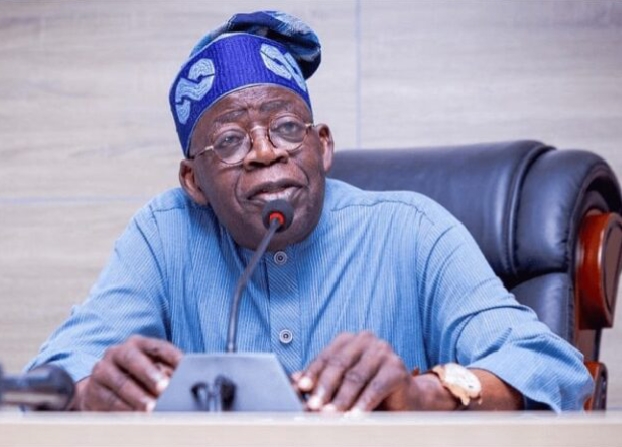
President Ahmed Tinubu
President Bola Ahmed Tinubu has expressed open satisfaction over the internal crises plaguing Nigeria’s major opposition political parties, bluntly asserting that it is not his responsibility to resolve their internal divisions.
Speaking during a joint session of the National Assembly on the occasion of Democracy Day celebrations on Thursday in Abuja, Tinubu advised opposition parties to focus on self-examination and internal reforms rather than casting blame on external actors.
“I cannot fix your internal problems for you,”
“Political parties fearful of members defecting might be better served by evaluating their own internal mechanisms, rather than conjuring imaginary demons. Try your best to put your house in order. I will not help you do so. In fact, it is a pleasure to witness your disarray.” She said.
According to reports from Daily Trust, nearly all major opposition parties including the People’s Democratic Party (PDP), Labour Party (LP), New Nigeria People’s Party (NNPP), and Social Democratic Party (SDP) are mired in leadership battles, factional splits, and ideological fragmentation. These parties have routinely accused the ruling All Progressives Congress (APC) of engineering or fueling their crises, allegations the APC has consistently denied.
Tinubu further noted that the APC has no intention of halting defections from opposition parties, stressing that doing so would be politically irresponsible.
“We would be guilty of political malpractice if we closed the door to those wishing to join the APC. I sincerely welcome our newest members from Delta and Akwa Ibom States, led by Governor Sheriff Oborevwori and Pastor Umo Eno, along with other members of this National Assembly,” he said.
Opposition Fires Back: Accusations of Authoritarianism and Political Sabotage
Reacting swiftly, several opposition leaders condemned Tinubu’s remarks, accusing the president of undermining democratic norms and deliberately destabilising rival parties.
Dr. Ralph Okey Nwosu, National Chairman of the African Democratic Congress (ADC), described Tinubu’s comments as deeply troubling, especially coming from a former pro-democracy activist.
“It’s disheartening that someone who fought the military and was a chieftain of NADECO now presides over a government allegedly spending state resources to cripple opposition parties,” Nwosu said in a telephone interview. “What we are seeing is a deliberate attempt to entrench a one-party state more draconian than military rule.”
He added that a robust opposition coalition is already in the works for the 2027 elections.
“We’re building a party with ethical standards and national ownership. Despite their schemes, we’ve moved beyond this. Time will tell.”he stated.
PDP: Tinubu’s Confidence Will Be His Undoing
The People’s Democratic Party (PDP), Nigeria’s main opposition party, also dismissed Tinubu’s remarks with disdain.
Speaking to Daily Trust, PDP’s Deputy National Publicity Secretary, Ibrahim Abdullahi, said: “We’re not perturbed. The overwhelming hardship inflicted on Nigerians by this government alone will ensure his defeat in 2027. After our upcoming convention, the PDP will be restructured and re-energised.”
Abdullahi further argued that the APC has no moral ground to critique the PDP until it matches the party’s 16-year governance record. “Let’s see how long Nigerians tolerate this level of hardship. Democracy is still, ultimately, about the will of the people.”
Atiku: June 12 Legacy Is Being Undermined
Former Vice President Atiku Abubakar, the PDP’s 2023 presidential candidate, issued a scathing statement via his social media platforms, accusing the Tinubu administration of dismantling the hard-won gains of the June 12 democratic struggle.
“What we are witnessing is not governance it is conquest,” “The promise that blossomed in 1999 is being steadily eroded. We are on the brink of a one-party dictatorship.” Atiku declared.
Atiku lamented the erosion of democratic institutions and rising authoritarianism.
“National institutions are being renamed to glorify a sitting president, as though the country were a private estate. Policies no longer empower the people they control them. This is not what June 12 represents.”he added.
He reiterated support for a broad opposition coalition to resist what he termed a slide into tyranny.
“The choice before us is clear: democratic renewal or despotism.”he added.
SDP, CUPP, Labour: Tinubu’s Comments Are A Threat to Democracy
The Social Democratic Party (SDP) also condemned Tinubu’s remarks. Its National Publicity Secretary, Araba Segun Aiyenigba, labeled the president’s comments as “executive rascality and ego-tripping.”
“We remain focused on building a credible alternative to redeem Nigeria. Tinubu’s gloating does not distract us,” he said.
In a strongly-worded statement, Chief Peter Ameh, National Secretary of the Coalition of United Political Parties (CUPP), described Tinubu’s posture as a “calculated assault on democracy.”
“For a president to publicly relish the chaos within opposition parties is not only grotesque but deeply unpatriotic,” “It confirms not just awareness but potential complicity in those crises. By choking opposition stability, Tinubu is paving the way for autocracy.”
Ameh said.
Obi/Datti Camp: Confirmation of APC’s Role in Undermining Opposition
Dr. Yunusa Tanko, spokesman for the Obi/Datti Presidential Campaign Council, echoed similar concerns.
Speaking on behalf of Labour Party presidential candidate Peter Obi, Tanko said Tinubu’s comments validated their long-standing belief that the APC is actively destabilising opposition parties.
“This is a dangerous trajectory. The international community must take note. The deliberate weakening of opposition parties poses a clear threat to peace and democracy in Nigeria.”je said .
As Nigeria marked Democracy Day, what should have been a celebration of pluralism and democratic resilience has instead become a platform for heightened political antagonism. President Tinubu’s unapologetic stance and the opposition’s vehement backlash signal that Nigeria’s democratic terrain is entering a volatile phase.
The stakes for 2027 are already mounting, and the coming months may determine whether Nigeria’s democracy consolidates or regresses under the weight of elite power struggles, institutional erosion, and diminishing public trust.