
Flooding: Commissioner Advises on Heavy Rain, Flood Menace – Highlights Safety Measures
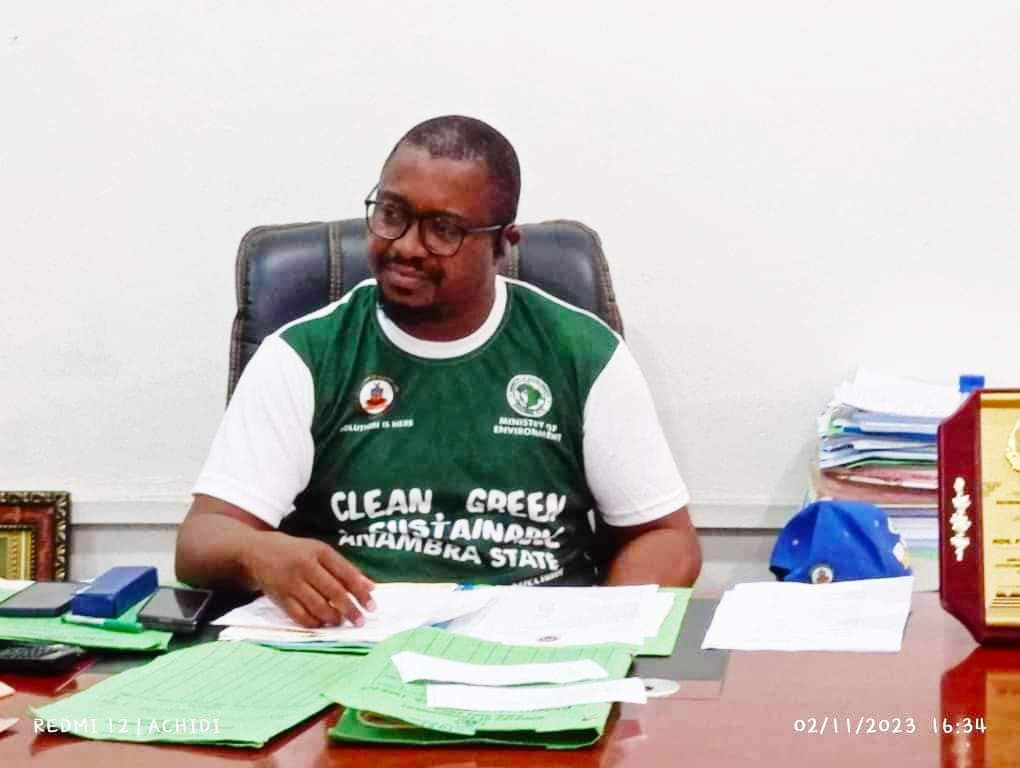
Anambra State Commissioner for Environment, Engr. Felix Odimegwu
By Polycarp Ifeanyi, Onitsha
The Anambra State Commissioner for Environment, Engr. Felix Odimegwu, has disclosed that his Ministry has commenced precautionary measures to curb the menace of this year’s flooding.
He stated that the Ministry is prepared to ensure the safety of residents in both riverine and upland areas.
He also emphasized the importance of consistent public warnings and updates about expected heavy rainfall and potential flooding, which are issued on a weekly basis.
Odimegwu made these statements during an interview with journalists at his residence in Awka, where he outlined the Ministry’s ongoing efforts to sensitize the public about the current rainfall season and the associated flood risks.
He said, “Following the seasonal rainfall prediction for the first half of the year by the Nigerian Meteorological Agency (NiMet), we disseminated the information and notified the public about the upcoming rainfall and its potential consequences. We urge everyone to be cautious and prepared.”
He further noted that the Ministry continuously sensitizes the public to avoid blocking water channels and drainages in and around their homes to allow for the free flow of water.
He identified blocked drainage systems as a major cause of man-made flooding.
“What we are doing is addressing causes of flooding in urban areas, especially those that are man-made. But if flooding is caused by rivers rising above sea level, we issue warnings to residents in riverine areas to prepare for evacuation,” said Odimegwu.
The Commissioner added that Governor Charles Soludo is also deeply concerned about the flooding challenges faced by the state in past years. In response, the government has set up several committees, led by Deputy Governor Dr. Onyekachi Ibezim.
According to the Commissioner, the committees include representatives from the Ministry of Environment, Ministry of Health, Ministry of Information, Ministry of Education, local government mayors, and the State Emergency Management Agency (SEMA).
“The committees were formed to allow us to begin strategizing early for potential flooding. They were established in 2022 after floods affected nine local government areas. We have resolved that such disasters will not occur again. But if they do, the impact will be significantly reduced because we are now better prepared,”
“With the onset of the rainy season, I send weekly early warning notices to stakeholders, including members of the standing committees and local government mayors. These mayors have their own emergency response teams to manage crises if they arise. These early warnings are essential—they help alert the public to prepare for possible heavy rainfall and flooding.”he said.
The Commissioner noted that the early warnings are also beneficial for farmers in flood-prone areas, allowing them time to harvest their crops before they are submerged. He stressed that traders, artisans, civil servants, and other residents also benefit from these alerts, as they help them plan their movements and avoid getting caught in the rain.
“We continue to release these warnings until the peak of the rainy season, when heavy flooding is most likely. At that point, we implement a manual preventive measure known as ‘marking.’ This involves burying indicators in the ground to measure the rising water level from the sea. When the water reaches the green level, there’s no cause for alarm. If it rises to the yellow level, it signals that people should be vigilant. At that stage, we begin advising residents to prepare to relocate. If it reaches the orange or red levels, that indicates severe danger—when floodwaters begin destroying property and endangering lives,” he explained.
He reiterated that early warning signs are crucial for families with children, livestock, and property to begin evacuating to designated Holding Centers. He mentioned that there are at least 20 Holding Centers in the state, all of which have been fumigated and properly equipped. Notifications for evacuation are issued through churches, community leaders, presidents-general, traditional rulers, and local government councils.
“Our government’s expectation is that, through proactive measures, we can prevent man-made flooding. We remain alert, especially to issues caused by human activities—like blocked gutters or illegal structures on waterways,” Engr. Odimegwu stated.
He also mentioned that Holding Centers are provided through the Ministry of Education for displaced schoolchildren. Since floodwaters may last one to two months before subsiding, these centers serve as temporary classrooms. Clinics are also available within the centers for childbirth and other medical needs.
“Several NGOs, churches, and humanitarian organizations also contribute essential supplies. Even the National Emergency Management Agency (NEMA) sends materials from the Federal Government. While these may not be sufficient, we ensure that local government mayors manage and distribute them judiciously to flood victims,” he added.
Commissioner Odimegwu expressed concern over the reluctance of some residents to evacuate flood-prone areas when advised to do so. He noted that some claim they cannot leave their ancestral land, and he appealed to such individuals to prioritize safety and evacuate when necessary.