
SIDEC Calls on Women Traders to Step Into Leadership Roles
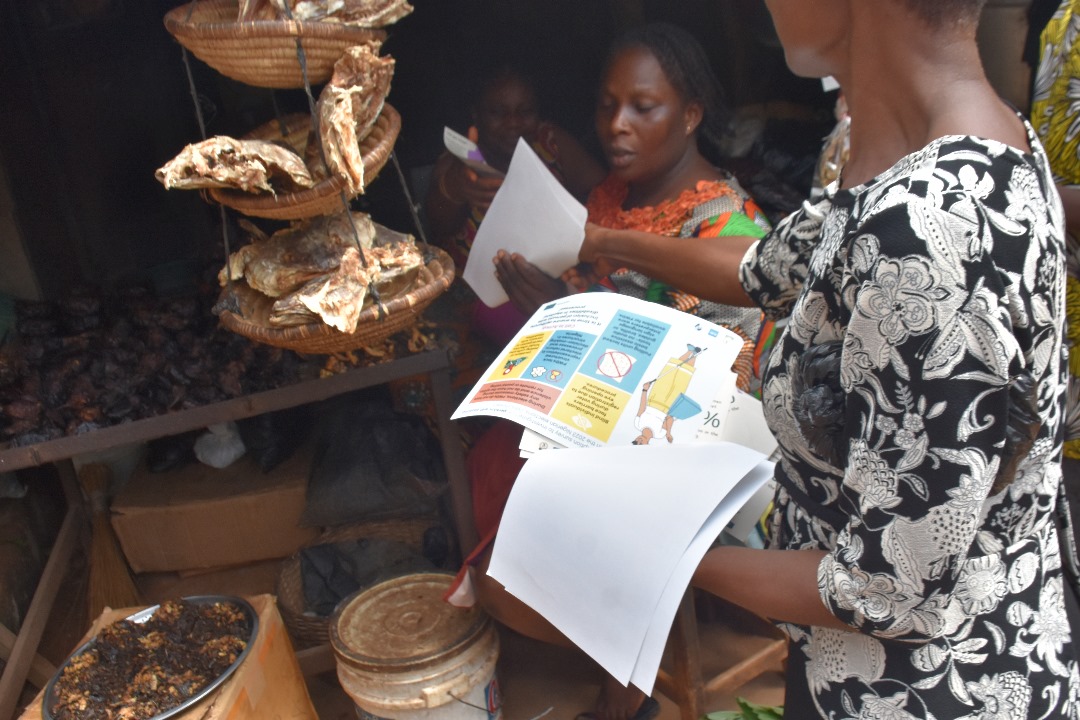
Afor-Igwe Market women
The Social and Integral Development Centre (SIDEC) has called on women traders in Anambra State to overcome political aloofness and aspire to leadership positions.
SIDEC Executive Director, Ugochi Ehiahuruike, emphasized that this is the only way women can harness their natural competencies to positively influence society.
She made the call during a sensitization programme held at Afor-Igwe Market, Umudioka in Dunukofia Local Government Area.
The event formed part of the Citizens Mobilization for Awareness Creation on Gender Equity, Social Inclusion, and Accountability project, implemented by SIDEC in collaboration with the Joint National Association of Persons with Disabilities (JONAPWD) and the National Council for Women Societies (NCWS).
The project is supported by the Women’s Rights Advancement and Protection Alternative (WRAPA), in partnership with the Policy and Legal Advocacy Centre (PLAC) and the Peering Advocacy and Advancement Centre in Africa (PAACA).
Ehiahuruike stated, “Without a man, there is no woman. We are here to complement what men are doing. Men may be the head, but women are the neck and without the neck, the head cannot stand. So, we are very important.”
She lamented the declining number of women in political leadership positions in the state.
“There was a time we had up to five or six women in the House of Assembly. In fact, for two consecutive terms, we had women Speakers. Sadly, today, there is only one woman in the 30-member House of Assembly, and only one woman among the 21 local government chairpersons. Even in the Governor’s cabinet, the gender ratio is unfavourable to women,” she said.
Ehiahuruike envisioned a society where women are granted equal opportunities to contest and hold elective positions without discrimination.
“Across markets in Anambra State, we hope to see situations where, if a man is chairman, a woman can serve as secretary or even as chairperson. There’s no law that bars women from leading market associations.
“At Afor-Igwe, we want to see women elected into the market executive. We want to see women rise.”she said.
She also urged women traders to prepare for active participation in the upcoming elections in the state. “Anambra is gearing up for elections. Are you ready to cast your vote? Let’s mobilize other women and overcome voter apathy this time.
“As we advocate for an end to the marginalization of women, we must also speak against discrimination toward persons with disabilities. Market leadership must be inclusive get women and PWDs involved. They are our brothers and sisters.”she added.
Programme Coordinator of WRAPA, Christiana Eguma, noted that although women excel in many sectors, their lack of interest in political leadership remains a major setback.
“The National Gender Policy (2006) stipulates a specific percentage of female representation in governance, yet it is rarely implemented,”
“Most women are unaware of governance issues, despite being the majority of voters. Thankfully, various electoral reforms have made the process more accessible including for PWDs. In the past, one had to return to vote after accreditation, but now, voting follows immediately. That’s a reform. INEC also provides assistive materials and prioritizes aged voters and PWDs.”she said.
Eguma expressed concern that women continue to perform well in other areas but neglect political participation. “Apathy remains high because many believe their votes don’t count. This project seeks to build a better society for all. Men should not view this as a threat to their authority.
“Women must develop an interest in politics and join political parties—these are platforms for leadership. Start by voting, then aspire to be voted for. Also, hold elected officials accountable. Continuous engagement is essential,” she added.
In response, several women traders acknowledged the importance of women in leadership, but also voiced frustrations over harsh economic conditions.
Chukwura Uchenna and Caroline Ikejiofor lamented that excessive levies and fees had forced many out of the markets.
“The burden is too much. It discourages women from participating in politics,” said Gladys Ogodinma. “The taxes range from ₦12,000 to ₦39,200. It’s a major deterrent.” they stated.
Caroline Ikejiofor pleaded, “We want to be involved, but the government must show us mercy. The charges are unbearable. We’re already dealing with high blood pressure.”
Uche Okafor also decried the frequent and arbitrary increases in shop rents. “It jumped from ₦5,000 to ₦12,000. It’s mindless and sudden. We’ve been given a deadline of July 10. The pressure is too much,” she said.