




Building Collapses in Nigeria Tied to Neglected 1992 Planning Law – NITP
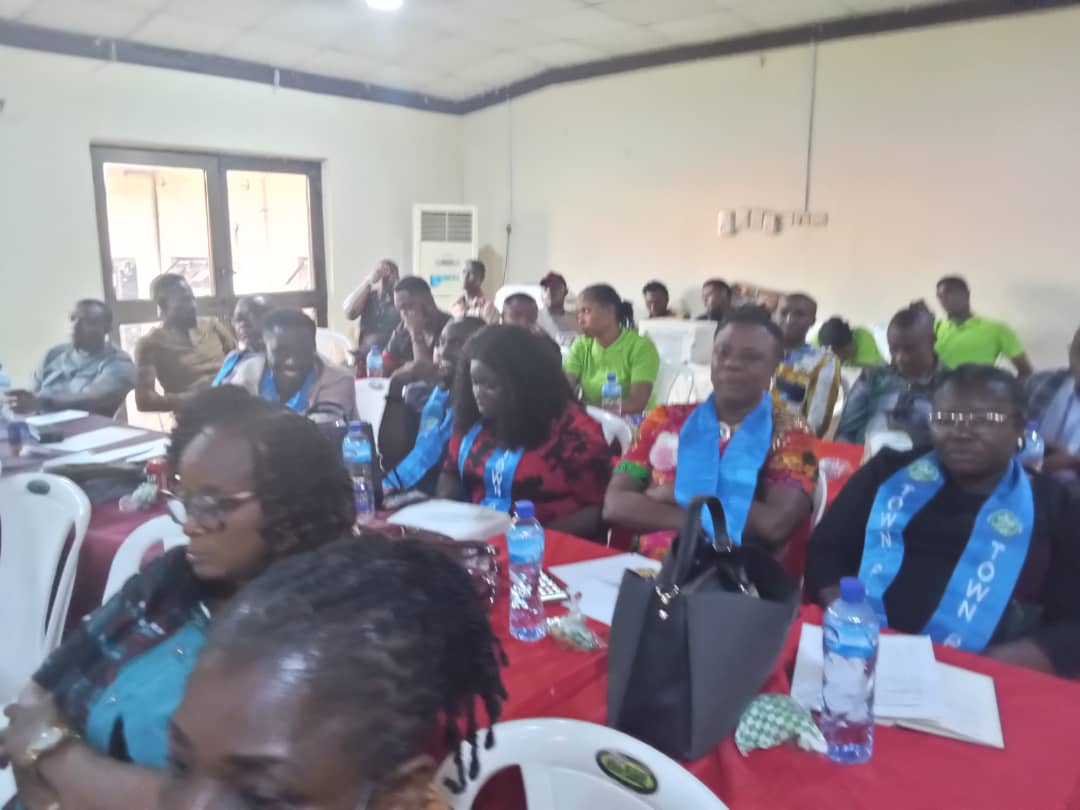
A Cross section of members, Nigerian Institute of Town Planners in Awka Anambra State
The Nigerian Institute of Town Planners (NITP) has attributed the persistent cases of building collapse across Nigeria to the federal government’s failure to implement the Nigerian Urban and Regional Planning Law enacted in 1992.
The National President of NITP, Dr. Ogbonna Chime, made this known during the 2025 Leadership Training Programme held in Awka, Anambra State, themed “Leaders’ Role in Promoting the Urban Planning Profession and Its Administration.”
Dr. Chime said that the 1992 law, developed indigenously by Nigerian professionals, contains comprehensive provisions capable of eliminating many causes of structural failure and ensuring a safer built environment.
He described the legislation as a significant improvement over the outdated 1946 colonial law, which prioritized the interests of the colonial government over those of national development.
Highlighting the critical reforms embedded in the 1992 law, Dr. Chime noted that it empowers qualified town planners to head planning authorities at the local level, while also mandating the structured inclusion of other building professionals such as architects, quantity surveyors, estate managers, and civil engineers on planning boards at the state level.
According to him, this multidisciplinary oversight ensures rigorous planning approvals and effective construction monitoring.
He noted that had the law been fully implemented nationwide, particularly in areas with stable geophysical conditions, the frequency of building collapse incidents would have been significantly reduced or possibly eliminated altogether.
“When professionals work together under clear legal frameworks, risks are minimized and standards are maintained,” he stated.
Dr. Chime also refuted recent allegations suggesting that NITP members collude with developers to use substandard materials.
“No trained town planner who understands the ethics of the profession would engage in such unethical conduct,” he insisted.
While commending the Federal Ministry of Housing and Urban Development for establishing a task force to tackle the menace of building collapse, Dr. Chime maintained that the implementation of the 1992 Planning Law remains the most sustainable solution. “The tools are there; what is lacking is political will,” he added.
He explained that the leadership training forms part of NITP’s ongoing professional development efforts aimed at resolving internal misunderstandings and fostering unity within the Institute. “We’ve observed that many disputes among members stem from ignorance about the Institute’s constitution and structure. That’s why we initiated this training across the Eastern, Northern, and Western zones,” he said.
Tpl. Nathaniel Atebije, in his presentation titled “Ethical Leadership for National and State Executives of NITP,” stated that ethics must remain the cornerstone of leadership within the Institute.
He explained that ethical leadership enhances public trust, accountability, and credibility, urging members to lead by example. “By consistently upholding ethical standards, NITP can become a model for other professional bodies and indeed, for Nigerian society as a whole,” he said.
Another speaker, Tpl. Steve Onu, speaking on “Leadership in Professional Administration of Urban and Regional Planning,” outlined key responsibilities such as policy development, project management, urban renewal, and stakeholder engagement. He described leadership as a function of vision and values, noting that effective leaders build people in order to build the profession.
Tpl. Kabir Yari, represented by Dr. Ogbonna Chime, stressed the importance of adhering to the NITP Constitution and Conventions, describing them as the compass for effective governance within the Institute. “The Constitution provides a clear roadmap. What remains is for leaders to demonstrate the capacity and integrity to execute their responsibilities effectively,” he said.
In his remarks, the Anambra State Chairman of NITP, Tpl. Nwofor Ben, described the event as a strategic forum for stakeholders to deliberate on critical issues affecting urban planning and to propose solutions beneficial to broader society.
Chairman of the Local Organizing Committee and Vice Chairman of the Anambra State Chapter, Tpl. Ifeanyi Igwilo, reiterated the importance of continuous education in the profession. “Urban planning is dynamic, with constant innovations. Events like this provide opportunities to share knowledge, track emerging trends, and plan strategically for the future,” he stated.