





High Alert: British Warships, Helicopters Monitor Russian Ship Near UK Waters
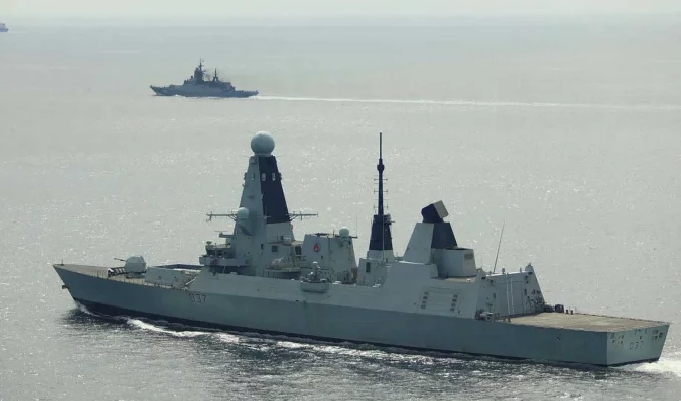
British Royal Navy Type 45 destroyer HMS Duncan tracks Russian warship Boikiy during Channel operation in June 2025. Picture source: British Royal Navy
The British Royal Navy has deployed warships and helicopters to monitor and escort Russian naval vessels transiting the English Channel and the North Sea during a focused four-day operation.
According to information released by the Royal Navy, the Type 45 destroyer HMS Duncan and the River-class offshore patrol vessel HMS Mersey played central roles in shadowing the Russian Navy’s Steregushchiy-class corvette RFN Boikiy as it sailed east through the Channel.
This high-readiness mission underscored the Royal Navy’s commitment to maritime security and NATO vigilance amid a surge in Russian naval activity near UK territorial waters.
The RFN Boikiy is a Steregushchiy-class corvette (Project 20380) assigned to the Russian Baltic Fleet. Designed for multi-role operations, the vessel is equipped with stealth features, advanced sensors, and a comprehensive weapons suite that includes Uran anti-ship missiles, Redut surface-to-air missiles, torpedoes, and a 100mm naval gun. The corvette also operates a Ka-27 helicopter for extended anti-submarine warfare and surveillance missions.
Its recent presence in the Channel marks a strategic move by Russia to assert military presence in key maritime corridors and to provide armed escort for vessels operating under Western sanctions.
This operation followed shortly after HMS Trent and Wildcat helicopters from 815 Naval Air Squadron tracked the Russian frigate RFN Admiral Grigorovich as it moved from Gibraltar into the North Sea. The increasing frequency of Russian naval movements through strategically vital sea lanes has prompted coordinated responses among NATO allies.
On June 20, 2025, HMS Duncan intercepted RFN Boikiy near the island of Ushant, at the southwestern edge of the Channel. HMS Mersey assumed escort duties on June 21, off the Isle of Wight, allowing HMS Duncan to return to its scheduled training ahead of future deployments.
Luke Pollard, the UK’s Minister for the Armed Forces, reaffirmed that the Royal Navy will continue to shadow all Russian warships near British waters and safeguard critical infrastructure, including undersea cables. Commander Daniel Lee, Commanding Officer of HMS Duncan, emphasized the strategic importance of these missions as a clear demonstration of the Royal Navy’s readiness and enduring commitment to protecting British maritime interests.
This latest operation adds to a growing list of confrontations between the British Royal Navy and Russian naval forces in the English Channel throughout 2025. On June 16, RFN Boikiy escorted two sanctioned Russian oil tankers, Selva and Sierra, through the Channel. These tankers, under UK and EU sanctions, were reportedly en route to Russian ports for oil loading. The presence of a Russian warship as an escort marked an unprecedented development, signaling an escalation in Russia’s maritime strategy and a direct challenge to Western restrictions.
Earlier this year, in May, HMS Tyne shadowed the Russian Kilo-class submarine Krasnodar as it transited the Channel surfaced, returning from operations in the eastern Mediterranean. In February, a larger Russian naval group was monitored by HMS Iron Duke, HMS Tyne, and RFA Tideforce. This group included the landing ships Aleksandr Otrakovsky and Ivan Gren, along with merchant and logistical support vessels reportedly transporting military cargo from Syria.
These consistent and deliberate transits represent a significant increase in Russian naval assertiveness near British and allied waters.
In response, the Royal Navy has intensified its maritime presence and surveillance operations. HMS Duncan, one of the most advanced Type 45 air-defense destroyers in service, is equipped with the Sea Viper missile system and cutting-edge radar technology capable of tracking and neutralizing multiple airborne threats simultaneously. Its roles include fleet protection, multinational operations, and helicopter deployment for anti-submarine and reconnaissance missions—making it a cornerstone of British maritime defense.
HMS Mersey, a River-class offshore patrol vessel, provides essential support for maritime security and territorial surveillance. Its missions include fishery protection, counter-smuggling, border enforcement, and the escort of foreign warships through sensitive UK-controlled waters. Although lightly armed, HMS Mersey’s endurance and adaptability allow it to maintain a constant and effective presence in contested maritime environments such as the English Channel.
The growing presence of Russian warships in the Channel throughout 2025 has raised serious concerns among defense planners and policymakers. The Royal Navy’s heightened readiness posture reflects the urgency of deterring hybrid threats, including undersea surveillance and sabotage that could target the UK’s critical data and energy infrastructure.
Through operations like this, the British Royal Navy continues to assert its role as a global naval power and a steadfast defender of freedom of navigation and national security.