

Don’t Blame Colonial Masters for Africa’s Development Woes – Political Analysts
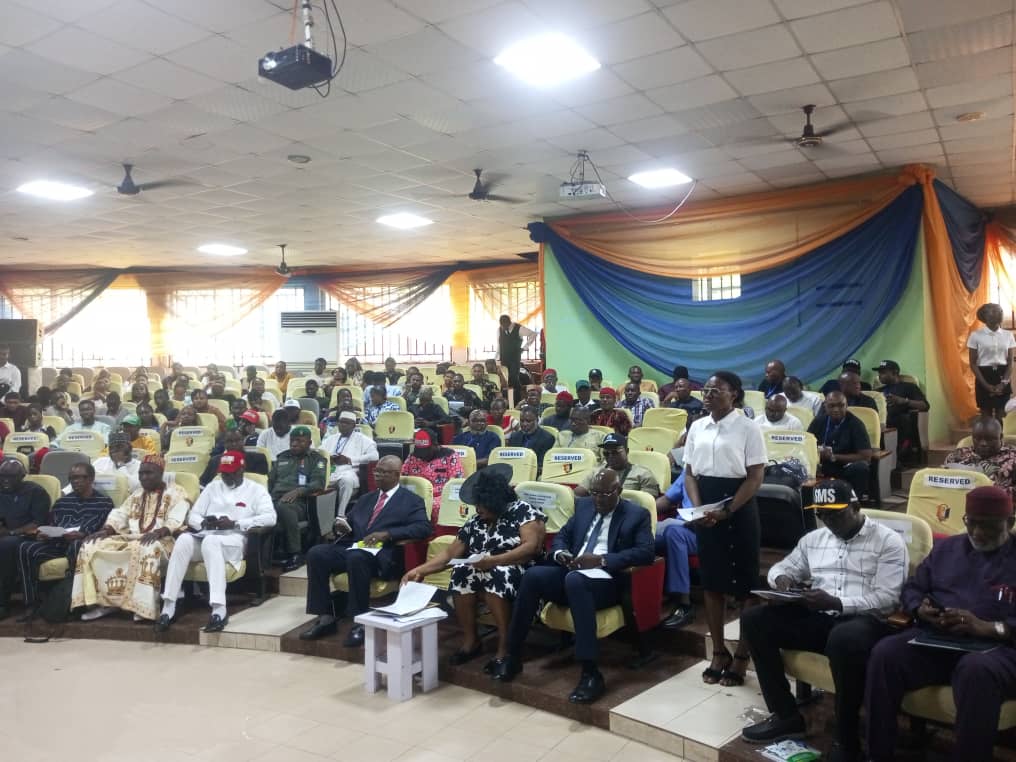
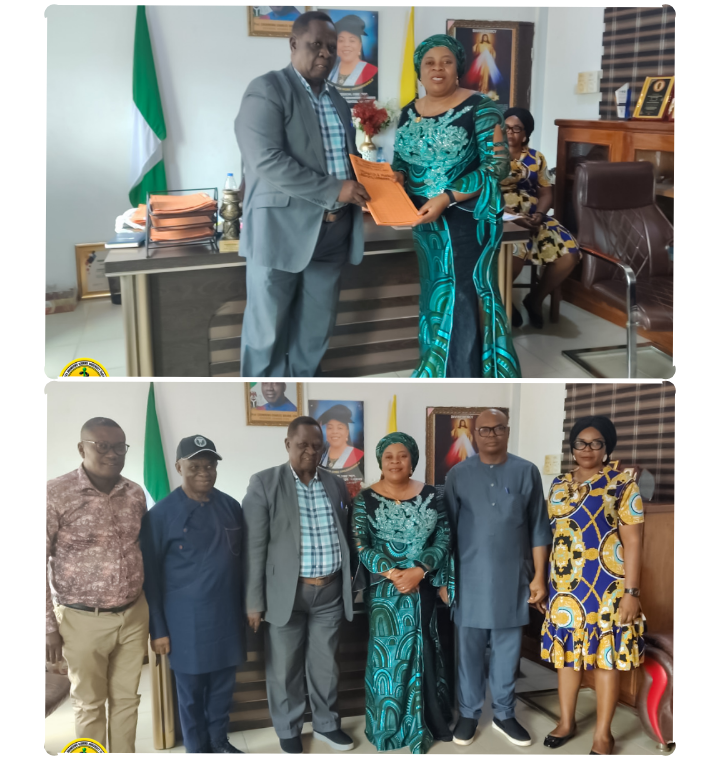
A cross section of participants at maiden international conference organized by the Department of Political Science at Nnamdi Azikiwe University, Awka.
Political analysts have called on African leaders and citizens to take responsibility for the continent’s poor development trajectory, rather than continuing to blame former colonial powers.
This call was made during the maiden international conference organized by the Department of Political Science at Nnamdi Azikiwe University, Awka.
The conference was themed “Africa at a Crossroads: Confronting Governance, Security, and Development Challenges in the 21st Century.”
Speakers at the event described it as regressive and counterproductive to keep blaming colonialism for Africa’s current challenges, several decades after independence.
They argued that with visionary and accountable leadership, African nations could have progressed well beyond their current underdeveloped state.
Delivering the lead paper, Dr. Ogban Ogban-Iyam lamented Africa’s persistent dependence on its former colonial rulers, decades after their departure.
“I have not seen any country formerly ruled by colonialists that is now regarded as a major industrial power. You can talk about India, but that is largely due to its sustained leadership—not necessarily democracy,” he said.
Dr. Ogban-Iyam criticized the party system in many African countries, where developmental projects initiated by one administration are often abandoned by the next, despite being of national importance.
He further argued that what is commonly referred to as democracy in many parts of the world is, in reality, a form of plutocracy.
“I want to openly state that there is no country truly ruled by democracy. What we have is plutocracy at its best. Elective leadership is often just a sophisticated form of dictatorship. Power, when possessed by the people, is rarely used against them. I repeat: power is never used against the possessor.”he stated.
Also speaking at the event, former Publicity Secretary of the Peoples’ Democratic Party (PDP), Mr. Olisa Metuh, advocated for a more equitable political zoning arrangement in Nigeria.
He argued that the current zoning formula marginalizes certain regions of the country.
“Every day we talk about zoning, but is the current arrangement truly what we want? I believe zoning should be based on merit,” Metuh stated.
He cited Nigeria’s recent leadership history to illustrate his point:
“The president in 1999 was from the Southwest. The immediate past president was from the Northwest. Now, the Southwest is in power again. When this tenure ends, the presidency is likely to return to the North,most probably the Northwest again. If we are not going to prioritize merit, then we must ensure that power rotates fairly among all six geopolitical zones. The current North-South dichotomy is insufficient and unacceptable.”he stated.
Metuh also emphasized the need to institutionalize political parties in Nigeria, highlighting the challenges of ideological inconsistency and party defection.
“Institutionalizing political parties is essential for good governance, security, and development. Our multi-party system suffers from ideological emptiness and weak structures. Party-switching what some call political cross-capitalism and the absence of intra-party democracy and manifesto commitment are rampant. Building institutional parties isn’t just desirable; it is our only hope.”he added.
In her welcome address, Vice Chancellor of Nnamdi Azikiwe University, Professor Carol Arinze-Umobi, described the conference theme as highly relevant to the continent’s current challenges.
“The theme, Africa at a Crossroads: Confronting Governance, Security, and Development Challenges in the 21st Century, speaks directly to the realities facing many African nations today.”she said.
She expressed concern that, decades after gaining independence, most African countries remain trapped in a cycle of underdevelopment, plagued by insecurity, armed conflicts, and governance failures.
“Can the colonial masters of old still justifiably be blamed for this unfortunate state of affairs? The critical question is: how can citizens who suffer most under the burden of underdevelopment be awakened to take ownership of their destinies and hold governments accountable?”she said .
Head of the Department of Political Science, Professor Jude Okafor, lamented the decline of a continent historically known as the cradle of civilization.
“Recent studies show that Africa is abundantly blessed with both human and natural resources. Yet, nine out of the ten poorest people in the world are Africans. Among the ten most underdeveloped countries globally, Africa accounts for the majority.”Okafor said.
Chairman of the occasion and former Chief Judge of Anambra State, Justice Peter Umeadi, commended the department for hosting the conference.
“I commend your Pan-African focus. This is an institution named after the Zik of Africa. What we need today is the selflessness and vision of Dr. Nnamdi Azikiwe and other nationalists, if we are to realize the Africa of our dreams.”he stated.
In his closing remarks, Chairman of the Local Organizing Committee, Dr. Ignatius Ngini, pledged to expand and improve the event in the future.
“This is our maiden edition, and we intend to make it an annual event. We’ll need all the support we can get to make that happen. We hope for a better Nigeria and a better Africa, where everyone is free to pursue their ambitions without hindrance,” he added.