




A Call to the Churches: Reclaiming the Sacred Mission Beyond Material Pursuits
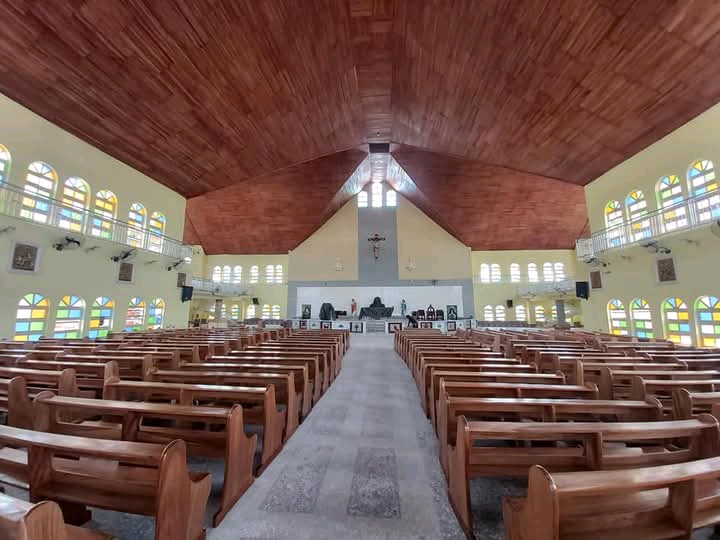
Catholic Church in Nigeria
By Titus Maduako Eleweke
In recent times, a troubling shift has overshadowed the true purpose of our churches,a shift from being sanctuaries of salvation and spiritual guidance to arenas preoccupied with property acquisition, wealth accumulation, and monetary gain. This disturbing development calls for urgent reflection and renewal within the very institutions meant to shepherd souls toward God.
The church was originally established as a comforting refuge, a beacon of hope designed to draw people closer to God and to champion the salvation of mankind. Yet today, many congregations seem to have lost sight of this sacred mandate. Instead of the undiluted word of God offering solace and hope for eternal life, many churches have morphed into platforms where material desires eclipse spiritual growth. Attendance is increasingly driven not by a hunger for divine truth but by the pursuit of worldly contracts, blessings, and wealth,transactions disguised as acts of faith.
The phenomenon is both disheartening and dangerous. Seeds sown are often less about faith and more about securing favor or blessings in the form of financial windfalls. Congregants arrive with expectations not of spiritual nourishment but material prosperity, while some church leaders exploit this yearning, transforming places of worship into arenas of monetary solicitation.
Recent controversies have only deepened this crisis of faith. Earlier, the Awka Catholic Diocese faced public outcry over aggressive property acquisitions, evicting faithful members from buildings that once served as their homes and sources of livelihood,using court .This episode raised painful questions: Has the church abandoned its mission for soul-saving to become just another institution seeking wealth at all costs? The very people the church is meant to uplift,its poorest members were left to grapple with hunger and hardship.
Similarly, the Awka Anglican Diocese finds itself embroiled in allegations of property sales through forgery,inside the house of God. This is not only scandalous but profoundly heartbreaking. When the church itself becomes mired in such disputes, how can it effectively guide the faithful?
Moreover, church services today are increasingly consumed by fundraising efforts. It is common now to see half or more of the worship time dedicated to soliciting funds for projects, often leaving worshippers questioning whether spiritual growth or financial gain is the true priority. As a result, many young people are turning away from the church altogether, some reverting to traditional worship or abandoning organized religion, disillusioned by what they perceive as a spiritual scam.
The fear of God,the core of Christian teaching,is being overshadowed by an obsession with material wealth. In many congregations, wealth visibly divides the community: the affluent occupy front-row seats, while the poor are relegated to the back, reinforcing social divisions rather than bridging them.
Even venerable institutions like the Catholic, Anglican, and CMS churches,once revered for solemn worship and moral leadership have adopted practices focused more on spectacle and fundraising than reverence. Pentecostal churches, often privately owned enterprises, face criticism for prioritizing business interests over spiritual welfare.
This crisis cuts to the heart of the church’s mission. Moral integrity and spiritual guidance must be restored as central tenets, not sacrificed at the altar of greed. Churches must remember their role as sanctuaries for the vulnerable,the hopeless, the homeless, the marginalized. Yet today, some have built schools and hospitals that exclude their own members, prioritizing profit over pastoral care.
The churches that once proudly sponsored the first generation of graduates now seem preoccupied with what they can extract from their congregants rather than what they can give back.
The urgent question remains: Can our churches reclaim their place as beacons of hope for the hopeless, refuges for the displaced, voices for the voiceless, and pillars of moral courage?
Tragically, many church leaders today hesitate to speak truth to power, often entangled in the very systems of greed and corruption they ought to challenge. True spiritual leadership requires boldness to confront injustice, to uplift souls, and to prioritize salvation over silver.
It is time for the church to return to its sacred roots to lead with humility, compassion, and unwavering commitment to the salvation and well-being of all mankind. Only then can it restore trust, inspire faith, and fulfill its divine mission.
Titus Maduako Eleweke is an Anambra State based Award winning Journalist