1,844 Killed in Southeast Nigeria Amid Worsening Insecurity 2021–2023 – Amnesty Int’l
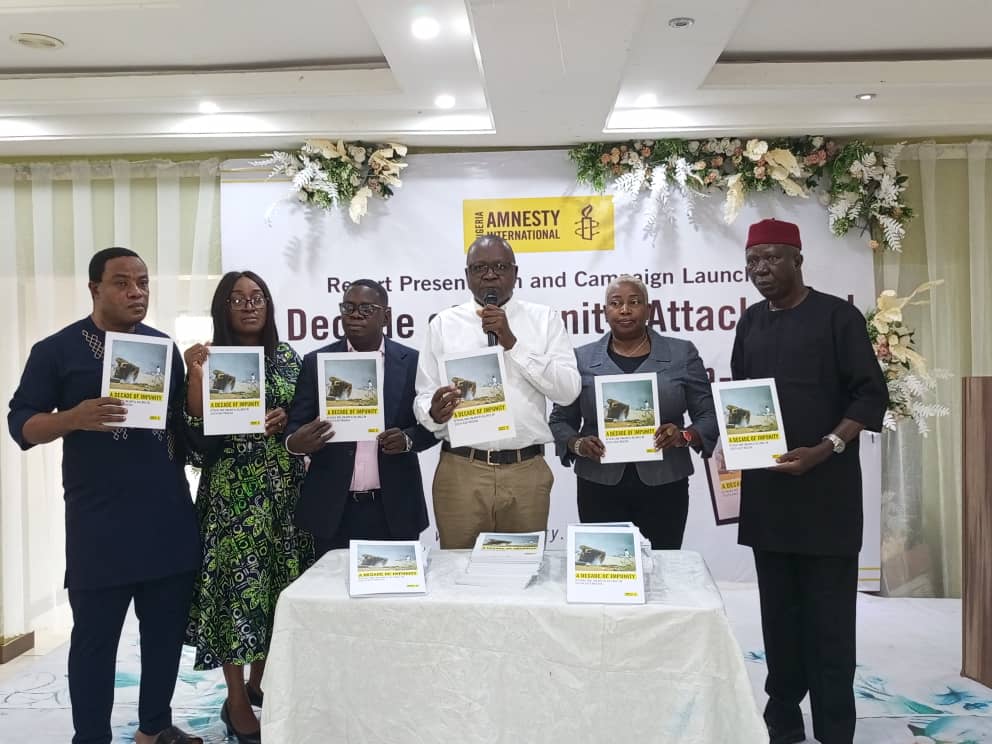
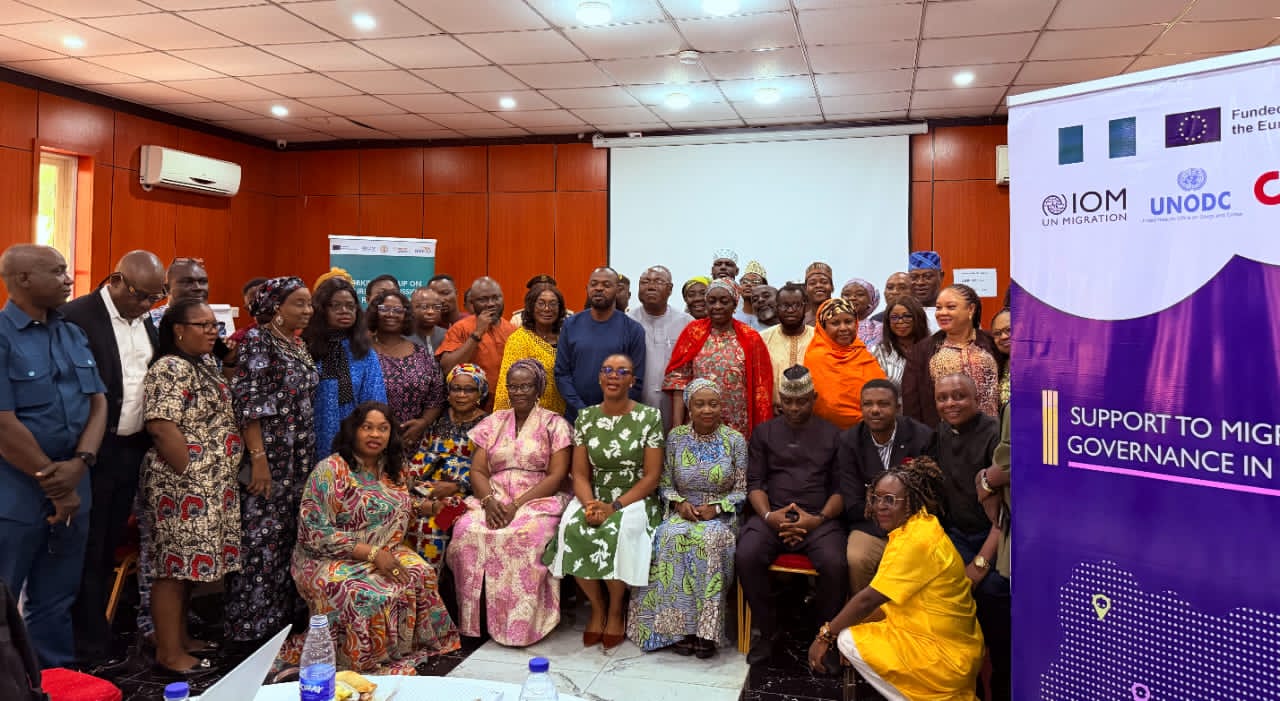
Amnesty International Nigeria Director, Isa Sanusi (center, in white shirt), flanked by stakeholders during the report presentation in Enugu on Tuesday
By Kenechukwu Ofomah, Awka
A mismanaged security crisis in Southeast Nigeria has led to widespread lawlessness and grave human rights abuses, resulting in the deaths of at least 1,844 people between January 2021 and June 2023.
This was revealed in a new report by Amnesty International Nigeria, presented on Tuesday in Enugu, the regional capital of Southeast Nigeria.
The report, titled “A Decade of Impunity: Attacks and Unlawful Killings in Southeast Nigeria”, documents extrajudicial killings, torture, enforced disappearances, and arbitrary arrests carried out by both state and non-state actors including armed gangs, vigilantes, state-sponsored paramilitary groups, and criminal cults.
The presentation brought together key stakeholders from all five Southeast states, including civil society groups, youth and women organizations, victims’ families, media representatives, and other concerned citizens.
Key Findings and Methodology
Presenting the report, Isa Sanusi, Director of Amnesty International Nigeria, said the findings were based on interviews with over 100 individuals, including survivors, victims’ relatives, lawyers, civil society members, and traditional and religious leaders.
He noted that the research teams visited Owerri ,Imo State, Asaba ,Delta State, Obosi ,Anambra State, and Enugu Enugu State between April and November 2023 to gather first-hand evidence.
According to Sanusi, the region once known for its peacefulness and economic vitality has now become a landscape of fear, violence, and devastation due to the activities of secessionist movements, criminal armed groups, and repressive security forces.
“The Nigerian government must take immediate action to end forced disappearances, extrajudicial killings, torture, and assassinations perpetrated by both state and non-state actors,” Sanusi stated.
He stated that the government has a constitutional and international obligation to protect citizens’ rights—especially the rights to life, liberty, personal security, and freedom of movement regardless of their location.
“People have abandoned their hometowns for fear of attack or abduction. Schools have shut down, markets closed, and communities are suffering massive economic setbacks. The culture of impunity must end,” he added.
Amnesty International called for prompt, independent, and impartial investigations into all reported abuses and urged the government to hold perpetrators accountable.
Call for Accountability
Also speaking at the event, Ler Jonathan-Ichaver, a Board Member of Amnesty International Nigeria, described the report as a turning point in efforts to mobilize Southeast stakeholders to demand accountability.
She announced the launch of a global campaign to amplify international awareness of the crisis and to galvanize support to end the violence.
“This campaign is a call to action. We’re urging stakeholders within and outside Nigeria to lend their voices to this cause. With over 10 million supporters globally, we reaffirm our commitment to justice and a better future for the Southeast and Nigeria as a whole,” she said.
State Government Silence and Civil Society Response
Presenting the research methodology, Maurice Chukwu, a staff member of Amnesty Nigeria, expressed concern over the lack of engagement from Southeast governors.
“We reached out to all five state governors for dialogue on the worsening insecurity. Only the Anambra State Governor responded and agreed to a meeting,” he revealed.
A particularly moving moment came when Nduka Ozor, a relative of a victim from Agwa community in Imo State, recounted how his brother—a practicing lawyer—was brutally murdered by known gunmen in their locality.
“He was a peaceful man. His life was taken for nothing. We demand justice—not just for my brother, but for all the innocent lives lost,” Ozor said.
Expert Reactions and Panel Discussion
The report was praised by several panelists for its depth and relevance.
Okechukwu Nwanguma, Executive Director of the Rule of Law and Accountability Advocacy Centre (RULAAC), described it as a powerful indictment of state and non-state impunity fueling insecurity in the Southeast.
“This is an essential intervention. It echoes what many civil society organizations, including RULAAC, have long documented. Until accountability becomes the norm, peace will remain out of reach,” he said.
Nwanguma also referenced a former Inspector General of Police’s directive to “kill secessionists without consequence” as a prime example of state-sanctioned abuse.
“This kind of recklessness emboldens violence. Security forces are becoming part of the problem rather than the solution,” he added.
Professor Felix Asogwa, a scholar of International Relations and Strategic Studies at Enugu State University of Science and Technology, commended the report for shining a light on the human rights crisis in the region.
Similarly, civil society activist Nelson Nwafor criticized the prevailing culture of silence among Southeast leaders.
“We cannot be quiet while our people are being killed. This report must serve as a springboard to engage both security agencies and political leaders, to end this horrific trend,” Nwafor urged.
Call to Action
Following the report’s presentation, Amnesty International Nigeria officially launched a regional campaign demanding concrete steps from all stakeholders to protect civilians and restore peace in the Southeast.