


Umahi and the Biafra Question: A Caveat to Skeptics
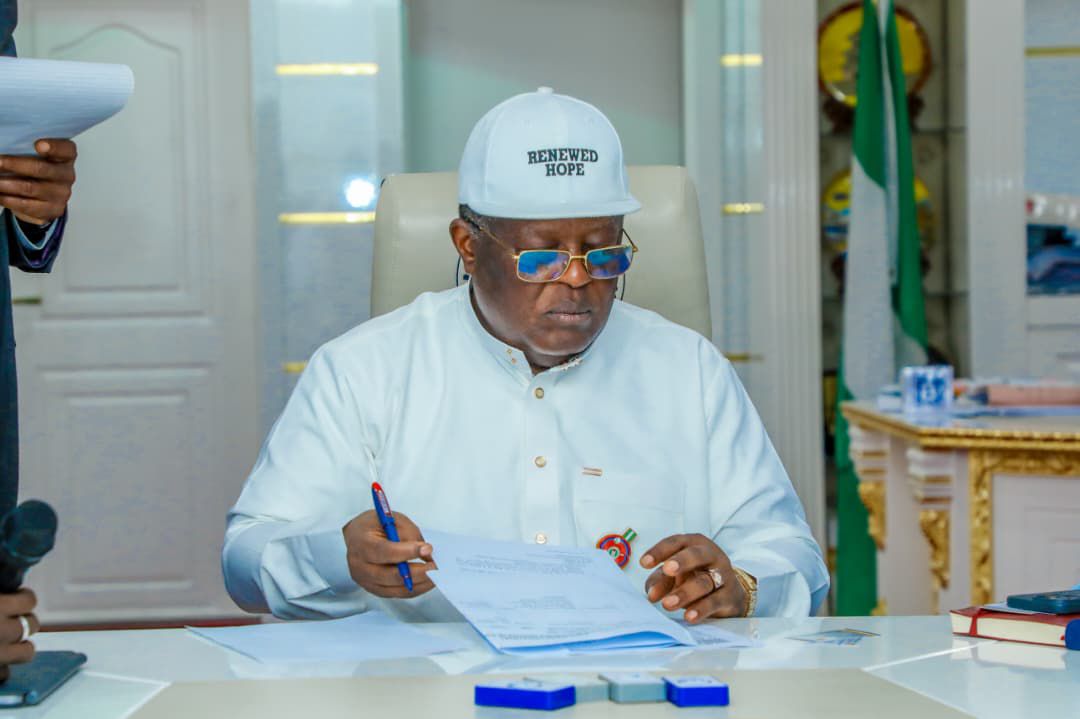
Honourable Minister of Works and former Governor of Ebonyi State, Senator David Umahi
By Emmanuel Uzor, Awka
Every Igbo son and daughter bears, in one form or another, the imprint of the Biafra agitation. This age-long struggle, born out of deep-seated grievances, has over time assumed different shapes and interpretations. Various actors and movements have advanced the cause from their own perspectives, each defining the type of Biafra they either fought for or continue to advocate.
From the era of Dim Chukwuemeka Odumegwu Ojukwu to the emergence of subsequent figures who presented themselves as arrowheads of the agitation, one truth remains evident to any discerning mind: the Biafra struggle was never, and has never been, about an individual. It was, and remains, a collective response to systemic injustice.
The agitation for a sovereign state of Biafra can be examined from multiple dimensions. However, for clarity and brevity, it is sufficient to reduce it to two broad categories: Biafra of Form and Biafra of Physical Reality. Though distinct, both point toward the same ultimate objective—not merely the creation of a separate state, but the emergence of a just society: a “state within a state” where fairness, equity, and dignity are guaranteed for all.
The Biafra of Form represents a protest against the structural inequities embedded in the Nigerian federation, particularly the persistent marginalization of Ndigbo. It serves as both a moral indictment of injustice and a warning signal. In this sense, agitation becomes a tool—first, to demand redress within Nigeria, and second, to assert the right to self-determination if those injustices remain unaddressed.
Thus, the agitation operates on two levels: if marginalization is addressed, the Biafra of Form achieves its purpose; if it is ignored, the agitation for a physical Biafra inevitably gains momentum. This dynamic presented Ndigbo with a historic opportunity to press for a more inclusive Nigeria—an equitable federation where every group has a seat at the table and a fair share in the nation’s inheritance.
To actualize the vision of the founding fathers who believed in a united but just Nigeria, agitation became the principal instrument through which Ndigbo sought redress for decades of discrimination, exclusion, and political sidelining under successive administrations.
It is within this context that the Honourable Minister of Works and former Governor of Ebonyi State, Senator David Umahi, appears to have grasped—perhaps more clearly than some agitators themselves—the progression and underlying purpose of the Biafra struggle, particularly the Biafra of Form.
His recent remarks on Biafra capture the essence of this argument. They implicitly acknowledge that the agitation was, ab initio, a legitimate protest against exclusion and marginalization. Umahi articulated what many Igbo intellectuals have long maintained: that the roots of the Biafra agitation lie in deliberate inconsistencies and inequitable treatment of federating units, especially the Southeast.
While inspecting an array of federal road projects—particularly in Enugu State—Umahi courageously addressed his people, drawing attention to deliberate steps already being taken by the administration of President Bola Ahmed Tinubu to resolve the age-old question of Igbo inclusion in the Nigerian project.
His message was neither ambiguous nor accidental. He stated clearly that the agitation for Biafra arose as a response to marginalization, and that the present administration is consciously working to dismantle those structural barriers.
Viewed strictly from its positive perspective, Umahi’s intervention amounts to a call for the suspension of the physical agitation for Biafra, in light of President Tinubu’s demonstrable efforts to reintegrate Ndigbo into the mainstream of national governance and development.
The appointment of Senator Umahi as Minister of Works itself represents a historic turning point. For years, the Southeast remained conspicuously absent from Nigeria’s strategic power architecture. Indeed, the closest the zone came to the nation’s “third seat” was during the tenure of Senator Ken Nnamani as Senate President. Umahi’s appointment not only broke this long-standing jinx but also restored a sense of belonging long denied the region.
Beyond symbolism, his position has translated into tangible development. Under his stewardship, multiple critical road projects are being executed simultaneously across the Southeast—projects that had either stalled or been ignored since the return of democracy.
In addressing the people, Umahi reeled out these projects not as political propaganda, but as evidence that the Biafra of Form had not been ignored. At the same time, he argued that the rationale for pursuing a physical Biafra had been substantially weakened.
Ndigbo, he insists, cannot afford to withdraw from the national equation just as a window of opportunity has opened. His position is clear: the physical agitation for Biafra should pause, while the Southeast leverages the renewed disposition of President Tinubu toward full integration and inclusion.
For Umahi, it is strategically wiser to remain within Nigeria and assert legitimate rights than to retreat into endless agitation—especially when the core grievances that gave rise to the struggle are being addressed. His own appointment, he argues, is a compelling signal of the President’s readiness to confront historical injustices against Ndigbo.
Indeed, Umahi maintains that President Tinubu has delivered what Ndigbo sought for decades—not through secession, but through unprecedented inclusion in governance and infrastructure development. To abandon this milestone for renewed agitation, he warns, would be unstrategic and counterproductive.
Historically, the push for Biafran secession was fueled by neglect, exclusion, and underrepresentation at the federal level. Today, that narrative is undergoing a significant shift. According to Umahi, the Tinubu administration has deliberately opened the doors of national development to the Southeast.
He cited ongoing projects such as the Enugu–Awka–Onitsha Expressway, the Enugu–Port Harcourt Road, the Lagos–Calabar Coastal Highway, the Second Niger Bridge and its access roads, the dualization of the Enugu–Abakaliki Expressway, and the Ndibe Beach bridge linking Afikpo to Benue and Cross River States. Also noteworthy are the reconstruction of the collapsed Artisan Bridge in Enugu and the massive flyover at Eke Obinagu–Emene, designed to ease traffic congestion.
These developments, taken together, demonstrate that Igbo interests now have a visible imprint in national policy, appointments, and infrastructure planning. The Southeast, by all indicators, has begun to receive its fair quota in national governance, with several strategic appointments complementing Umahi’s position.
This reality also explains why leaders such as Governor Peter Mbah of Enugu State and others have found alignment with the APC-led federal government.
As Umahi aptly puts it: “When a people are fully integrated, respected, and empowered within the structure of the nation, the dream once pursued through agitation is achieved through cooperation.”
In one of his most profound reflections, Umahi observed:“Biafra was never about breaking Nigeria; it was about being counted in Nigeria. Today, through inclusion, equity, and concrete development, Ndi-Igbo are no longer spectators in the Nigerian project—they are co-authors of its future.”
Indeed, when justice finds a people, agitation loses its voice. When the road is built, the home secured, and equity restored, there is no need to flee the house. The essence of agitation, after all, is not destruction, but correction. By that measure, Umahi’s argument is not only pragmatic but intellectually sound.
Emmanuel Uzor
Public Affairs Analyst
Awka, Anambra State