


Ezeugwa Raises Alarm:Electoral Transparency Crisis Pushing Nigeria Toward Collapse
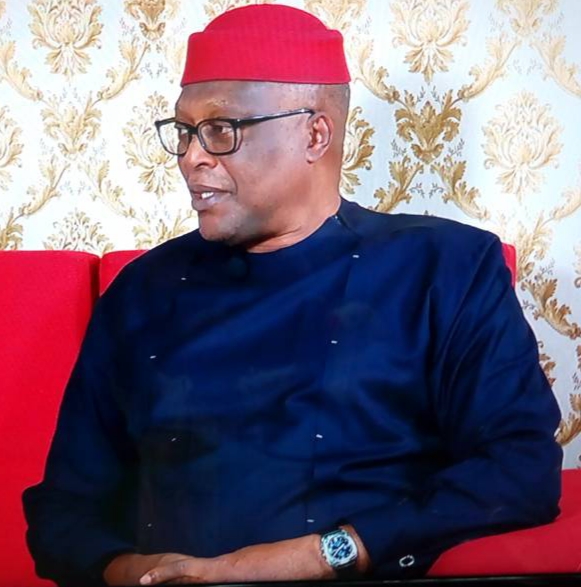
A political affairs commentator, Chidozie Ezeugwa, has raised concerns that Nigeria risks deeper instability and democratic decline if electoral reforms fail to guarantee full transparency, warning that citizens may disengage from the political process if they believe their votes will not count.
Ezeugwa said democracy is sustained by checks and balances, noting that citizens have a responsibility to hold leaders accountable. According to him, silence in the face of questionable governance practices creates conditions for authoritarian tendencies to grow.
“Power belongs to the people,” he said. “When the people fail to challenge actions that threaten democracy, leaders may gradually adopt dictatorial tendencies.”
He argued that this responsibility applies across all levels of governance — from communities and local governments to the federal administration. Without consistent civic engagement, he warned, governance structures may become insulated from accountability.
At the center of his concern is the amended Electoral Act recently passed by the National Assembly and signed by the President. While earlier debates favored electronic transmission of results from polling units to the IReV portal, the final law retained both electronic and manual transmission options.
Ezeugwa maintained that the introduction of manual collation weakens electoral safeguards. He explained that electronic transmission from polling units directly to a central portal allows for real-time monitoring and traceability, reducing the likelihood of post-voting alterations.
“If results are transmitted electronically from the polling units, anyone interested can verify them,” he said. “But when you combine that with manual collation, you create doubt.”
He alleged that manipulation typically occurs at collation centres, where results from polling units are aggregated before final declaration.
According to him, candidates who lose at the polling unit level can emerge as winners after collation adjustments. “That is where the battle is always fought,” he said, describing collation centres as vulnerable points in the system.
Reflecting on the recent FCT elections, Ezeugwa suggested that they offered a preview of how the current framework might operate in future national elections, warning that if the process remains unchanged, the 2027 general elections could generate similar controversies to those experienced in 2023.
“My fear is that 2027 may look like 2023,” he said, cautioning that unresolved electoral disputes could deepen public distrust.
Ezeugwa expressed disappointment that advocacy efforts by civil society groups and concerned citizens did not result in exclusive electronic transmission provisions.
In his view, the retention of manual collation signals reluctance among political actors to close avenues for manipulation. “It is only those who are not confident of their popularity that fear transparent systems,” he said.
He also questioned the speed with which the bill was assented to, suggesting that the executive and legislative branches were aligned on the outcome.
According to him, the President could have returned the bill for reconsideration in response to public concerns.
“The President had the opportunity to show that he stands with the people. Transparency should not only be promised in speeches but demonstrated in action.”
Beyond the electoral process, Ezeugwa linked public distrust to broader national challenges, including insecurity, crime, and economic hardship.
He argued that when citizens lose faith in political institutions, some may disengage entirely, while others may seek alternative means of expressing frustration.
“When people feel that the system does not work for them, they may withdraw or look for other ways to respond,” he said.
He warned that widespread voter apathy could undermine democratic legitimacy.
“If citizens believe election outcomes are predetermined or manipulated, participation rates may decline, weakening the representative foundation of governance.
“Mass participation is the core ingredient of democracy,” he said. “When that is eroded, the entire system is threatened.”
Ezeugwa also highlighted socioeconomic pressures, noting that poverty and inequality create vulnerabilities that politicians may exploit.
He criticized the use of financial inducements during elections and argued that economic hardship should not become a tool for political advantage.
According to him, Nigeria cannot afford to regress in electoral practice at a time when digital systems are increasingly standard worldwide.
He dismissed arguments about technological limitations, pointing to widespread telecommunications coverage across the country.
“We communicate across distances every day. It shows that the technology exists.”
Despite his concerns, Ezeugwa said there remains an opportunity for electoral authorities and government officials to rebuild confidence through credible conduct in upcoming off-cycle elections and bye-elections.
Demonstrating consistency between polling unit results and final declarations, he argued, would send a strong signal to voters. “The assurance must come through action. From the polling unit to the final announcement, there must be transparency.”
He concluded with a warning that democracy cannot thrive where citizens feel excluded from decision-making.
Sustained disregard for public sentiment, he said, could damage Nigeria’s international reputation and deepen domestic instability. “If leaders fail to carry the people along, the consequences may be difficult to contain,” he said.