
Men Must Move From Sympathy to Action to Achieve Gender Equality – SIDEC
Men have been urged to go beyond verbal support and become active drivers of gender equality if meaningful and lasting social change is to be achieved.
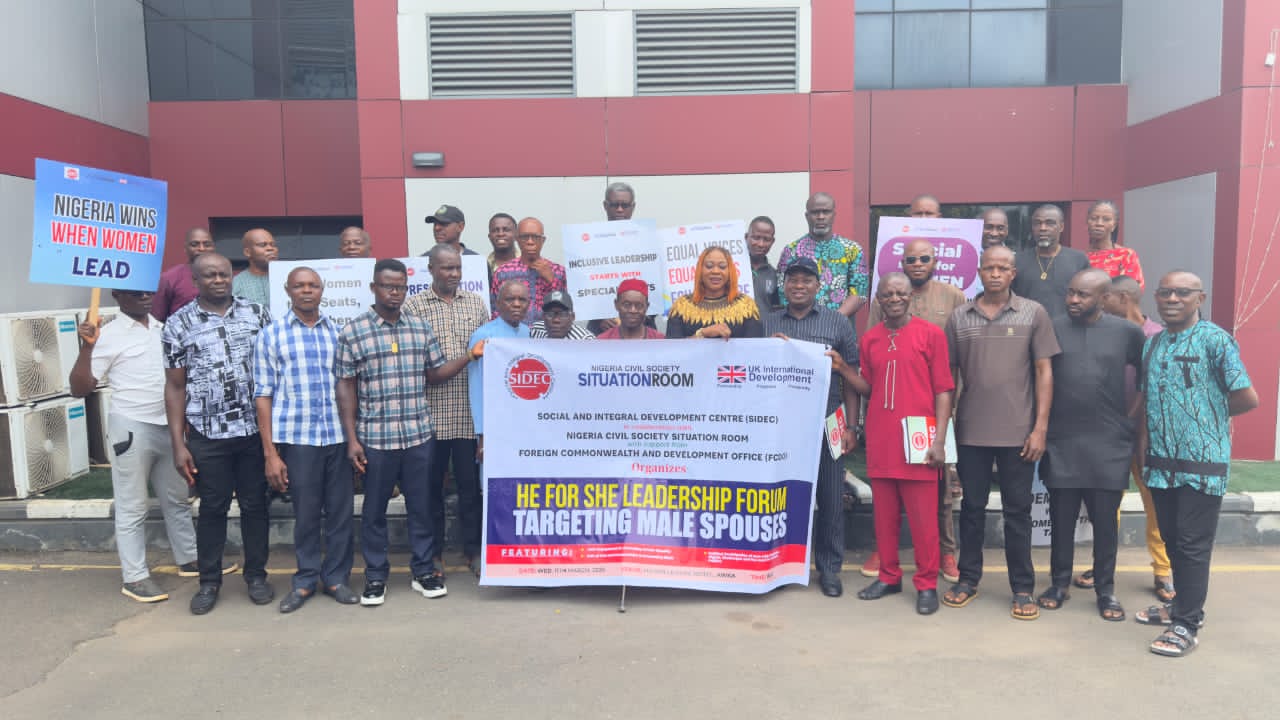
The Executive Director of the Social and Integral Development Centre (SIDEC), Ugochi Ehiahuruike, made the call during a HeForShe Leadership Forum organised for men under SIDEC’s Project IMPACT – Inclusive Mobilization for Participation, Advocacy, and Civic Transformation.
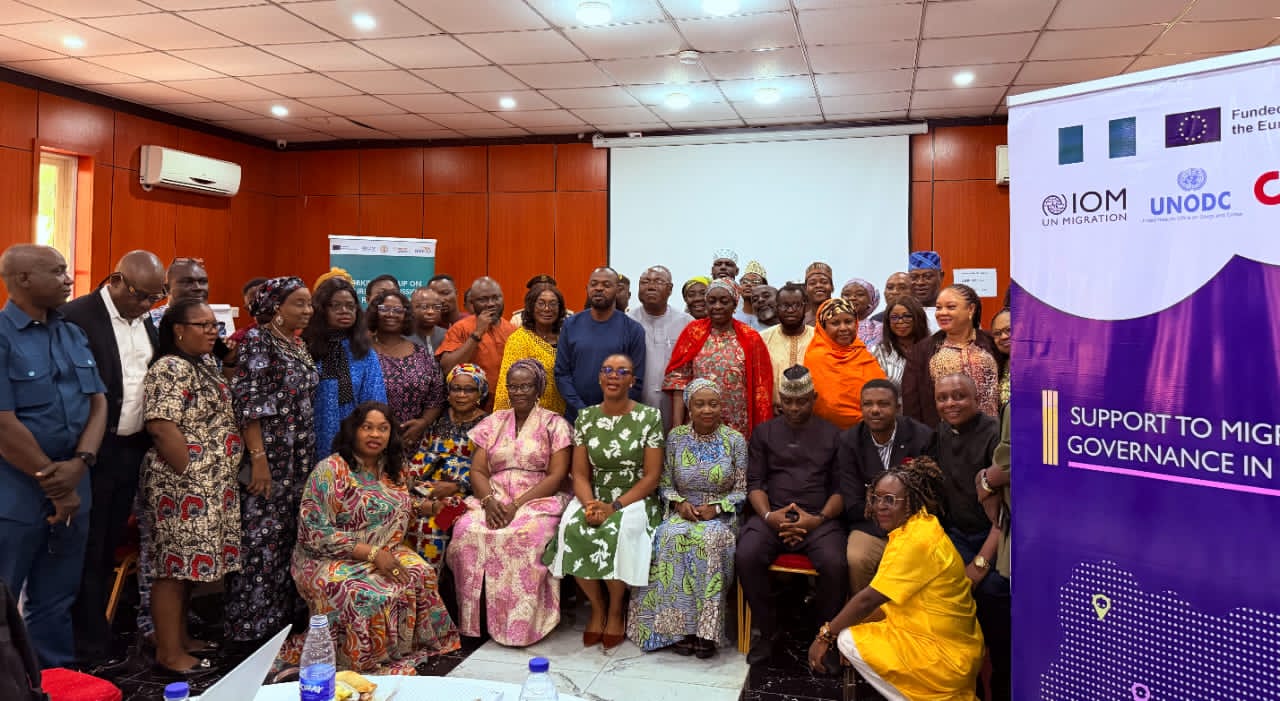
The forum brought together politicians, clergy, community leaders, civil society actors and members of the media to deliberate on the role men must play in promoting gender justice and inclusive governance.
Delivering a presentation titled “Understanding Men’s Engagement in Advancing Gender Equality,” Ehiahuruike stressed that men remain critical stakeholders in the struggle for gender equity and must intentionally position themselves as allies in dismantling discriminatory practices and harmful norms affecting women and girls.
According to her, although many men claim to support gender equality, their commitment often varies widely, with many remaining passive observers rather than active participants in the movement for change.
Ehiahuruike explained that men’s involvement in gender advocacy can be understood through five progressive stages, beginning with awareness and culminating in transformational engagement.
She said the first stage is awareness and understanding, where men begin to learn about gender inequality and issues such as S@xual Exploitation, Abuse and Harassment (SEAH). “At this stage, men recognise that inequalities exist and seek knowledge about them, but their involvement is largely intellectual and limited to understanding the issues,” she said.
The second stage, she noted, is passive engagement, where men may discuss gender concerns and even condemn harmful practices, but take little concrete action to address them.
According to her, the third stage is active engagement, where men begin to participate in programmes, campaigns and advocacy initiatives aimed at promoting gender equality and preventing abuse and discrimination against women and girls.
Ehiahuruike explained that the fourth stage is leadership and allyship, where men become visible advocates for gender justice, openly challenge discriminatory practices and support policies that enhance women’s participation in governance and decision-making.
“At the highest level is transformational engagement, where men embrace gender equality as a core value and actively work to influence social attitudes, challenge cultural norms and dismantle structures that perpetuate inequality,” she said.
However, the SIDEC Executive Director expressed concern that a large proportion of men remain what she described as “silent sympathisers.” “These men believe in gender equality and agree that practices such as SEAH should end, but they remain largely passive and do not translate their beliefs into meaningful action,” she said.
Ehiahuruike warned that silence or inactivity, even when well-intentioned, can inadvertently sustain gender inequality and reinforce harmful stereotypes.
According to her, sustainable progress in gender advocacy requires moving men beyond sympathy and occasional activism toward consistent and intentional action. “Men must understand that gender equality is not only a women’s issue. It is a societal issue that requires the active participation of everyone,” she concluded.
In another presentation on inclusive politics, the Chairman of the Joint National Association of Persons with Disabilities (JONAPWD) in Anambra State, Ugochukwu Ernest Okeke, emphasised that persons with disabilities have the same constitutional rights as other citizens to participate fully in Nigeria’s political processes.
He noted that politics plays a central role in shaping leadership, determining resource allocation and influencing policymaking, making participation by all segments of society crucial to democratic governance.
Okeke explained that the Discrimination Against Persons with Disabilities (Prohibition) Act guarantees persons with disabilities the right to vote, contest elections and participate in governance without discrimination.
He added that state disability laws, including that of Anambra, further reinforce these rights by promoting accessibility and equal participation in public life.
Despite these legal provisions, Okeke said persons with disabilities continue to face several barriers within the political space.
He identified these challenges to include persistent societal stigma that questions the leadership capacity of persons with disabilities, lack of accessibility to public buildings and campaign venues, as well as the high financial cost of political contests.
Other obstacles, he said, include limited support from political parties and instances of discrimination during party primaries and electoral processes.
To address these challenges, Okeke called on governments and political institutions to adopt deliberate policies that promote inclusive politics.
He urged political parties to create opportunities for persons with disabilities in leadership structures and candidate selection processes. “There is also the need for leadership training, financial empowerment initiatives and sustained public awareness campaigns to challenge stereotypes surrounding disability,” he said.
According to him, when persons with disabilities are fully included in political processes, democracy becomes stronger, more representative and equitable for all citizens.
A breakout session during the forum provided participants the opportunity to examine factors limiting women’s participation in politics, propose solutions and identify strategies for addressing the challenges.
Participants stressed that advancing gender equity would require collective action and stronger collaboration among government institutions, civil society organisations and community leaders.