



Turning the Tide: How FRSC Is Reducing Tanker,Trailer Crashes in Nigeria
By Osondu Ohaeri
In Nigeria’s road transport ecosystem, tanker and trailer operations remain among the most critical yet inherently high-risk segments of the haulage industry.
These vehicles play an indispensable role in the movement of petroleum products, industrial materials, agricultural produce, and other essential commodities that drive the nation’s economy.
However, they have also been associated with some of the country’s most devastating road traffic crashes.
From catastrophic fuel explosions to fatal multi-vehicle collisions, crashes involving articulated vehicles have continued to claim lives, destroy property, disrupt economic activities, and inflict significant environmental and socio-economic costs.
Between 2020 and early 2025 alone, tanker-related crashes reportedly claimed at least 555 lives nationwide, highlighting the urgent need for sustained regulatory intervention and comprehensive safety reforms.
Against this backdrop, the Federal Road Safety Corps (FRSC) has intensified a multifaceted strategy aimed at reducing crashes involving tankers and trailers.
Through strengthened regulation, technology-driven enforcement, stakeholder collaboration, public enlightenment, and capacity building, the Corps has begun recording measurable improvements in safety compliance and crash outcomes across the haulage sector.
Strengthening Regulatory Control through the Safe-to-Load Initiative
At the heart of the FRSC’s intervention is the Safe-to-Load Programme, launched in 2015 as a strategic regulatory framework designed to ensure that only roadworthy tankers and professionally qualified drivers are permitted to transport petroleum products and other hazardous cargoes.
Under this initiative, every tanker undergoes mandatory pre-loading inspection at designated tank farms before receiving clearance to load petroleum products.
These inspections assess the mechanical integrity and overall roadworthiness of the vehicle, while drivers are required to possess valid Class “G” driver’s licences and other relevant competence certifications before commencing operations.
The programme directly addresses longstanding causes of tanker crashes, including mechanical defects, overloading, poor vehicle maintenance, and the operation of heavy-duty vehicles by inadequately trained or unqualified drivers.
The initiative has produced remarkable compliance outcomes. At the inception of the programme in 2015, compliance with the mandatory Class “G” driver’s licence among tanker drivers stood at 58.2 per cent. By the end of 2025, this figure had increased dramatically to 99.4 per cent, reflecting the effectiveness of sustained regulatory enforcement and stakeholder cooperation.
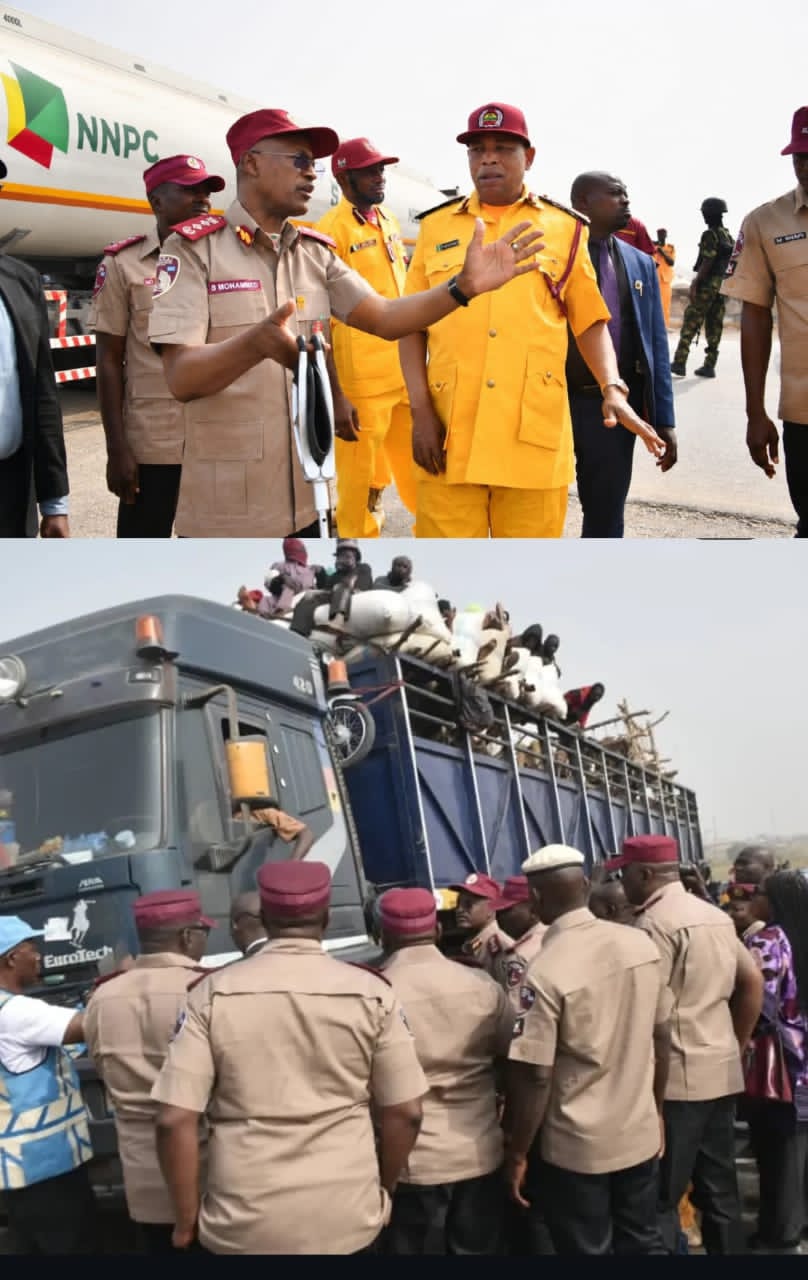
Commenting on this achievement, the Corps Marshal, Shehu Mohammed, noted that the Safe-to-Load initiative was conceived to promote a safer operating environment for tankers conveying petroleum products and other hazardous cargoes.
According to him, the recent improvements demonstrate the positive impact of sustained regulatory oversight, stronger institutional collaboration, and increased industry compliance.
He further emphasized that the impressive licensing compliance underscores the Corps’ commitment to ensuring that only professionally trained, certified, and competent drivers operate high-risk vehicles on Nigerian roads.
Improved compliance, he observed, has significantly enhanced operational safety, reduced crash risks, and promoted greater professionalism within Nigeria’s petroleum haulage industry.
Beyond improved licensing compliance, the Safe-to-Load Programme has also delivered significant safety outcomes.
In 2025, the FRSC recorded a 61.29 per cent reduction in fatalities arising from tanker-related crashes, alongside a 15.53 per cent decline in the crash severity index.
These achievements underscore the programme’s effectiveness and reflect the success of the Corps’ collaborative engagement with petroleum marketers, transport operators, regulators, and other critical stakeholders.
Enforcement of Safety Technologies and Operational Standards
Recognizing that engineering deficiencies contribute significantly to articulated vehicle crashes, the FRSC has strengthened the enforcement of critical safety technologies and operational standards for tankers and trailers.
Among the mandatory requirements are the installation and proper calibration of speed limiting devices to control excessive speed; the installation of API-compliant leak-proof systems that provide internationally accepted standards for the design, construction, and maintenance of welded steel tanks; and the use of retro-reflective tapes to improve vehicle visibility during night-time operations and adverse weather conditions.
The Corps has also intensified enforcement of vehicle registration requirements, documentation compliance, periodic safety inspections, axle load regulations, and the prohibition of defective tyres.
These measures are specifically targeted at reducing crash risks associated with speeding, brake failure, tyre bursts, poor visibility, and overloading, which remain among the leading causes of crashes involving articulated vehicles.
Driver Training, Certification and Professional Re-Orientation
Recognizing that human error remains one of the leading causes of road traffic crashes, the FRSC has continued to prioritize capacity building for tanker and trailer drivers.
This strategy includes regular training and retraining programmes, defensive driving education, safety awareness campaigns, and collaboration with industry regulators and transport unions to improve drivers’ knowledge of contemporary safety standards.
The Corps has also consistently advocated mandatory professional certification for haulage drivers. Complementary initiatives such as the Minimum Industry Safety Training for Downstream Operations (MISTDO) have further strengthened safety consciousness within the petroleum transportation value chain by equipping drivers and operators with practical knowledge of risk management, emergency response procedures, and safe operational practices.
Collectively, these interventions have contributed to improved professionalism and greater adherence to established safety protocols across the industry.
Data-Driven Enforcement and Crash Investigation
As part of its statutory responsibilities, the FRSC has institutionalized comprehensive post-crash investigation mechanisms for tanker and trailer crashes.
Rather than merely documenting crash statistics, these investigations seek to identify the immediate and underlying causes of each incident.
The findings provide valuable evidence for policy formulation, operational planning, targeted enforcement, and the development of preventive safety measures.
This evidence-based approach enables the Corps to continually refine its interventions, ensuring that enforcement strategies evolve in response to emerging trends and operational realities rather than remaining purely reactive.
Robust Public Enlightenment Campaigns
The FRSC has also recognized that public behaviour frequently contributes to the magnitude of casualties arising from tanker crashes.
One of the most dangerous practices remains fuel scooping following tanker accidents, despite repeated warnings about the enormous risks involved. Numerous fatalities across the country have resulted not from the initial crash itself but from subsequent explosions triggered while members of the public attempted to collect spilled petroleum products.
To address this persistent challenge, the Corps has intensified nationwide public enlightenment campaigns through television documentaries, radio jingles, newspaper publications, social media engagements, community sensitization programmes, and stakeholder forums.
The FRSC also works closely with transport unions, petroleum marketers, community leaders, emergency responders, and civil society organizations to discourage fuel scooping and promote safer public responses during tanker emergencies.
These campaigns have become increasingly important in the wake of tragic incidents, including the 2025 tanker explosion near Suleja, which claimed over 100 lives and once again underscored the devastating consequences of unsafe public behaviour around petroleum accidents.
Multi-Stakeholder Collaboration
Recognizing that road safety cannot be achieved through enforcement alone, the FRSC has continued to strengthen strategic partnerships with relevant stakeholders across the petroleum transportation sector.
The Corps collaborates closely with petroleum regulatory agencies, the Nigerian Association of Road Transport Owners (NARTO), the Nigeria Union of Petroleum and Natural Gas Workers (NUPENG), security agencies, emergency response organizations, state traffic management authorities, and petroleum marketers.
This integrated approach ensures that safety standards are monitored and enforced throughout the logistics value chain—from loading depots and storage facilities to highways and final destinations.
The growing synergy among these institutions has significantly improved compliance, enhanced information sharing, strengthened enforcement, and reinforced Nigeria’s overall road safety framework.
Persistent Challenges
Despite these encouraging achievements, several structural and operational challenges continue to hinder efforts to completely eliminate tanker and trailer crashes in Nigeria.
Among the most significant are the continued operation of aging haulage fleets with poor maintenance histories, driver fatigue arising from prolonged long-distance operations, inadequate rest areas and truck parks along major highways, insufficient investment in modern transport infrastructure, poor road conditions in several corridors, and the country’s overwhelming dependence on road transportation for petroleum distribution.
These systemic issues extend beyond regulatory enforcement and require coordinated policy responses involving infrastructure development, transport sector reforms, private sector investment, and stronger institutional collaboration.
Conclusion
The Federal Road Safety Corps’ evolving strategy represents a significant shift from conventional traffic enforcement to a comprehensive system of risk management within Nigeria’s haulage industry.
By integrating regulatory oversight, technological innovation, professional driver certification, evidence-based enforcement, stakeholder collaboration, and sustained public education, the Corps is gradually reducing both the frequency and severity of tanker and trailer crashes on Nigerian roads.
Although considerable progress has been made, sustaining these gains will require continuous enforcement, periodic review of safety regulations, improved road infrastructure, modernization of the national haulage fleet, and deeper collaboration among all stakeholders in the petroleum transportation value chain.
Ultimately, safer tanker and trailer operations are not merely a regulatory objective. They constitute a national imperative that directly impacts public safety, environmental protection, economic stability, energy security, and the preservation of human lives.
Osondu Ohaeri, FNIPR, is a Deputy Corps Commander and Corps Public Education Officer at the Federal Road Safety Corps (FRSC) National Headquarters, Abuja.