


OPINION:Anambra’s Smart City Dream Begins with Environmental Discipline, Urban Planning, Rule of Law

By Titus Eleweke
The Anambra State Government, on Saturday, July 4, imposed a statewide lockdown to compel residents to participate in environmental sanitation. The government was deliberate and serious about the exercise. Major cities such as Awka, Onitsha, Nnewi, and towns and communities across the state were virtually deserted as residents stayed home to clean their surroundings.
The exercise recorded impressive compliance and deserves commendation. However, I am not among those who believe that government should have to lock down cities and communities before citizens do what ought to be a normal civic responsibility.
Should government remind citizens to cut the grasses around their homes, sweep their compounds, or clear their gutters? Certainly not. These are voluntary responsibilities that every responsible resident should undertake regularly.
Should government force people to maintain personal and environmental cleanliness? Again, the answer is no. Cleanliness is first an attitude before it becomes a policy. Every resident should consciously maintain a clean environment without waiting for government directives or enforcement.
During the last sanitation exercise, the government deployed security agencies across the state to ensure compliance. Ironically, there was no electricity in many areas, thereby forcing residents to come outside in numbers and clean their surroundings.
Ultimately, who suffers from a dirty environment? It is the people themselves. Who benefits from a clean environment? Again, it is the residents. Refusing to clean one’s surroundings only creates health hazards, environmental degradation, and avoidable flooding that affect everyone.
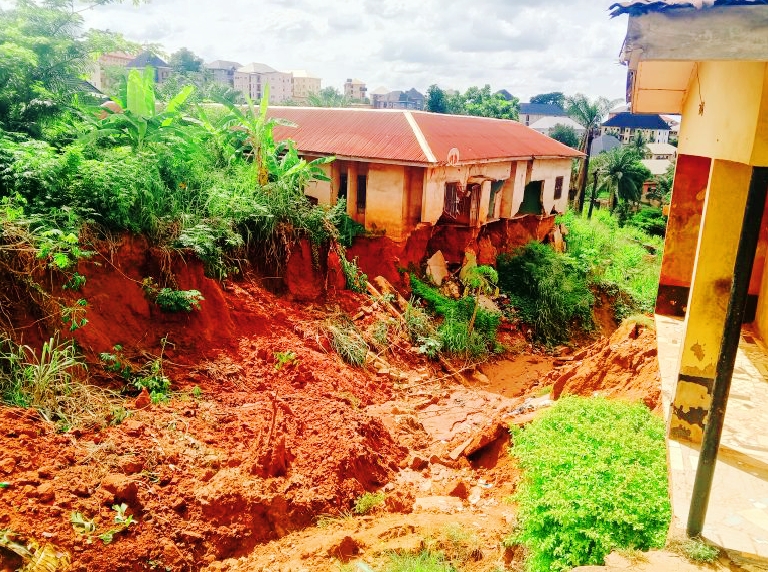
Beyond forced sanitation exercises, the government must address the deeper causes of erosion and flooding across Anambra State. This requires a fundamental overhaul of environmental management, urban planning processes, building approval systems, and strict protection of lands designated for recreational facilities, green areas, drainage corridors, and other public purposes.
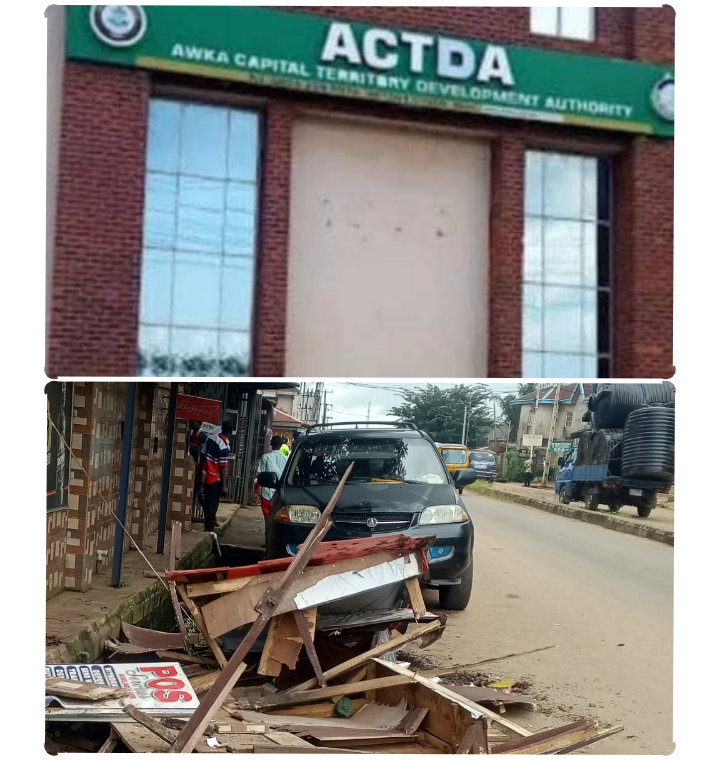
The Ministry of Environment, the Anambra State Physical Planning Board, the Awka Capital Territory Development Authority (ACTDA), and every agency responsible for urban development must rise to their responsibilities by strictly enforcing town planning laws and environmental regulations.
Today, many individuals have erected buildings on natural drainage channels, even in high-profile locations such as the Commissioners’ Quarters, Awka ,the Ifite axis of Awka, and several other parts of the capital city. Similar violations are widespread in Onitsha, Nnewi, and other urban centres across the state.
Onitsha, once regarded as one of Nigeria’s better-planned commercial cities, has gradually lost its planning integrity as developers continue to replace any open spaces with plazas, markets, and other commercial structures, often in violation of approved development plans.
The devastating rainfall that recently caused widespread destruction in Onitsha was not merely a natural disaster. Much of the damage resulted from blocked drainage channels, indiscriminate construction, illegal structures on waterways, and poor environmental management, all of which intensified flooding.
Indeed, most cases of flooding and erosion in Anambra State are largely man-made. Illegal sand mining, indiscriminate waste disposal into gutters and drainage systems, construction on floodplains, and disregard for approved building regulations have significantly worsened the situation.
This trend is unsustainable if Anambra State genuinely intends to preserve its landmass and secure its environmental future. Ironically, many people lament that erosion is consuming the state, yet the same people continue to engage in activities that accelerate erosion and flooding.
To effectively mitigate these environmental challenges, the government must establish a robust monitoring and enforcement system to identify and prosecute individuals engaged in illegal sand mining, unauthorized developments, obstruction of drainage channels, and indiscriminate waste disposal.
There was a time when the Ocha Brigade actively enforced environmental sanitation and public order. Today, that agency has become largely inactive, leaving a vacuum in environmental enforcement. The Governor should urgently appoint the Managing Director of the Ocha Brigade to restore its operations and strengthen environmental compliance across the state.
Similarly, ACTDA and the Physical Planning authorities must wake up to their statutory responsibilities. Urban development should not merely involve in approving building plans; it must also include continuous monitoring to ensure that developments comply with approved layouts and environmental standards.
If Anambra State truly desires to achieve Governor Chukwuma Soludo’s vision of a Smart City, environmental sustainability,disciplined urban planning must become central pillars of that vision. A smart city is not defined only by modern roads, digital infrastructure, or beautiful buildings. It is equally measured by orderly physical development, efficient drainage systems, proper waste management, functional public spaces, environmental resilience, and strict adherence to planning regulations.
Government should therefore intensify public awareness campaigns against indiscriminate waste disposal, illegal developments on drainage corridors, and the obstruction of natural waterways. These campaigns should utilise radio, television, newspapers, social media, traditional institutions, community leaders, religious organisations, schools, and market associations to change public behaviour.
Communities also have a critical role to play. Town unions, village associations, youth groups, and traditional rulers should continuously educate residents about the environmental and economic consequences of poor sanitation and unplanned development.
Above all, the government must demonstrate the political will to confront this growing environmental menace without fear or favour. Enforcement should not be selective. Every individual found violating environmental or planning regulations should face appropriate sanctions, including government officials who unlawfully approve building plans or facilitate illegal developments.
Anambra State must reclaim its reputation as one of Nigeria’s most organised and progressive states. It must restore orderly urban development and protect its original master plans. Landowners should understand that purchasing a plot of land does not entitle them to build on every square metre of it. Adequate setbacks, sanitary lanes, access roads, drainage corridors, and pedestrian pathways must be preserved in accordance with planning regulations.
The roads that provide access to our homes, markets, schools, and businesses were all created because previous landowners sacrificed portions of their land for public use. The present generation owes the same responsibility to future generations. If Anambra must become the smart, modern, environmentally sustainable state envisioned by its leadership, then every citizen, developer, community, and government institution must play their part by respecting environmental laws and embracing responsible urban planning.