

OCHA Brigade: An Environmental Force at a Crossroads

By Titus Eleweke
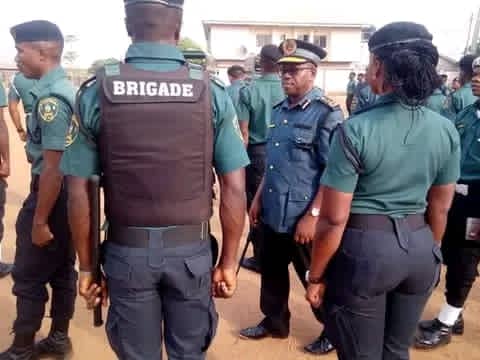
Operation Clean and Healthy Anambra, popularly known as OCHA Brigade, occupies an important position in Anambra State’s environmental management architecture.
As the state’s frontline environmental enforcement agency, its effectiveness matters directly to the quality, cleanliness and sustainability of the state’s public spaces.
That is precisely why the government should take a fresh and serious look at the condition of the agency.
OCHA Brigade was established to enforce environmental laws and regulations in Anambra State.
Its personnel operate on the streets, engage with members of the public and property owners, and undertake the often difficult task of ensuring compliance with environmental regulations.
Such responsibilities require more than uniforms and deployment. They require a clear chain of command, appropriate training, adequate equipment, sustainable funding, competitive remuneration and a workforce that believes its institution has a future.
Concerns emerging from within and around the agency suggest that some of these fundamentals deserve urgent attention.
For several months following the removal of the substantive Managing Director, questions have reportedly arisen over the agency’s administrative direction and internal coordination.
Although personnel have continued to perform their duties, there are concerns about morale and uncertainty within the organisation.
This should concern the government,not merely because of the welfare of OCHA Brigade personnel, but because institutional uncertainty can ultimately affect the effectiveness of environmental enforcement.
The issue should therefore not be reduced to the appointment or removal of any individual. The larger question is whether OCHA Brigade currently has the institutional structure required to perform the mandate for which it was established.
Who should command an environmental enforcement agency?
Another issue requiring careful examination is the deployment of personnel from other government establishments to administer an agency with a specialised operational and paramilitary character.
There is nothing inherently wrong with government deploying experienced civil servants where their expertise is relevant.
However, OCHA Brigade’s operational character raises a legitimate question: should its command and administrative structure sufficiently reflect the specialised training, discipline and responsibilities required of environmental enforcement personnel?
That question deserves an evidence-based answer.
Government should establish a clear distinction between administrative support and operational command.
The agency needs professional administration, but it also needs leadership that understands environmental enforcement, field operations, discipline and the realities faced by personnel on the streets.
Welfare cannot be separated from performance
Perhaps the most serious concerns relate to the welfare and remuneration of personnel.
There are claims that some OCHA Brigade workers remain on relatively low wages despite holding higher educational qualifications, while the agency itself continues to face operational and logistical difficulties.
These claims should be independently verified by the relevant authorities.
If confirmed, however, they would represent a serious institutional problem.
An agency charged with enforcing environmental laws cannot be expected to maintain high standards indefinitely while its personnel feel inadequately rewarded, poorly equipped or uncertain about their career progression.
Government should therefore conduct a comprehensive review of the employment status, remuneration, career structure and welfare of OCHA Brigade personnel.
The reported desire of some personnel for clearer integration into the state’s formal public-service structure also deserves consideration.
Whether such integration is legally and administratively appropriate should be determined by the enabling law and the state’s broader public-service framework.
What should not be allowed is a situation in which personnel remain uncertain about their institutional identity and career prospects.
Equipment and operational capacity
Environmental enforcement is a field operation. Personnel need vehicles, communications equipment, protective gear, offices and other basic logistical support.
Reports that the agency has experienced shortages of operational and administrative vehicles should therefore be independently assessed by government. If confirmed, the situation requires correction.
An environmental enforcement agency cannot be expected to cover an expanding state effectively if its operational capacity does not grow alongside its responsibilities.
The same principle applies to funding. As Anambra’s population, urban areas and environmental challenges expand, OCHA Brigade’s funding should be periodically reviewed against its actual responsibilities rather than being treated as a fixed administrative expense.
A board and stronger institutional governance
If the enabling legislation provides for a governing board or similar oversight mechanism, government should examine whether that provision is being fully implemented and whether the existing governance structure remains adequate.
A properly constituted governing structure could provide institutional continuity, strengthen oversight, clarify responsibilities and reduce excessive dependence on changes in individual office holders.
The objective should be an agency whose policies and operations continue smoothly regardless of who occupies the office of managing director.
Reform, not abandonment
OCHA Brigade should not be viewed simply as another government agency.
Environmental enforcement is increasingly central to the quality of life in Anambra State.
The state is experiencing rapid physical development, increasing pressure on public spaces and continuing challenges involving waste disposal, illegal development and environmental compliance.
These challenges require an enforcement institution that is disciplined, professional and properly equipped.
The answer, therefore, is not to weaken OCHA Brigade or allow institutional uncertainty to persist. It is to reform and strengthen it.
The state government should consider a comprehensive review covering the agency’s enabling law, governance structure, command arrangements, personnel status, remuneration, training, logistics, operational vehicles, funding and accountability mechanisms.
Personnel should know who they report to. Government should know what the agency requires.
The public should know what standards OCHA Brigade is expected to enforce.
And the agency itself should have the resources and institutional backing necessary to discharge its responsibilities.
OCHA Brigade was created for a purpose. If Anambra is serious about maintaining a clean, orderly and environmentally responsible state, that purpose should be matched with the institutional investment required to achieve it.
The government owes the public a functioning environmental enforcement system—and it owes the men and women who operate that system the tools, structure, dignity and welfare necessary to do their jobs effectively.
The reform of OCHA Brigade should therefore become a matter of institutional priority, not an afterthought.