FISCAL DISCIPLINE, HUMAN DIGNITY: OTTI REWRITING ABIA’S GOVERNANCE STORY
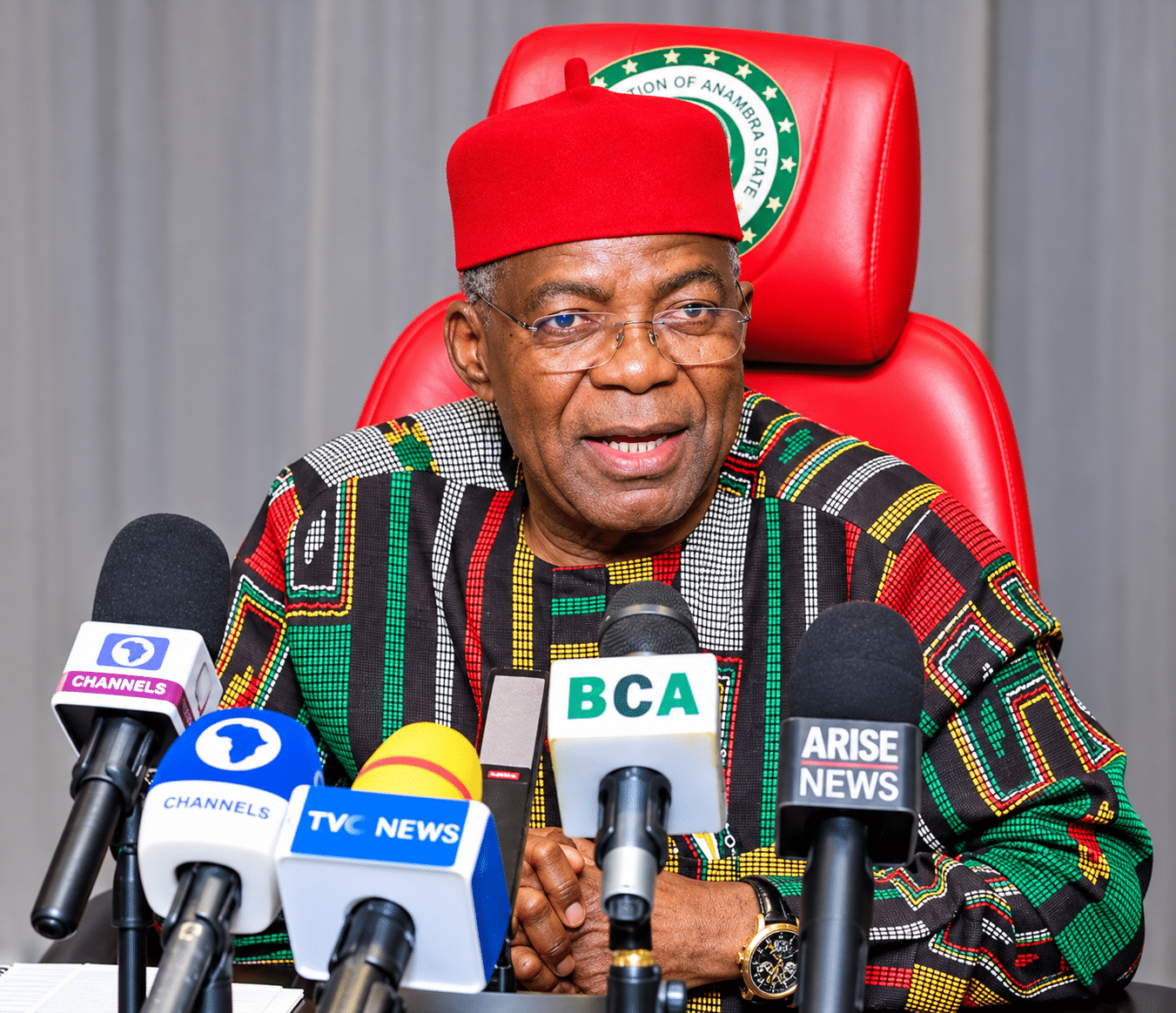
Governor of Abia State,Dr. Alex Chioma Otti
By Titus Eleweke
For years, Abia was trapped in a cycle that seemed almost impossible to break: public resources were expended without corresponding public value, workers went unpaid, pensioners waited endlessly for their entitlements, roads deteriorated, public institutions lost credibility, hospitals struggled, schools decayed, and citizens became increasingly cynical about government.
That was the Abia that Dr. Alex Chioma Otti inherited on May 29, 2023.
Forty months later, the most compelling argument for the Otti administration is not the number of projects commissioned, the volume of speeches delivered or the political rhetoric surrounding the administration.
It is something more fundamental: the return of the idea that government can actually work for the people.
Otti did not inherit a perfect State. He inherited a State burdened by accumulated liabilities, institutional decay and a deep deficit of public confidence.
His response has been to place fiscal discipline, transparency, infrastructure, human capital and institutional rebuilding at the centre of governance.
The result is an Abia that is visibly different.
This is not a claim of perfection. It is a record of measurable change.
THE BIGGEST PROJECT IS RESTORING PUBLIC CONFIDENCE
The most important transformation in Abia may not be any single road, hospital, school or government building. It is the gradual restoration of confidence that public money can be converted into public value.
That is the real meaning of the Otti administration’s much-discussed fiscal discipline.
Government is not merely about collecting revenue and spending money. It is about determining priorities, eliminating waste, confronting inherited liabilities and ensuring that every available naira produces a visible benefit for the citizen.
That philosophy is reflected across the State.
430 ROADS, ABOUT 900 KILOMETRES: INFRASTRUCTURE AS AN ECONOMIC POLICY
When Otti declared infrastructure an emergency, it was not merely a construction policy. It was an economic strategy.
At the May 2026 Media Chat, the Governor disclosed that 414 road projects covering 864.12 kilometres had been completed across the 17 Local Government Areas, while 82 additional roads covering 212 kilometres were under construction.
From Port Harcourt Road, Ohanku Road, Ovom Road, People’s Road, Obohia Road and the 11-kilometre underground drainage tunnel in Aba, to Cemetery Road, Umule, Kent, Umuimo, Afule, Udeagbala, Ehi, University, College, Queens, MCC, Elizabeth and Ajagba roads, the transformation is visible across the commercial city.
In Umuahia, the 6-lane Aguiyi Ironsi Boulevard, Library Avenue and Uma Ukpai Way have added a new dimension to the capital’s urban landscape.
Beyond the cities, the Omenuko Bridge, 30-kilometre Arochukwu Road, Nunya-Eluama Road, Umuahia-Uzuakoli-Abiriba-Ohafia corridor, Umuahia-Ikot Ekpene Road and Ahiaeke-Okwuta-Bende Road are part of a wider effort to reconnect communities and strengthen economic activities.
The significance of these projects goes beyond asphalt.
Good roads reduce transport costs, shorten travel time, improve commerce, increase property values, connect farmers to markets and make businesses more competitive.
The installation of more than 10,000 solar streetlights has also extended economic activities into the night and improved visibility and security in several communities.
EDUCATION: WHEN PUBLIC SCHOOLS BECOME A CHOICE AGAIN
Perhaps one of the clearest tests of any government is whether ordinary families can see a better future for their children.
Otti’s administration has made education a major pillar of its development agenda, consistently allocating 20 per cent of the State budget to the sector.
In the 2026 budget of N1.016 trillion, N203.2 billion was allocated to education.
Free and compulsory basic education introduced in 2024 has expanded access, while more than 5,394 teachers were recruited in 2025 and another 4,075 in August 2026.
The administration’s intervention in school infrastructure, including 221 model primary and secondary schools and 20 smart schools, represents a deliberate attempt to reverse decades of neglect.
The restoration of accreditation in institutions including Abia State University, Ogbonnaya Onu Polytechnic and Abia State College of Education Technical is equally significant.
So are the ongoing investments in hostels, faculties, laboratories, classrooms and other tertiary infrastructure.
The real measure of success, however, is not the number of buildings.
It is whether a child from a poor household can enter a public school without feeling that poverty has already determined his or her destiny.That is the test.
HEALTHCARE: FROM NEGLECT TO FUNCTIONAL PUBLIC SERVICE
A government that cannot protect the health of its people cannot credibly claim to be developing the State.
The Otti administration’s investment in healthcare therefore deserves to be viewed not merely as construction but as an attempt to rebuild the public health architecture.
With 15 per cent of the 2026 budget, amounting to N149.7 billion, allocated to health, the administration has backed its stated commitment with resources.
Through Project Ekwueme and related interventions, hundreds of primary healthcare facilities have been renovated, equipped or functionalised, while major hospitals and specialist facilities are receiving attention.
The recruitment of 821 health professionals, restoration of accreditation at the ABSU Teaching Hospital and expansion of the Abia State Health Insurance Scheme to more than 270,000 residents are further indications of a system moving from emergency management towards structured healthcare delivery.
The ultimate test remains simple:
Can an ordinary Abian walk into a public health facility and receive competent care without first asking how much money he must produce?
That is the standard by which healthcare reform should ultimately be judged.
THE ELECTRIC BUS REVOLUTION: MODERNITY MUST HAVE A HUMAN FACE
The launch of Abia Green Shuttle represents one of the administration’s most visible attempts to connect governance with modern urban living.
Since its December 2025 launch, the State-owned electric bus system had transported more than 386,000 passengers by May 2026, with 40 electric buses already in operation and additional buses expected.
The commissioning of the Nnenna Otti Bus Terminal and the near completion of the Aba terminal further point towards an integrated transport system.
This is not simply about electric buses.
It is about whether public transport can become cleaner, safer, more predictable and more dignified.
The same principle informs the ongoing airport project: Abia must not remain economically important while being infrastructurally isolated.
CLEANER CITIES, STRONGER ECONOMY
Few things symbolised Abia’s institutional decline more painfully than the condition of its major cities.
Waste, blocked drainage, deteriorating roads and environmental neglect was part of the everyday experience.
The administration’s environmental reforms, including structured waste evacuation and the creation of jobs within the environmental management system, have begun to change that narrative.
A clean city is not cosmetic.
It is a public health intervention, an investment incentive, a tourism asset and a statement about how government values its citizens.
THE REAL INFRASTRUCTURE IS THE HUMAN BEING
Otti’s most consequential philosophy may be his insistence that people are the real infrastructure.
Through TechRise and other youth-focused programmes, thousands of young Abians are being trained in software engineering, artificial intelligence, cybersecurity and other digital skills.
Investment in innovation-driven enterprises, agriculture, leadership development and women’s participation in government is equally important.
The objective should not merely be to produce young people who are waiting for government jobs.
It is to produce young people capable of creating value, building businesses, solving problems and competing globally.
That is the difference between empowerment as political vocabulary and empowerment as economic policy.
THE MOST POWERFUL REFORM: RESTORING THE DIGNITY OF WORKERS AND PENSIONERS
If there is one area where the human impact of the Otti administration can be measured beyond statistics, it is in the treatment of workers and pensioners.
The administration inherited liabilities estimated at N191.2 billion, including pension arrears running into several years and unpaid obligations across several institutions.
More than N40 billion has reportedly been committed to clearing salary and pension arrears within two years, including a single-tranche N10 billion payment to pensioners.
Today, salaries and pensions are being paid on or before the 28th of every month.
That should not be treated as extraordinary news.
It should be considered the minimum standard of responsible government.
The commencement of gratuity payments to retirees from 2001 to 2010 is another significant step in confronting an uncomfortable legacy.
For the pensioner who spent decades serving the State, a pension is not a favour.
It is deferred income. It is an earned right. It is dignity.
That is why fiscal discipline must ultimately be measured not only by spreadsheets but by the human lives those numbers affect.
LAND REFORM: GOVERNMENT SHOULD NOT BE THE SOURCE OF PROPERTY INSECURITY
Land administration is another area where institutional reform has direct economic consequences.
With more than 5,047 Certificates of Occupancy signed under the administration and the digitisation of millions of land records, Abia is moving towards a system in which property ownership can be verified more efficiently and land-related disputes and fraud can be reduced.
A functioning land administration system is fundamental to investment.
Investors cannot confidently build businesses where ownership is uncertain, documentation is opaque and transactions take years.
Land reform is therefore economic reform.
THE NUMBERS TELL ANOTHER STORY: REVENUE WITHOUT RECKLESS BORROWING
Perhaps the strongest evidence of the administration’s fiscal philosophy lies in its approach to revenue and debt.
Abia’s internally generated revenue reportedly rose from N14.67 billion in 2022 to N66.86 billion in 2025, representing a dramatic increase.
At the same time, the administration has maintained that recurrent expenditure should not be financed through reckless borrowing.
The reported reduction in inherited debt, alongside improvements in fiscal transparency rankings, suggests that the State is beginning to move from a culture of dependency and accumulated obligations towards greater fiscal responsibility.
The 2026 budget of N1.016 trillion is ambitious.
But ambition is only meaningful when backed by discipline, implementation and accountability.
THE NEW ABIA IS NOT BUILT BY GOVERNMENT ALONE
It would be tempting to reduce the story of Abia’s transformation to Governor Otti.
That would be incomplete.
Government can provide the framework, but citizens, businesses, professionals, workers, entrepreneurs and communities must sustain the transformation.
The presence of international diplomats and development partners in Abia is also significant, not because their visits alone prove success, but because investors and foreign missions generally respond to changes in institutional credibility, economic opportunity and security. Perception matters.But performance matters more.
And performance must ultimately survive beyond photographs, ceremonies and political seasons.
OTTI’S BIGGEST TEST IS SUSTAINABILITY
The strongest argument for the Otti administration is not that everything in Abia has been solved.It has not.
Abia still has enormous infrastructure gaps. Poverty remains real. Unemployment remains a challenge. Healthcare requires deeper investment. Education needs sustained funding. Industrialisation must produce more jobs. Rural communities must feel the impact of development as strongly as urban centres.
The airport must be completed.
Major road networks must be maintained.
The gains in revenue must be institutionalised.
The reforms must survive political transitions.
That is where the real test lies.
Development is not the ability to build quickly; it is the ability to build institutions that endure.
THE VERDICT
Governor Alex Otti has not performed magic.
He has only applied a philosophy that is remarkably simple: cut waste, block leakages, prioritise essentials, pay legitimate obligations, invest in people and infrastructure, and make public resources work for the public.
The strongest evidence is not found in government advertisements.
It is found in the worker who receives his salary on time.
In the pensioner who no longer waits indefinitely.
In the trader whose goods can move through a rehabilitated road.
In the student attending a properly equipped public school.
In the patient who finds a functional healthcare facility closer to home.
In the young person who acquires a digital skill instead of waiting endlessly for a government appointment.
In the investor who can increasingly see Abia as a place to build rather than merely a place to visit.
Abia is not yet where it should be.
But it is no longer where it was.
And that distinction matters.
The task now is to protect the gains, deepen the reforms, demand accountability and ensure that today’s transformation becomes tomorrow’s institutional culture.
Good governance should not be celebrated because it is rare. It should be demanded because it is the people’s right.
Governor Otti’s record so far makes a compelling case that disciplined governance can restore a State’s confidence, dignity and economic direction.
The mandate, therefore, should not be reduced to personality.
It should be about preserving a new standard.
Abia has begun to move. The responsibility now is to ensure that it never goes back.