Archbishop Okeke Commissions Medical Equipment Donated by Philanthropist, Dr Ojukwu
By Polycarp Ifeanyi
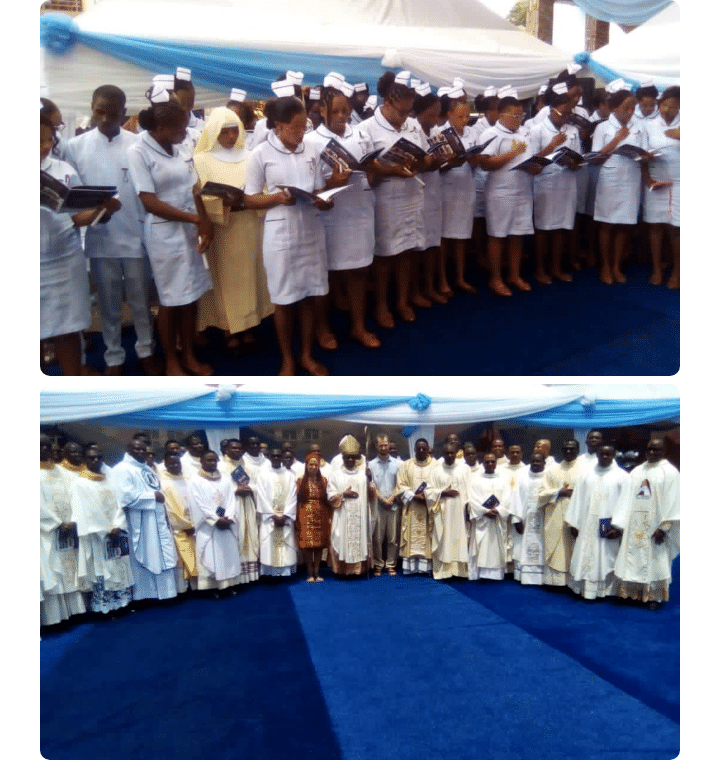
Abatete community in Idemili North Local Government Area of Anambra State was agog as the Catholic Archbishop of Onitsha Archdiocese, His Grace, Most Rev. Valerian Maduka Okeke, commissioned medical equipment donated by a philanthropist and medical practitioner, Dr Charles Kene Ojukwu, to the Immaculate Heart Maternity Home and Laboratory Centre, Abatete.
Dr Ojukwu, a foreign-based medical practitioner and holder of the Abatete chieftaincy title, Oku na-enye-ife, single-handedly equipped the facility, an annex of Waterside Hospital, Onitsha, with the medical equipment to strengthen healthcare delivery and improve the centre’s capacity to provide essential maternal and medical services.
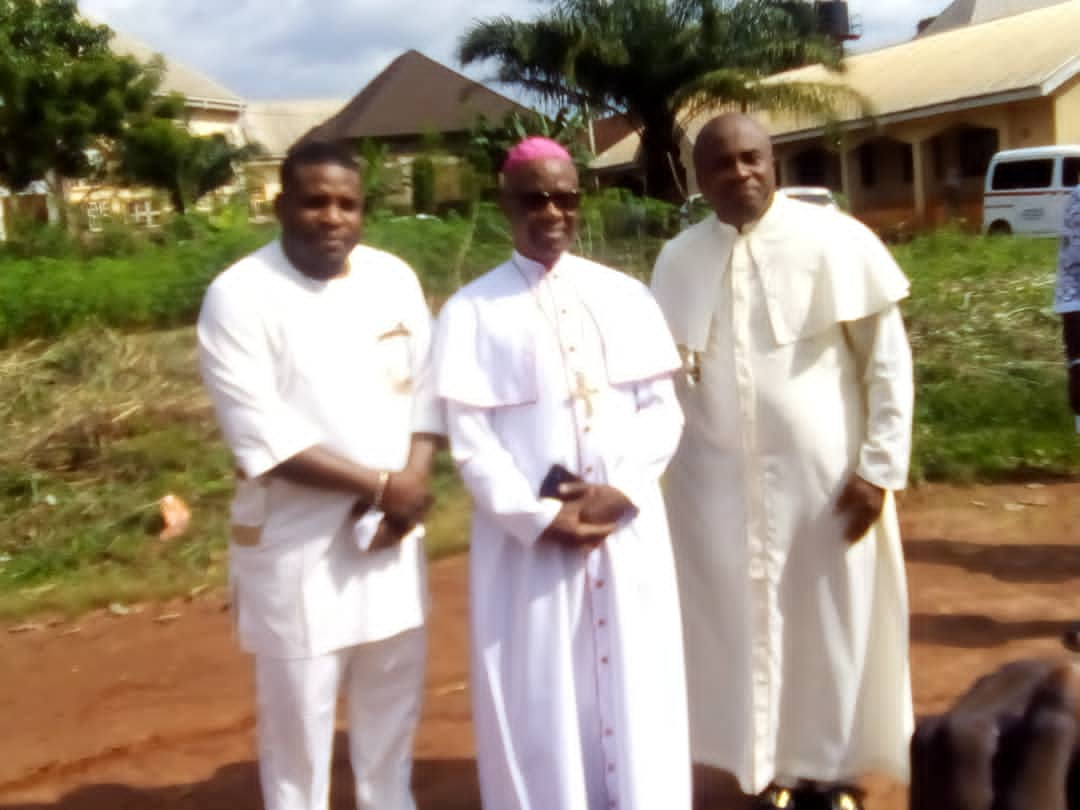
Shortly after the commissioning, Archbishop Okeke, accompanied by several Catholic priests and the Anambra State Commissioner for Health, Dr Afam Obidike, expressed gratitude to the donor for his generosity and commitment to improving healthcare in the community.
The Archbishop called on other affluent individuals to emulate Dr Ojukwu’s gesture by investing in the development of their respective communities. He noted that the donor was neither the richest person in Abatete nor the only medical doctor from the community, stressing that everyone had a responsibility to contribute to the welfare and development of society.
Archbishop Okeke also urged communities to create a safe and welcoming environment for their sons and daughters living abroad who wished to return home and contribute to local development. He cautioned against actions and attitudes that discourage them from coming home, particularly the atmosphere of fear associated with kidnapping and insecurity.
“Let us stop discouraging our people abroad by instilling fear of kidnapping in them. We contribute to why they don’t come home. They may not come home, but they still send support. When they send money, ensure you deliver it. If they send money for the maternity and you keep it for yourself, know that you are holding maternity money. It concerns you,” Archbishop Okeke said.
In her welcome address on behalf of the management and staff of the centre, Sr Winifred Maduwuba described Archbishop Okeke as a visionary leader, commending his fatherly care and numerous contributions to healthcare, education and human development across the Onitsha Archdiocese.
She expressed appreciation for the commissioning of the donated equipment, noting that the intervention would strengthen the centre’s capacity to provide essential medical services and improve the quality of care available to residents of Abatete and neighbouring communities.
Listing the items donated by Dr Ojukwu, Sr Maduwuba said they included an autoclave machine, a suction machine, a cardiac monitor, an oxygen cylinder with a trolley, a delivery bed, a digital fetal Doppler, a nebuliser, a diagnostic ultrasound machine, a phototherapy machine and a complete set of surgical equipment.
She added that the donor also undertook the repainting of the entire hospital, further improving the facility’s physical environment.
According to her, the donated items were more than medical devices, describing them as instruments of healing, hope and the preservation of human life.
Sr Maduwuba, however, appealed to individuals and corporate organisations to support the maternity home with a solar power system and a high-capacity generator to ensure a reliable electricity supply and uninterrupted delivery of healthcare services.
Speaking with journalists after the commissioning, Dr Ojukwu said his decision to equip the facility followed his discovery of its deplorable condition during a tour of primary healthcare centres in the area.
He explained that the visit prompted him to consider the basic medical equipment needed at the facility to prevent avoidable deaths, particularly during childbirth, rather than waiting until complications arose before attempting to intervene.
“So I asked, what basic equipment should be here to prevent mortality rather than only intervening during complications? The day I visited the hospital was the same day Afam Ojukwu visited me, and I gave him a list of all that was needed and we provided them,” he said.
Dr Ojukwu said he subsequently provided the necessary equipment, ranging from surgical sets to childbirth equipment, and ensured that the entire hospital was repainted.
He expressed delight that the Anambra State Government was represented at the commissioning by the Commissioner for Health, Dr Afam Obidike, describing the occasion as an opportunity to draw attention to the need to strengthen primary healthcare facilities across the state.
The philanthropist stressed that primary healthcare centres should be adequately equipped to preserve lives during labour, provide essential maternal care and manage medical emergencies before they become life-threatening.
He also urged the state government to ensure the equitable distribution of medical equipment to rural communities, irrespective of political considerations, noting that access to essential healthcare should not be determined by political affiliation or location.
Explaining the motivation behind his intervention, Dr Ojukwu said he visited Nigeria three to four times annually and had used his visit this year to assess the challenges confronting healthcare facilities in different communities.
He said his approach to success went beyond personal wealth accumulation, emphasising that the true measure of achievement was the ability to improve the lives of less privileged people by helping them access basic necessities.
“Personal acquisition of wealth is not success to me. Success to me is when the less privileged can obtain what is basic and necessary for sustainability, because the privileged is able to spare some to meet the needs of the underprivileged. That is success to me,” he said.
Dr Ojukwu, a graduate of Nnamdi Azikiwe University, Awka, encouraged individuals, particularly those who had achieved success outside their communities, to look inward and identify practical ways to improve the living conditions of their people.
He urged them to reflect on the needs of their communities and consider how they could contribute, either individually or collectively, to addressing them.
“Ask yourself, what can I do in my village to make life better for the people? There are basic needs you can meet either individually or collectively,” he concluded.