
Nigerian Authors Pay Tribute to Late African Scholar Ngũgĩ wa Thiong’o
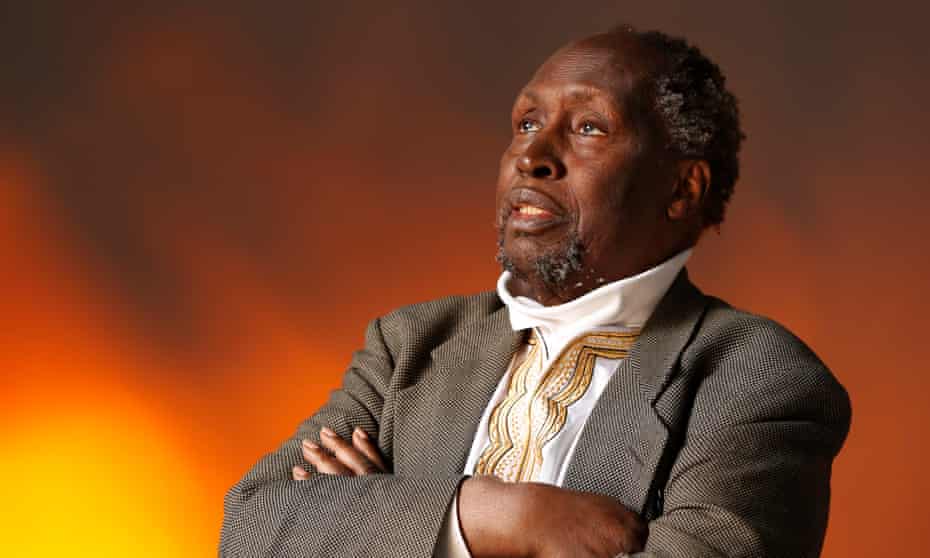
Renowned Nigerian authors have paid tribute to the late Kenyan scholar and literary icon Ngũgĩ wa Thiong’o, who passed away on Wednesday at the age of 87.
Ngũgĩ was a highly prolific writer, known for his novels, plays, short stories, and essays that powerfully critiqued colonialism and examined Africa’s socio-political realities.
His death was announced on Facebook by his daughter, Wanjiku wa Ngũgĩ, who described him as someone who “lived a full life and fought a good fight.”
“It is with a heavy heart that we announce the passing of our dad, Ngũgĩ wa Thiong’o. As was his last wish, let’s celebrate his life and his work. Rîa ratha na rîa thŭa. Tŭrî aira!” she wrote, quoting a Gikuyu phrase that loosely translates to, “With joy and sorrow. We are proud.”
She added that funeral arrangements would be announced by the family in the coming days.
Ngũgĩ’s contributions to African literature are immeasurable. His landmark works include Weep Not, Child, The River Between, Petals of Blood, Wizard of the Crow, The Black Hermit, and Decolonising the Mind, among many others. He was especially known for his decision to abandon writing in English in favor of his native Gikuyu language—a move that reshaped conversations around linguistic imperialism and cultural identity in African literature.
Alongside luminaries such as Chinua Achebe and Wole Soyinka, Ngũgĩ explored the lasting effects of colonialism on African societies, and his influence continues to resonate across generations.
Many Nigerian writers have expressed deep admiration for Ngũgĩ and acknowledged the indelible mark he left on African letters.
Chima Anyadike, a retired professor in the Department of English at Obafemi Awolowo University, Ile-Ife, reflected on Ngũgĩ’s critical role in identifying Africa’s core challenges:
“Ngũgĩ and a few others thoroughly understood the real problems of Africa,language, imperial exploitation through religion, and social inequality. Their lifelong struggle showed that unless these deeply entrenched mental structures are dismantled by Africans themselves, they will remain shackled by the puppets of imperial schemes.”
He added: “Will future generations of Africans be inspired by the great work they’ve done, so that these grains take on new lives and help Africans liberate themselves? Time will tell. May Ngũgĩ’s soul find eternal transformation in the ancestral realm.”
Ademola Adesola, assistant professor at the Department of English, Languages, and Cultures at Mount Royal University and author of several books, wrote:
“Ngũgĩ wa Thiong’o, fare thee well. Thank you for the strength, clarity, and robustness of your polemics. Your candor, contradictions, and controversies challenged the mind. Your just and valiant resistance against colonialism, capitalism, imperialism, and the phoniness of post-independence governance reminds us of the unfinished task before us.”
He recalled his student days at Obafemi Awolowo University, where he immersed himself in Ngũgĩ’s works:
“My final-year long essay, titled Socialist Realism and the African Novel: An Examination of Ngũgĩ wa Thiong’o’s Wizard of the Crow, was supervised by Prof. Chijioke Uwasomba, a devoted Ngũgĩ scholar. May Ngũgĩ’s family and admirers find strength during this period. I look forward to the many celebrations of his life and legacy.”
Professor Chijioke Uwasomba, also of Obafemi Awolowo University, echoed the sense of loss:
“A leading voice in the reclamation of Africa and its people has fallen. It’s a pity that those pimping for imperialism are becoming more brazen, emboldened, and are occupying key positions in their unpatriotic exploitation of the masses. May Ngũgĩ’s strident voice and restless spirit remain evergreen, haunting the rascals in power to their eternal reckoning.”
Segun Adekoya, a retired professor and author, added:
“May the soul of the late Ngũgĩ wa Thiong’o find eternal peace and rest from the turbulence of the world,its carnal desires, pain, strife, and toil. May the slumbering spirit of Africa awaken and strive for the realization of his dream: liberation from all forms of oppression.”
Wale Okediran, Secretary-General of the Pan African Writers Association, expressed deep sorrow at Ngũgĩ’s passing:
“The sudden news of Ngũgĩ wa Thiong’o’s death has left a deep vacuum in the African literary landscape. Beyond his literary contributions, he was a staunch advocate for literature in Indigenous African languages.”
He added that, in line with the family’s call for celebration, the Pan African Writers Association would soon announce a new literature prize to honor African writers producing work in Indigenous African languages.