President Bola Tinubu’s Two Years of Resolute Reforms in a Tenuous Republic
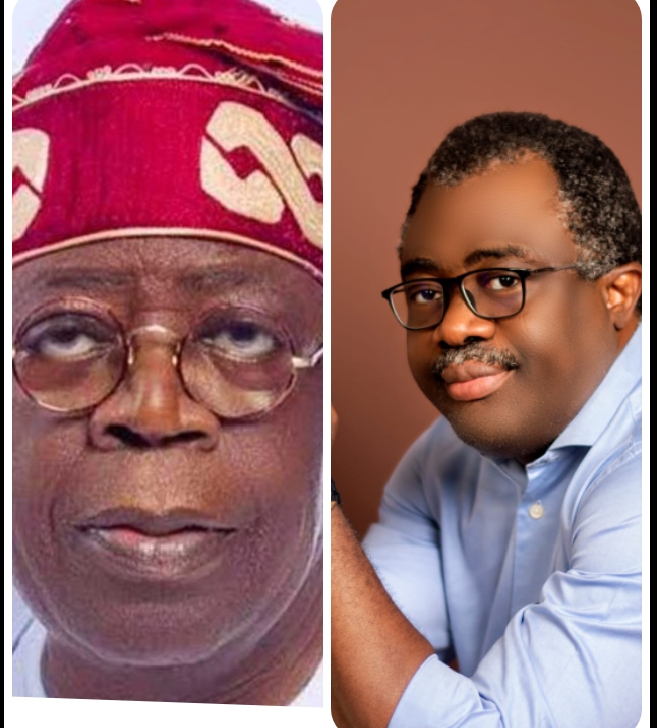
By Sir Paul Chukwuma
A close confidant once remarked, at the height of the 2023 general elections, that it would take a “madman” to aspire to lead Nigeria at such a perilous moment. His words were less hyperbole than diagnosis: at that time, Nigeria epitomized a “wicked problem” a multidimensional crisis with no straightforward solutions and numerous painful trade-offs.
To him, the presidency was a poisoned chalice; any occupant was destined for disillusionment and the gradual erosion of political capital.
Indeed, the economic outlook was grim. Inflation had surged to 22.4% in May 2023, driven by structural inefficiencies, supply shocks, and a ballooning fiscal deficit. Public finances were deeply strained.
According to the Debt Management Office, over 96% of government revenue in 2022 was allocated to debt servicing, with total public debt reaching ₦87.91 trillion by Q3 2023.
Compounding the fiscal crisis was the fuel subsidy, which consumed over ₦4.4 trillion annually,an unsustainable policy that effectively subsidized consumption at the expense of capital formation and long-term productivity.
The foreign exchange market was equally chaotic. The naira was subject to arbitrage across multiple rates official, NAFEX, and parallel,creating distortions that stifled investment and undermined confidence. At its lowest point, the FX backlog had climbed to $7 billion, trapping investors and importers in a bureaucratic maze.
Simultaneously, the Central Bank’s unorthodox monetary policy,marked by unchecked “Ways and Means” advances exceeding ₦27 trillion pumped unbacked liquidity into the economy, further fueling inflation and currency depreciation.
All of this unfolded against a backdrop of deepening insecurity from banditry in the North West to separatist unrest in the South East and growing ethnic and religious divisions that threatened national cohesion.
It was into this inferno that President Bola Ahmed Tinubu stepped on May 29, 2023. His impromptu declaration during his inaugural address “fuel subsidy is gone” was more than rhetorical flourish. It signaled a clear intent to prioritize structural reform over political expediency. For decades, Nigerian presidents had flirted with subsidy removal, only to retreat under the pressure of public discontent. Tinubu, however, acted,decisively and without equivocation.
His administration quickly embarked on a macroeconomic recalibration.
In June 2023, the unification of the FX windows effectively floated the naira, allowing market forces to determine its value. While painful in the short term, this move addressed the entrenched rent-seeking culture fostered by the previous multiple-rate regime. By eliminating arbitrage opportunities, the reforms sought to redirect capital from speculative ventures to productive enterprise.
Under new leadership, the Central Bank adopted a more orthodox monetary stance. It tightened liquidity, raised the Monetary Policy Rate (MPR) to 24.75%, and cleared a significant portion of the FX backlog by Q1 2024. These measures helped restore a degree of investor confidence. The naira, which had plunged to over ₦1,900/$ in early 2024, rebounded to ₦1,200/$ by May 2025, reflecting improved dollar inflows and coordinated fiscal-monetary alignment.
The results are beginning to materialize. The Nigerian Stock Exchange’s All-Share Index surged past 110,000 points in 2025,its highest level ever,driven by foreign portfolio inflows and improved corporate earnings. Many blue-chip companies posted strong FY2024 results, a testament to stabilizing macroeconomic fundamentals. According to the National Bureau of Statistics (NBS), GDP growth stood at 3.5% in Q1 2025, with the World Bank projecting a 3.7% expansion for the full year, fueled largely by services, telecommunications, and a recovering oil sector.
Inflation, though still high at 23.71% in April 2025, has begun to moderate on a month-on-month basis. Notably, food inflation,which had previously exceeded 40% has started to decline, aided by temporary import waivers on grains and fertilizer subsidies aimed at stabilizing supply chains. Nonetheless, significant challenges remain. Insecurity, middlemen-driven price gouging, and logistical inefficiencies continue to hamper agricultural productivity and inflate prices.
Tax revenues are also on the rise. The Federal Inland Revenue Service (FIRS) reported a record ₦12.3 trillion in tax receipts for FY2024—a 47% year-on-year increase,largely due to compliance reforms and digitization. The recently passed Fiscal Reform and Tax Policy Act, once assented to by the President, is expected to deepen revenue mobilization, plug leakages, and broaden the tax base beyond the oil sector.
Yet beyond the metrics, the soul of the nation still needs healing.
No economic recovery can be sustained without national unity. Ethnic mistrust, religious polarization, and regional marginalization remain potent threats to the republic’s stability. The administration must deepen dialogue, promote inclusion, and consciously cultivate a shared sense of ownership in the Nigerian project.
At the two-year mark, President Tinubu’s tenure is defined by audacity. His reforms though painful hold the potential to pivot Nigeria from consumption to production, from patronage to productivity, and from reactive governance to strategic statecraft.
But the journey is far from over.
The path ahead must prioritize inclusive growth. Social safety nets must be expanded. Infrastructure investment must not only increase but also become more efficient. Local manufacturing must be shielded from external shocks and incentivized to scale. Job creation,especially for Nigeria’s youth, who constitute 70% of the population,must transcend rhetoric and become reality.
If sustained, these early reforms may be remembered as the foundation of a new Nigeria: competitive, coherent, and confident on the global stage. But if truncated or mismanaged, they may become yet another chapter in Nigeria’s long catalogue of missed opportunities.
Mr. President, history is watching. And thus far, you have chosen the hard path of reform over the easy applause of populism. For that, posterity may yet commend your courage.
Congratulations on two years of purposeful leadership.
May your boldness yield enduring fruit for this nation.
Sir Paul Chukwuma is the YPP 2025 Governorship Candidate in Anambra State.