


OPINION:Anambra’s Illegal Revenue Collections: Justice Must Be Served Immediately
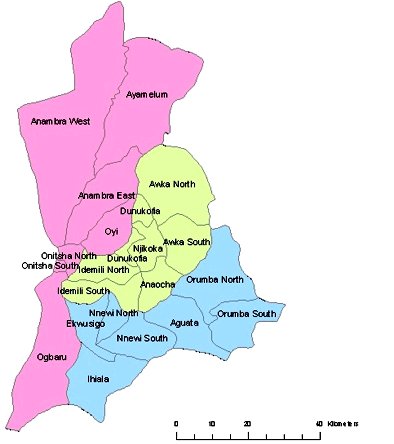
Anambra State Map
By Titus Maduako Eleweke
In a state celebrated for its industrious spirit and vibrant economy, Anambra’s recent struggle with illegal revenue collection remains a troubling paradox. Despite the explicit and unequivocal ban by Governor Charles Soludo on unauthorized levies and extortion, reports indicate that these illicit activities continue unabated, undermining governance, economic progress, and the very dignity of its citizens.
The persistence of illegal revenue collection in Anambra State is not merely an administrative lapse but a deliberate act perpetrated by a network of corrupt individuals who exploit their positions of authority for personal gain. These actors range from low-level revenue agents to influential local government officials and even security operatives who collude with these revenue extortionists under the guise of official duties.
At the grassroots, touts and unauthorized agents often harass traders, motorists, and business owners, demanding illegal levies in the streets and markets. At a higher level, some local government officials, ostensibly responsible for legitimate revenue generation, are complicit or indifferent, turning a blind eye as their agents engage in these practices. Certain security personnel, rather than protecting citizens, have been implicated in facilitating or directly benefiting from these unlawful demands.
This phenomenon thrives because of weak enforcement, lack of transparency, and fear among victims to report these abuses. The continuation of illegal levies despite the governor’s directive signals an urgent need for stronger institutional oversight and accountability.
The consequences of unchecked illegal revenue collection are far-reaching:
With this bizarre,Citizens lose confidence in government institutions when they see rules flouted without consequence. The governor’s authority is undermined, weakening governance overall.
The Illegal levies increase the cost of doing business, discourage investment, and stifle economic growth. Traders and commuters bear the brunt, often forced to pay multiple unauthorized charges, which in turn fuel poverty and inequality.
When those involved in illegal collections go unpunished, it emboldens a culture of impunity, where corrupt practices flourish at all levels of governance.
Many victims experience harassment, intimidation, and sometimes violence, which violates their basic rights and freedoms.
The call for punishment is not merely retributive but necessary to restore order, uphold the rule of law, and protect the economic interests of Anambra State’s citizens. The government must deploy transparent investigations and judicial processes to hold all perpetrators accountable, regardless of rank or influence.
Governor Soludo’s ban on illegal revenue collection is commendable and reflects a commitment to reform. However, words alone will not suffice. Anambra State must back these declarations with decisive action. Authorities must root out those who exploit the populace under the guise of revenue collection and send a clear message that corruption and extortion will not be tolerated.
For Anambra to truly thrive, justice and accountability must prevail. Only then can the state reclaim its reputation as a beacon of progress and opportunity in Nigeria.