
Amid WAFCON, AfroBasket Triumphs, Grim Data Shows Athletes Dying on Nigerian Roads
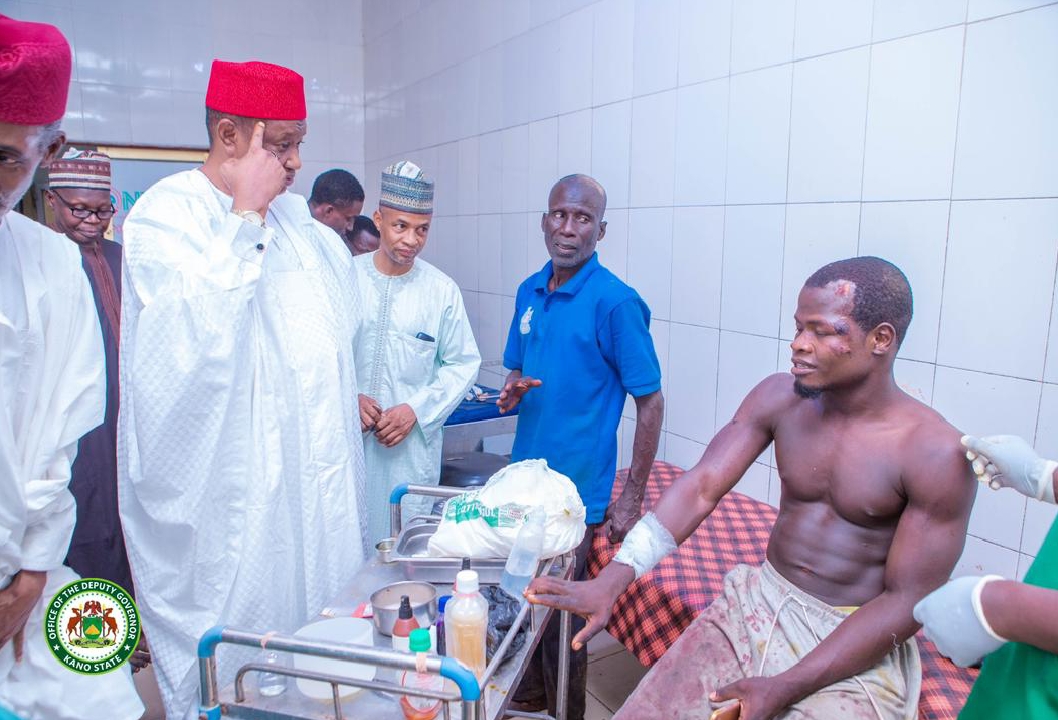
Nigerian Athlete in hospital
While Nigerians celebrate recent victories at WAFCON and AfroBasket 2025, data reveals a disturbing pattern: many athletes lost their lives in road crashes between April and June 2025 across several states while traveling to or from competitions.
An analysis of road accident data by our reporter project focused on developmental data in Nigeria, reveals a troubling intersection between sports and transportation safety. Within the second quarter of 2025, at least 383 people died in road crashes involving 948 persons, while 426 others sustained various degrees of injuries.
Among these figures, six crashes involved 55 sportspersons, resulting in 27 deaths and 28 injuries with incidents reported from Sokoto to Plateau, Lagos to Kano, and along the Benin-Ore Expressway in Edo and Ondo States.
These incidents call for deep reflection. Beyond awarding monetary prizes, providing apartments, or bestowing national honours on successful athletes, the Nigerian sports industry needs structural support particularly in safe, efficient transport.
Crashes Involving Sports Contingents
From Yobe Desert Stars players to contingents from Kano and Lagos States attending the National Sports Festival in Ogun State, and even a lone cyclist on a Lagos road, the data tells a tragic story of athletes at risk. Fuel tankers and heavy-duty cargo trucks frequent contributors to road fatalities—remain a persistent hazard.
Despite repeated Freedom of Information (FOI) requests to the Federal Road Safety Corps (FRSC), the agency did not release official crash data. As such, the figures may underrepresent the true scale. Our analysis relied on documented media reports from April 1 to June 30, 2025.
Athletes and Road Danger: A Survivors’ Tale
Former Nigerian international Brown Ideye, currently playing for Enyimba FC, recently voiced frustration about the conditions in Nigeria’s football leagues. He cited long road journeys, often under poor safety conditions, as a major burden,once traveling from Aba to Kano by road, only to play a match the following day.
Stakeholders such as Godwin Enakhena, Chairman of the Nigeria National League Club Owners and Managers Association (NALCOMA), and Adekunle Salami, Vice President of the Guild of Sports Editors, weighed in on the implications of Nigeria’s unsafe roads on sports development.
Salami noted that many incidents go unreported to avoid negative publicity. He revealed that investigations into the Kano athletes’ crash found that the same driver who drove the team to Abeokuta was behind the wheel when the fatal crash occurred.
“In other parts of the world, drivers must not operate for more than four hours straight. Here, one driver may travel from Lagos to Maiduguri and back. It’s unsustainable and dangerous,” Salami said.
He proposed subsidized air travel for athletes, better vehicle maintenance, and regional competition formats to reduce travel strain.
Enakhena, while admitting that NALCOMA is largely powerless to address systemic issues like bad roads, acknowledged that some NPFL clubs have secured airline partnerships but noted that similar arrangements are rare in the lower leagues.
“The NNL season is already structured regionally to reduce travel burdens. Only during the Super 8 are teams required to travel cross-regionally,” he said.
Tankers and Structural Failures in the Oil Sector
Titilope Anifowoshe, CEO of OlaTaram Oil and Gas Limited, attributed frequent fuel tanker crashes to deeper structural problems in Nigeria’s downstream sector.
“Most tanker drivers learn on the job,akin to apprenticeships. That’s dangerously inadequate for vehicles transporting combustible materials,” she noted.
She called for standardized training, regular fitness testing, and digital tracking for tanker drivers.
She also advocated shifting fuel transportation to rail and water modes, describing Nigeria’s dependence on road haulage as both dangerous and unsustainable.
Crash Statistics: A State-by-State Breakdown
It was recorded 295 vehicle-involved crashes nationwide in Q2 2025, including cars, commercial buses, motorcycles, tricycles, tankers, and trailers,Lagos State led with 34 crashes, followed by Ogun (17), Oyo (16), and FCT Abuja (8),Lagos also recorded the highest number of fatalities at 60 deaths, followed by Kano (42), Ogun (40), Borno (30), and Kogi (25),Crashes were reported in 32 out of 36 states, including single cases in Sokoto, Plateau, Cross River, Delta, Imo, Taraba, and Benue,Weekly Crash Log (April–June 2025)
Week 1 (April 1–7),14 crashes, 180 people involved, 60 deaths. Highlights:,Yobe Desert Stars team injured in Sokoto en route to Birnin Kebbi,15 killed in Kano bus crash,18 died during rescue operations in Ogun.,Abuja: Truck rammed into tricycles; Lagos’ Otedola bridge witnessed another crash.
Week 2 (April 8–14),7 cases, 35 involved, 6 deaths,Jigawa council chairman killed in a hit-and-run,Fatal truck collision in Bauchi; Ebonyi crash killed a baby and a woman.
Week 3 (April 15–21),11 crashes, 57 involved, 21 deaths,Petrol tankers caught fire in Oyo,Easter Monday crash in Gombe involving worshippers.
Week 4 (April 22–28),79 people involved, 46 deaths,Plateau: Bus carrying footballers crashed, killing 4 in Borno, 26 killed after a van hit an IED, Lagos: Cyclist killed; truck veered off bridge crushing buses.
Week 5 (April 29–30), Several deaths in Lagos, Kaduna, Benue, and Ondo crashes.
Week 6 (May 6–12),12 crashes, 48 people involved, 17 deaths,Dispatch riders killed in Lagos,Masquerade crushed in Anambra; pedestrians killed in Rivers.
Week 7 (May 13–19),9 crashes, 104 involved, 11 deaths, 43 injured,Team Lagos athletes involved in crash,Kerosene tanker crash in Oyo.
Week 8 (May 20–26),13 cases, 81 involved,Predominantly reported in Kogi, Lagos, Benue, Abuja.
Week 9 (May 27–31),13 cases, 102 involved, 54 deaths,22 Kano athletes died on the Kano-Kaduna highway,22 other fatalities recorded on May 28 across six states.
Week 10 (June 3–9),7 cases, 55 people, 32 deaths,Jigawa, Lagos, and Kaduna had the highest casualties.
Week 11 (June 10–16),14 cases, 42 people, 25 deaths,Lagos crash claimed 5 lives; truck crash killed 5 in Oyo.
Week 12 (June 17–23),9 cases, 30 people involved, 12 deaths,Imo crash on June 23 killed 9 due to overspeeding in bad weather.
Week 13 (June 24–30),10 crashes, 82 people involved, 36 deaths, 41 injuries,Lagos-Ibadan and Gombe crashes killed 10 and 8 people, respectively.
In a show of community responsibility, the Alabi family of Ilobu, Osun State, donated a desktop computer and printer to the local FRSC command.
Temitope Aluko, Chief Route Commander, acknowledged that the unit had previously operated without printing facilities and expressed gratitude for the donation, which will enhance the agency’s capacity to serve.
Conclusion
While sports achievements are being celebrated, the tragedies suffered by athletes on Nigerian roads demand urgent attention. Stakeholders agree that without investments in infrastructure, road safety, regulated transport, and professional standards, the cycle of avoidable deaths will persist—silently eroding the soul of Nigerian sports.
Infographics by: Adeola Ajibola