


ASUU Tells FG, Only Addressing Union’s Demands Can End Strike in universities
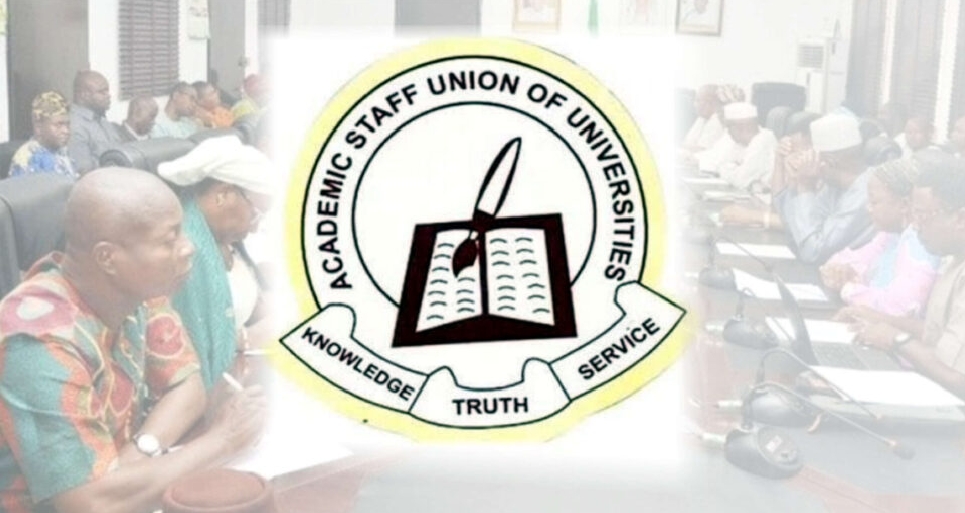
The Academic Staff Union of Universities (ASUU) has warned that unless the Nigerian government takes a definitive stance on the report from the renegotiation committee of the 2009 FGN-ASUU Agreement, its members may soon withdraw their services.
ASUU stated that the only way to avert an industrial strike is to comprehensively address the union’s demands in the shortest possible time.
According to ASUU, several government-appointed committees have reviewed the renegotiated agreement. The most recent committee, chaired by former Secretary to the Government of the Federation, Yayale Ahmed, submitted its report eight months ago.
In a statement dated Friday, 8 August, made available to journalists on Saturday, ASUU responded to the Minister of Education, Tunji Alausa’s claim that no trade unions in the education sector including ASUU would not go on strike again under President Bola Tinubu’s administration.
The statement was personally signed by ASUU President Chris Piwuna, a professor of medicine and consultant psychiatrist at the University of Jos Teaching Hospital in Plateau State.
Mr. Alausa, made his remarks recently during a Channels Television flagship program, “Politics Today,” where he reacted to ASUU’s threat to embark on industrial action if the government failed to implement the renegotiated agreement.
During the Channels Television program aired on Tuesday, 29 July, Mr. Alausa said President Tinubu had directed that ASUU or any other union in the education sector should never again be allowed to go on strike.
He added that the government is prepared to continue engaging the lecturers’ union and other trade unions in the sector to ensure mutually beneficial relationships and prevent unnecessary industrial actions.
However,Piwuna warned that ASUU members would not hesitate to withdraw from their duties if the government continues to take them for granted.
In its statement titled “Act Now to Avert the Looming Crisis,” ASUU said the minister’s optimism about peace on campuses was based solely on the government’s strategy of “dialogue, maintaining good relationships with union leaders, and meeting union demands.”
ASUU insisted there can be no peace on public university campuses nationwide unless the government acts on the outstanding issues.
He addressed several lingering problems with the government, including the unimplemented agreement, poor welfare conditions for lecturers, the exodus of union members abroad due to harsh working conditions, and the proliferation of universities.
The statement reiterated ASUU’s demands and highlighted the dissatisfaction among lecturers.
It reads in part:“Feelers from campuses across the country indicate that lecturers in Nigerian public universities are, to put it mildly, unhappy. They teach students on empty stomachs. They conduct research in libraries and laboratories lacking essential electronic and physical journals, books, chemicals, and reagents.
“They engage with communities and agencies using rickety cars, burdened by utility bills, children’s school fees, house rents, family upkeep, and a host of other unmet responsibilities. Yet elite Nigerians are quick to blame the universities for producing unemployable graduates and failing to initiate innovative research to solve the country’s problems. Our members feel forgotten, shamed, and demoralized by past and present governments
ASUU’s statement is reproduced in full:
ACADEMIC STAFF UNION OF UNIVERSITIES (ASUU)
FESTUS IYAYI NATIONAL SECRETARIAT COMPLEX, UNIVERSITY OF ABUJA,
GIRI, ABUJA
PRESS RELEASE
ACT NOW TO AVERT THE LOOMING CRISIS
The Minister of Education, Dr. Tunji Alausa, was recently quoted to have declared that “not again ever in this country will ASUU or tertiary institutions, trade unions, teachers, lecturers go on strike”. He predicated his declaration (optimism) on the government’s strategy of “dialogue, maintaining a good relationship with union heads (leaders) and meeting the demands of the unions”. While ASUU shares his optimism about dialogue and maintaining relationships, the government needs to go beyond words and act on our outstanding issues.
Feelers across campuses indicate that lecturers in Nigerian public universities are, to put it mildly, not happy. They teach students on empty stomachs. They conduct research in libraries and laboratories bereft of essential electronic and physical journals, books, chemicals, and reagents. They engage with communities and agencies in rickety cars while encumbered by utility bills, children’s fees, house rents, family upkeep, and a legion of other unmet responsibilities. Yet elite Nigerians are quick to blame the universities for “producing unemployable graduates” and for failing to initiate innovative research for addressing the country’s problems. Our members feel forgotten, shamed, and demoralised by past and present governments
ASUU has ceaselessly warned owners (government and visitors) of public universities – the Federal and State Governments – of the consequences of breeding a disempowered, dissatisfied, and disorientated intellectual workforce. At the centre of the union’s advocacy is respect for collective bargaining principles as enshrined in the International Labour Organisation’s (ILO) Convention No. 98 of 1949 and Convention No. 154 of 1981. The flip-flop disposition of successive governments towards collective bargaining has created an atmosphere of distrust that will take extra efforts and energy on the part of the current Federal Government to dispel. Nothing illustrates this antipathy better than the frustrated attempts to conclude the renegotiation of the 2009 FGN-ASUU Agreement, despite submission of a draft agreement by the Alhaji Yayale Ahmed committee to the government since December 2024, eight clear months ago!!
Every major dispute ASUU has had with governments since 2012, when the 2009 Agreement was due for renegotiation, emanated from failure to respect the provisions of the signed document on (i) conditions of service; (ii) funding; (iii) university autonomy and academic freedom; and (iv) other matters including the review of the laws governing the National Universities Commission (NUC) and Joint Admissions and Matriculation Board (JAMB). Agents of government at the State and Federal levels have characteristically thrown the underlying principles of the Agreement overboard and resorted to platitudes and tokenism. They pick and choose what aspect(s) of the package to “renegotiate” and implement. They discountenance the morale of intellectual workers and basic requirements for delivering on their mandate of teaching, research, and (community) service. And, now, we hear of attracting academics who were forced into seeking a better work environment elsewhere as “volunteers” with the “Diaspora Bridge”! On what foundation will the bridge stand? Does this not amount to hypocrisy?
Nigerian governments have distracted and deceived university lecturers for too long. They push academics to the point of a strike, and turn round to withhold their salaries. A government introduces a corruption-laden IPPIS, yet goes ahead to punish lecturers for opting out of the pipeline of corruption. Lecturers are promoted in the universities, but those responsible for giving cash backing withhold it with impunity, with several years of promotion areas outstanding. When a government punishes its citizens for demanding what is due to them, can it have any moral claim to a democratic culture? Where public officials and bureaucrats have the license to undervalue their country’s intellectual assets, will the hope of a knowledge-driven economy not elude the nation?
Our union is also gravely concerned by decisions of some governing councils at the federal and state Universities. Universities that are built on merit and scholarship are being turned into commodities for politicians and contractors in the appointment of Vice Chancellors. ASUU condemns the attempt to bring back the Ag. Vice Chancellor of Alvan Ikoku University of Education, despite clear evidence to the fact that her promotion to the rank of a Reader and Professor was fraught with a lot of contradictions, similar things are unfolding in federal universities.
For the umpteenth time, ASUU invites all genuine patriots to prevail on Nigeria’s Federal and State Governments to address all lingering labour issues in the Nigerian University System to avert another looming industrial crisis. Nigerian academics are tired of governments’ excuses, which have only left them with a long list of Memoranda of Understanding/Memoranda of Action (MoUs/MoAs) – 2013, 2017, 2019, 2020 – and kept them talking over the renegotiation of the 2009 Agreement for upward of eight years! No memorandum or “discussion” can take the place of a Collective Bargaining Agreement (CBA), which fully addresses staff welfare issues and the requisite environment for productive academic work. The time to act is now!
Christopher Piwuna
ASUU President