

The Myth, Perception, Reality of the Udo Deity: Leadership Crisis in Nnobi
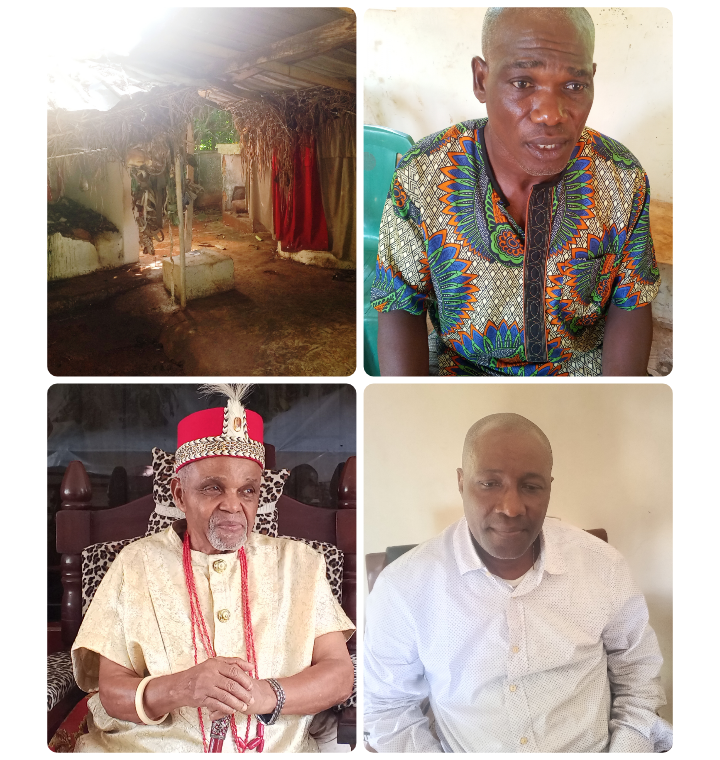
Nnobi, a town in Idemili South Local Government Area of Anambra State, is widely recognized for its entrepreneurial spirit and thriving industries. Unfortunately, the town has recently garnered negative attention due to increasing insecurity, rising crime rates, and disturbing allegations involving the use of a traditional deity known as Udo. These claims particularly implicate the chief priest, Chijioke Okaa, in perpetuating various evils through the shrine.
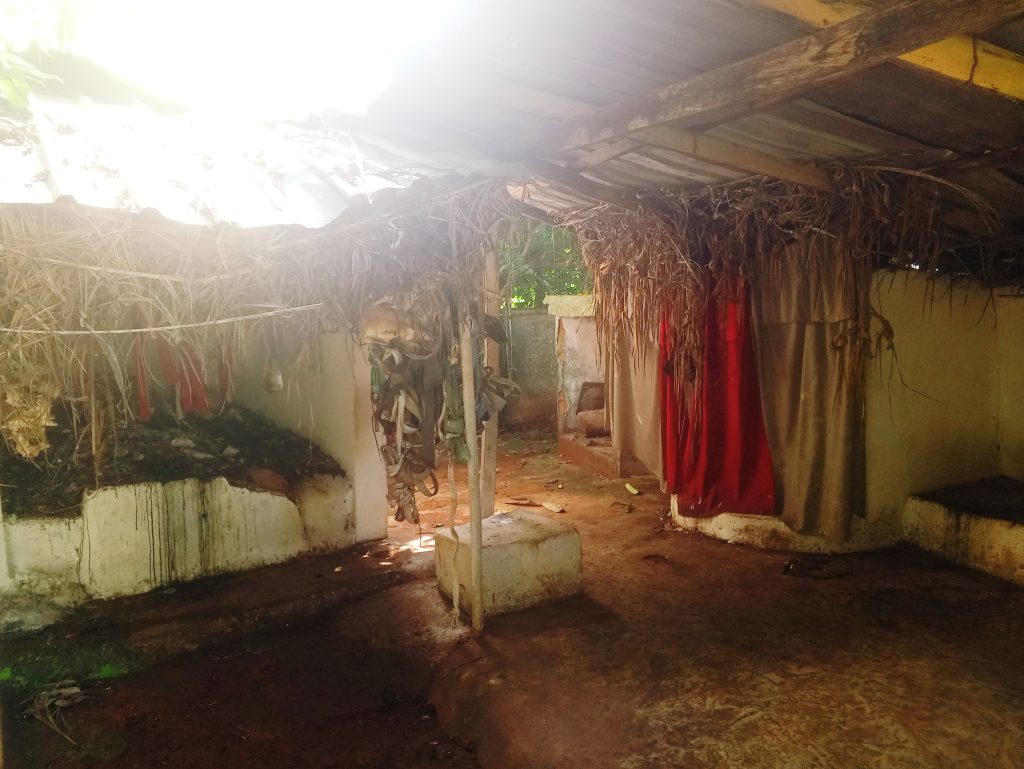
Udo deity
Nnobi serves as the head of the 17 communities within Idemili and is home to many prominent deities, with Udo being among the most significant. The town holds cultural and traditional importance in the region.
Allegations Against the Chief Priest and the Udo Shrine
Recently, serious accusations have emerged against Chijioke Okaa, the chief priest of the Udo shrine located in Awuda quarter, Nnobi. These allegations include involvement in organ harvesting, ritual killings, the forceful acquisition of land through the shrine’s influence, and even the dumping of dead bodies within the shrine premises. Critics claim these nefarious activities are directly linked to the worsening insecurity challenges in Nnobi.
Some concerned citizens have petitioned the state government regarding land disputes and the alleged criminal activities linked to the chief priest. Consequently, Chijioke Okaa was arrested by the Agunachemba (traditional security), though he was later released. Investigations into the matter are still ongoing.
Perspectives from Nnobi Leadership
Seeking clarity, insideoutnewsng.com interviewed key community leaders, including Barrister Dominic Okpala, the President General of Nnobi Town Union; HRM Igwe Nick Obi, the traditional ruler of Nnobi; and members of the Ugochukwu family, custodians of the Udo deity in Awuda quarter.
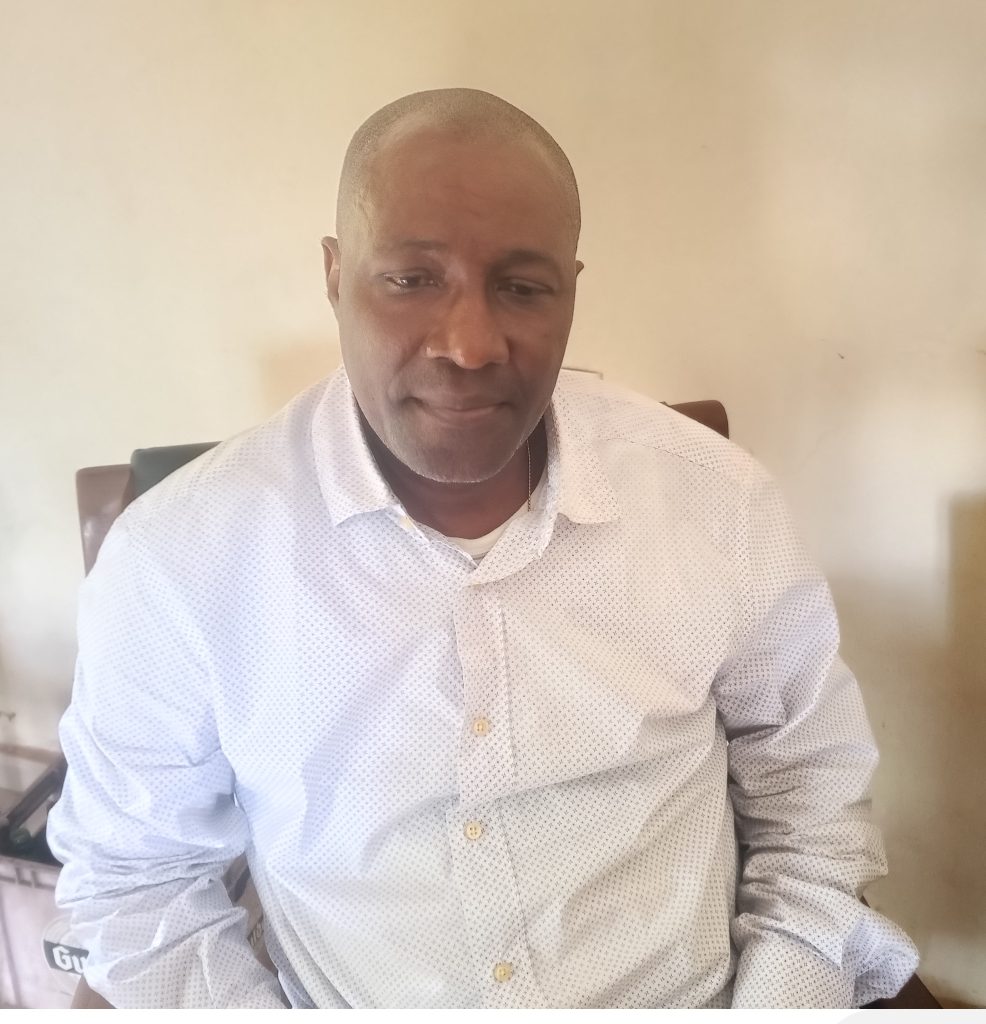
Barrister Dominic Okpala, President General of Nnobi Town Union
Barrister Dominic Okpala, President General of Nnobi Town Union:
Barr. Okpala emphasized that his role is strictly administrative; he is not responsible for cultural or traditional matters. He expressed ignorance regarding the allegations against the Udo shrine, stating that no formal or informal complaints have been brought to his attention.
He clarified that cultural custodianship lies with the Igwe (traditional ruler), and he is unsure if the Igwe is aware of these accusations. However, he assured that should any complaints arise officially, the Town Union would establish a committee involving the Igwe-in-Council to investigate and respond accordingly.
Regarding specific allegations such as organ harvesting, ritual killings, and land grabbing, Barr. Okpala said:I cannot comment on organ harvesting or the dumping of dead bodies because I have no knowledge of such practices. None of these issues have been formally reported to me. However, I am aware of a case involving the discovery of a woman’s dead body from Awuda and another from Ebenese around Nimo. This case was initially handled by Akwuzu SARS before being transferred to Awka. We are actively following up to ensure justice is served. Strange as it may be, I have heard the suspect has been released and is freely roaming the streets.”
When asked about the chief priest Chijioke Okaa’s involvement in such acts, he responded:”I have heard the name but do not know him personally and cannot speak to his activities or the deity’s functions.”
On the subject of dead bodies being dumped at the Udo shrine, he remarked:
“Our community constitution does not recognize such practices in relation to the Udo shrine. If such acts occur, they are acts of self-help and not tradition. I have heard of similar incidents elsewhere, such as the Okija shrine, but never in Nnobi. If true, it would be deeply troubling.”
Regarding the issue of insecurity in Nnobi, often attributed to the shrine’s influence, Barr. Okpala stated:”Before I became President General, Nnobi was plagued by insecurity,dead bodies were a common sight, and the community was notorious for criminal activity. Since our administration began, we have worked tirelessly to restore peace. On June 23, 2023, we established the Nnobi Central Security Team, which has significantly reduced crime. While no community is completely free of crime, our security operatives are among the most disciplined in the state.”
He denied knowledge of any bribery or harassment by security personnel under his watch and urged that if such acts occur, they would be dealt with severely.
On the mayor of Idemili South bringing in external security operatives:
“We were not aware when the mayor brought in security personnel into Nnobi. These operatives intimidated our local security team and restricted their operations, prompting protests and official complaints to the police, DSS, and the Commissioner for Homeland Security. Subsequently, the mayor apologized.”
Regarding a retired Anambra born U.S. military officer, Bonaventure Ezekwenna, who claimed harassment linked to Chijioke Okaa, Barr. Okpala expressed skepticism and questioned whether his security team was aware of such claims.
Leadership Crisis in Nnobi
He said:The leadership crisis in Nnobi community has persisted for some time. A significant source of this turmoil stems from a faction within the community, specifically from the quarter where the Igwe originates. This group is deliberately fueling the conflict as part of a strategy to weaken the central authority, undermine community welfare, and disrupt the organizational structure of Nnobi.
Nnobi town comprises three quarters: Ebenise, Ngo, and Awuda, with Awuda being the youngest. Presently, most challenges arise from Awuda, which also houses the community’s deity.
The roots of this problem trace back to the tenure of Governor Chinwoke Mbadinuju. During his administration, he created 68 autonomous communities across the state, including Awuda quarter in Nnobi. On May 21, 2003, Awuda received its certificate of autonomy. However, when Chris Ngige assumed office, the State House of Assembly invalidated these autonomous communities.
Approximately sixteen communities challenged this decision in court, with Awuda listed as the 14th plaintiff. On December 11, 2006, Justice Ezendi ruled in favor of validating the autonomous communities, a verdict celebrated by Awuda with a 21-gun salute.
The state government appealed, and the Court of Appeal overturned the judgment, effectively abolishing autonomous communities statewide. Awuda, alongside other communities, escalated the matter to the Supreme Court, where the case remains pending, with Awuda still a key party.
Since then, relations within Nnobi have deteriorated. Awuda’s persistent pursuit of autonomy has alienated them from the rest of Nnobi. The town union’s efforts at unity are often countered by Awuda’s divergent agenda, leading to a lack of cohesion. According to Section 14 of the Nnobi constitution, while the three quarters may hold separate meetings, any discussion must not be detrimental to the town’s progress and development. Unfortunately, Awuda’s actions have been more divisive than unifying, despite the Igwe himself being from Awuda.
Before my appointment as President-General (PG), during a discussion at the Igwe’s palace involving stakeholders from all three quarters, Awuda representatives claimed they had abandoned the pursuit of autonomy. They presented several newspaper articles supporting this stance. However, as a lawyer, I emphasized that only a formal letter withdrawing from the Supreme Court case would convincingly end the matter. To date, Awuda remains listed as the 14th plaintiff in the suit, with no official withdrawal.
Traditional Ceremonies in Nnobi
He said :Due to the ongoing crisis, Nnobi was unable to celebrate the 2025 New Yam Festival.
The community traditionally observes a ceremony called “Olulu”, which precedes “Ikpoji.” Olulu is associated with “Chi Idemili,” a deity located behind Afor Nnobi market.
The sequence begins with the Olulu celebration, followed by Isi Ana celebrating the New Yam Festival, then the Igwe’s celebration, and subsequently, the respective quarter heads celebrate within their quarters. The final town-wide festival, “Asa Olu,” typically takes place on the last Saturday of September.
However, in 2025, just one day before Olulu was to conclude, a lawyer from Awuda, accompanied by members of the same quarter, obtained a court injunction from the Magistrate Court in Nnobi restraining the Olulu celebration. This unprecedented legal action disrupted the traditional calendar.
Some claim that Olulu is not constitutionally recognized in Nnobi, but it is explicitly mentioned in the Igwe’s council bylaws. The failure to celebrate Olulu led the Chief Priest Isi Ana to withhold Ikpoji, which is essential before the New Yam Festival. Despite this, the Igwe proceeded to celebrate his New Yam Festival, which deviates from the community’s cultural practices.
As a result, the Nnobi general meeting officially decided not to celebrate the New Yam Festival in 2025.
Igwe Nnobi HRM Nike Obi’s Response on Asa Olu Celebration
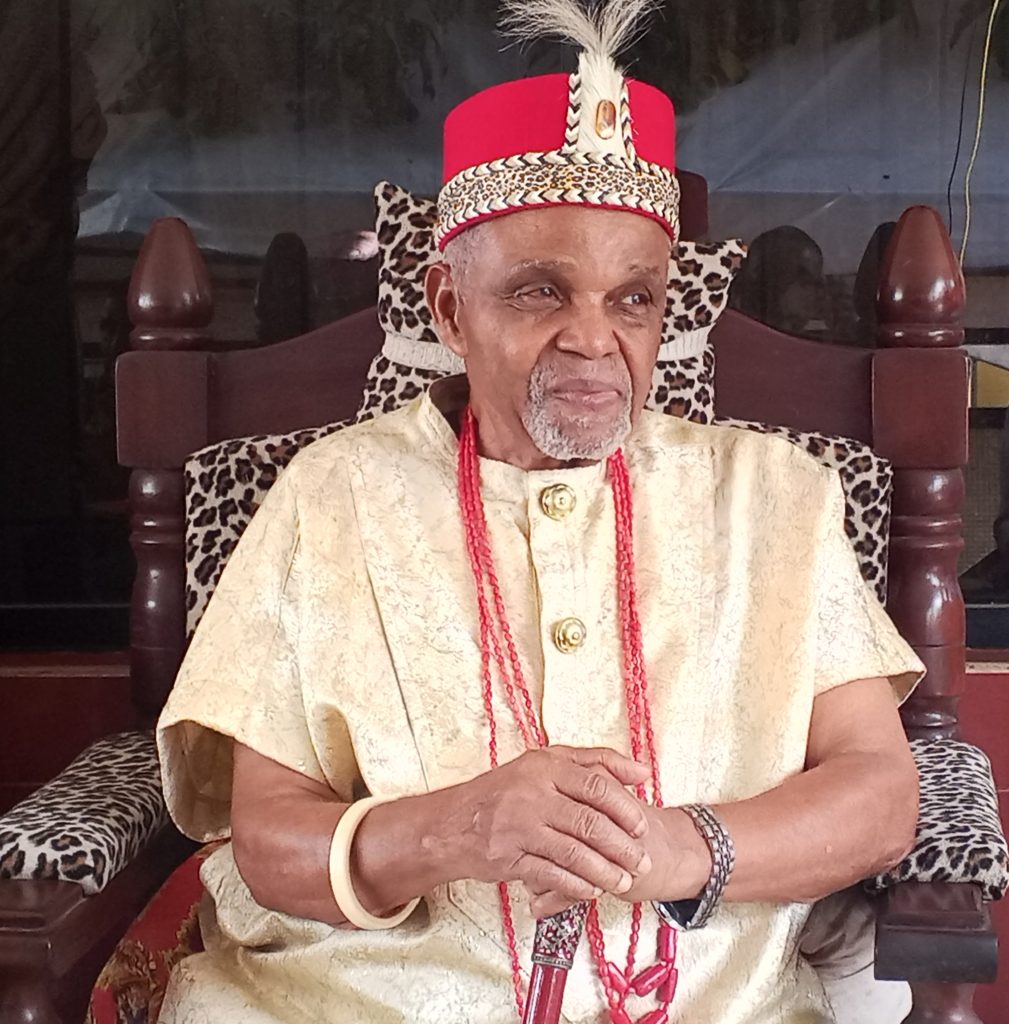
Igwe Nnobi HRM Nick Obi
The Igwe explained that Asa Olu celebrates farming and the harvest. It is a thanksgiving to God for a peaceful farming season and a plea for grace in the upcoming season. Ikpoji, performed by Isi Ana Nnobi, officially signals the market’s opening for yam sales; without it, yams cannot legally be sold.
Following Ikpoji, within a week, the Igwe performs Iwaji, urging other quarters to do likewise, culminating in Asa Olu, which unites the community in celebration. The festival of Ofala is the final celebration of the Nnobi festival cycle.
This year, due to the loss of the community chairman, festivities were scaled down in his honor.
Regarding the absence of Ikpoji and the Igwe’s independent celebration, the Igwe stated that Isi Ana’s failure to perform Ikpoji constitutes a dereliction of duty. No court order prohibits Ikpoji; the injunction only restricts Olulu at a particular location.
Nnobi is the head of Idemili, home to the Idemili shrine, overseeing 17 communities that pay annual obeisance. By state law, the Igwe is the custodian of culture, tradition, and customs; no one can override the Igwe in these matters. The Igwe is responsible for upholding these traditions and leading all town celebrations.
On Autonomy
The Igwe expressed ignorance of any Supreme Court case regarding Awuda’s autonomous status, noting Awuda’s stated disinterest in pursuing autonomy. The autonomous community law allows the state to allocate funds accordingly, but both the Anambra State government and traditional rulers oppose autonomous communities.
Since the Court of Appeal nullified the autonomous community law and the State Assembly passed legislation abolishing autonomous communities, the issue should be considered settled. While states like Imo and Abia recognize autonomous communities, Anambra does not.
Regarding the Alleged Dumping of Corpses and Property at Udo Deity
The Igwe denied any knowledge of corpse dumping at the Udo shrine, suggesting that such practices may have existed 200 to 300 years ago but are not part of current traditions.
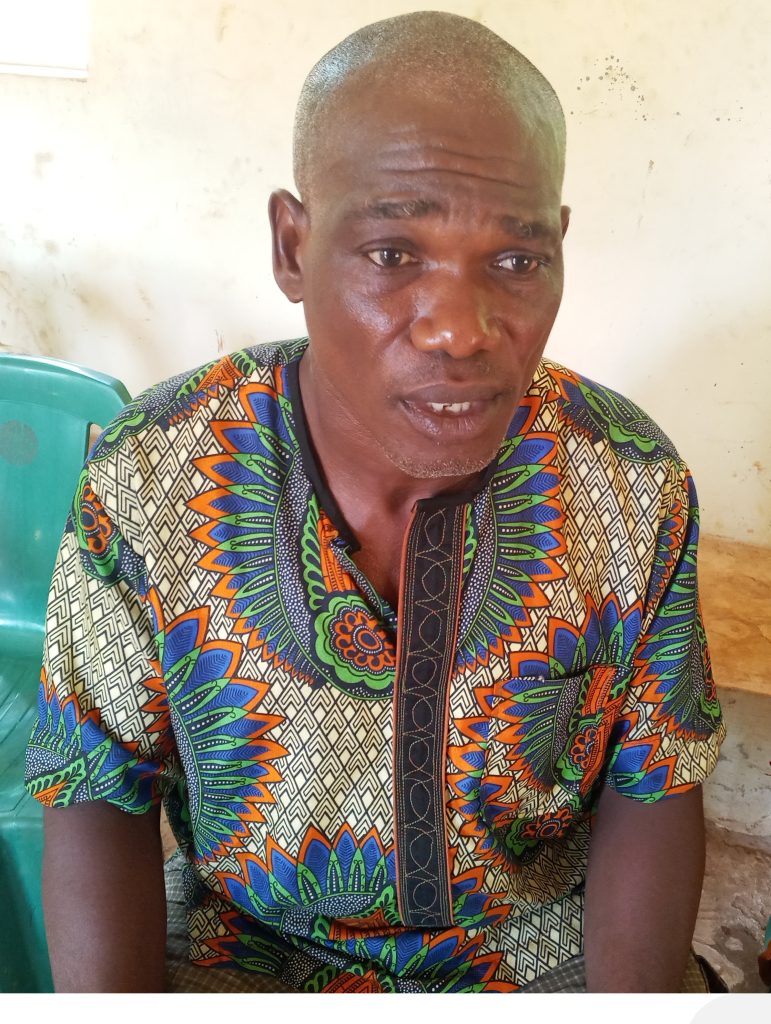
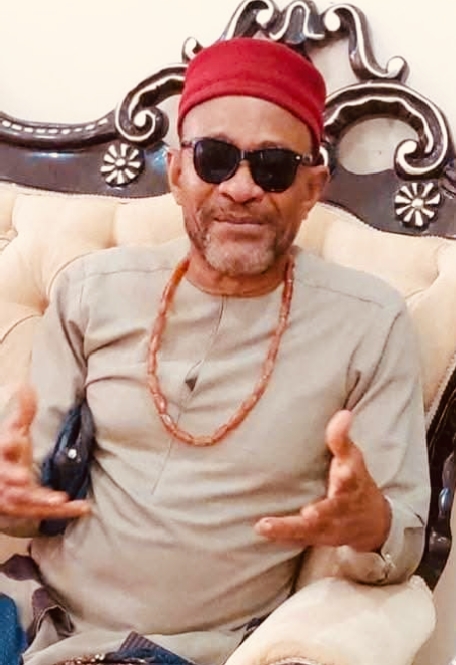
Sunday Ugochukwu
Sunday Ugochukwu, in charge Obi Ugochukwu family ,the custodian of the Udo shrine, explained that the Udo deity was established by their ancestors to protect the land and defend the oppressed. It serves as a guardian of justice, fairness, and truthfulness. If someone oppresses another, the oppressed can seek Udo’s intervention. Udo does not harm the innocent or engage in unjust wars.
When Udo adjudicates and finds someone guilty who refuses to make amends, it can enact severe consequences, including dead ,seizing the offender’s property. The property remains with the shrine until the offended party is appeased and compensation made. Refusal leads to further pursuit by Udo.
He said the Chief Priest strictly adheres to due process; manipulation would endanger his life. Trials before Udo require the presence of both parties, and no one is tried in absentia.
On Allegations Against Chief Priest Chijioke Okaa
Sunday Ugochukwu refuted claims that Chief Priest Okaa misuses the shrine for personal gain or intimidation. He described Okaa as a just and upright man. He said that no dead bodies have ever been dumped in the shrine during his lifetime, though people occasionally bring offerings like cattle for ritual purposes.
One Bonaventure Ezekwenna, an indigene of Awuda quarter, accused Okaa of misappropriating land and intimidating residents through Udo. Ezekwenna claimed to have purchased land for N10 million from Okaa’s niece, while Okaa allegedly claims ownership based on a N20 million transaction with the same niece. He also accused Okaa of threatening his life and manipulating justice.
He responded that he had no knowledge of these allegations and emphasized that anyone bringing disputes before Udo is urged to settle conflicts openly. The Udo shrine is for justice and does not favor unjust ones.
On Claims of Organ Harvesting and Land Grabs
He strongly denied that Okaa engages in criminal acts such as organ harvesting or illegal land acquisition. He said that the shrine’s purpose is justice, and any abuse would lead to the perpetrator’s downfall.
He called on anyone with evidence of wrongdoing to come forward for investigation, highlighting the importance of due process and verification of facts, including purchase documents and payment proof.
The Udo deity’s laws strictly forbid murder, hindrance of progress, and bearing false witness.
Personal Reflection
At 50 years old and as the custodian of the Ugochukwu family charged with the care of the Udo shrine,he affirmed his deep understanding of the deity’s role in promoting justice and fairness in the community.
The situation in Nnobi highlights the complex intersection of tradition, leadership, and law enforcement in addressing contemporary challenges. While allegations surrounding the Udo deity and its chief priest are serious and disturbing, the community’s administrative and traditional leaders maintain a cautious stance, emphasizing due process and investigation. The evolving security landscape in Nnobi underscores the need for coordinated efforts among traditional authorities, local government, and security agencies to restore peace and trust within the community.