EFCC Recovers ₦566bn, $411m, 1,502 Properties in Two Years Under Olukoyede’s Leadership
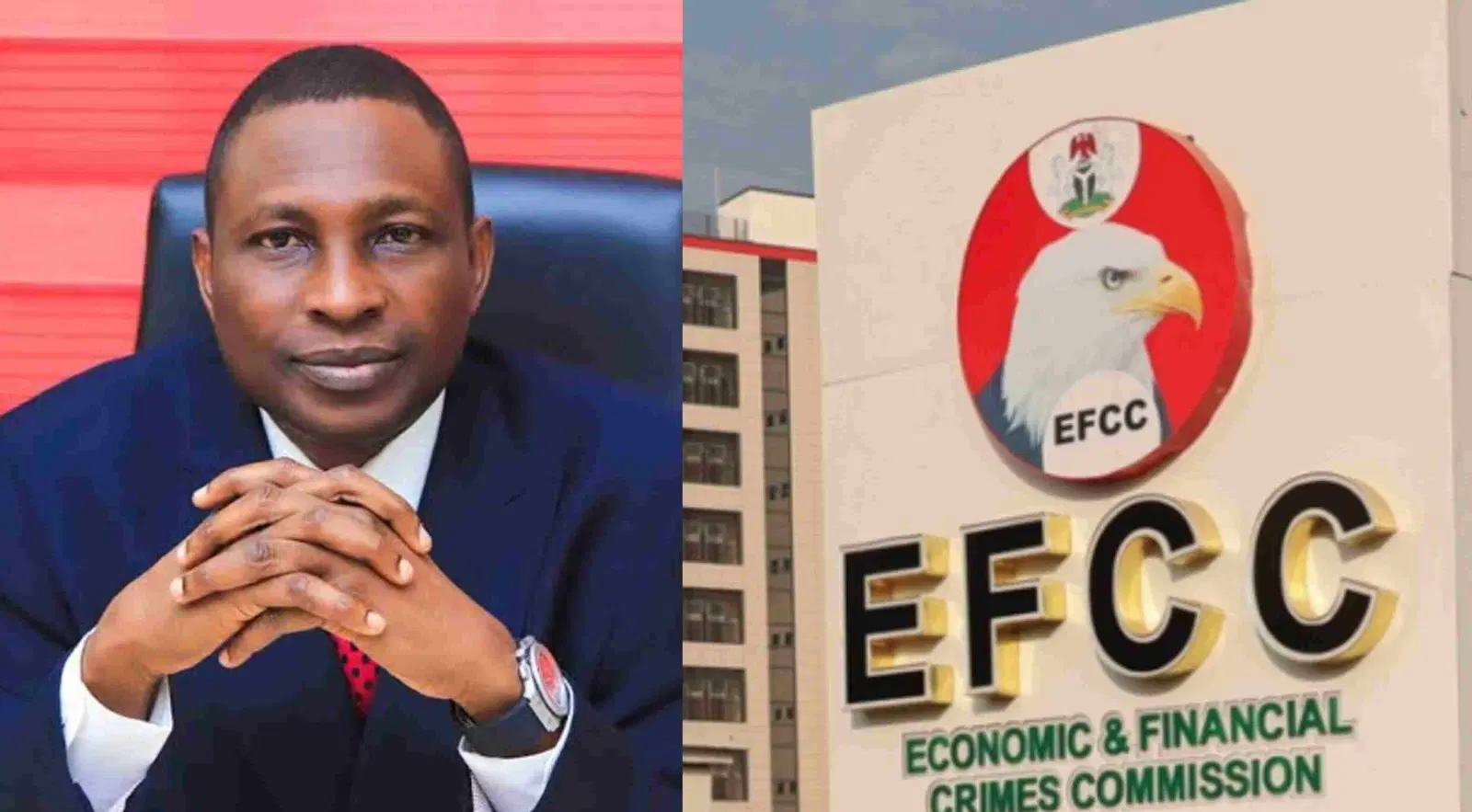
The Executive Chairman of the Economic and Financial Crimes Commission (EFCC), Mr. Ola Olukoyede, has announced that the Commission has recorded unprecedented success in the fight against economic and financial crimes over the past two years, recovering more than ₦566 billion, alongside other currencies and assets.
Olukoyede made this disclosure on Thursday, October 23, 2025, at the EFCC’s corporate headquarters in Abuja, while addressing journalists as part of activities marking his second anniversary in office.
He was appointed on October 18, 2023, and confirmed by the Senate the following day.
Olukoyede said his tenure has been defined by sweeping reforms and record-breaking achievements across all operational areas of the Commission.
Speaking through the EFCC’s Director of Public Affairs, Commander CE Wilson Uwujaren, the Chairman revealed that between October 2023 and September 2025, the Commission received over 19,000 petitions, conducted 29,240 investigations, filed 10,525 cases in court, and secured 7,503 convictions.
During the same period, the EFCC recovered a total of ₦566,319,820,343.40, $411,566,192.32, £71,306.25, €182,877.10, and other foreign currencies from proceeds of financial and economic crimes.
Olukoyede further disclosed that the Commission recovered 1,502 non-monetary assets, including 402 properties in 2023, 975 in 2024, and 125 so far in 2025.
“Among these recovered assets are two significant landmarks — the final forfeiture of 753 duplex units in Lokogoma, Abuja, and the forfeiture of Nok University, now renamed the Federal University of Applied Sciences, Kachia, Kaduna State,” he stated.
According to the EFCC Chairman, these recoveries serve as concrete evidence of the Commission’s renewed commitment to tracing, confiscating, and returning illicit assets to the Nigerian state and victims of financial crimes.
He highlighted several high-profile cases prosecuted within the review period, including those involving former governors Willie Obiano, Abdulfatah Ahmed, Darius Ishaku, Theodore Orji, and Yahaya Bello. Others include former ministers Olu Agunloye, Mamman Saleh, Hadi Sirika, and Charles Ugwu, as well as former Central Bank of Nigeria Governor, Godwin Emefiele.
Olukoyede also revealed that in December 2024, the Commission arrested 792 suspects linked to investment and cryptocurrency fraud in Lagos, among whom were 192 foreigners who were subsequently prosecuted and deported.
“This development sent a clear message that Nigeria will not allow its territory to become a safe haven for cybercriminals,” he said.
In addition, the EFCC Chairman disclosed that the Commission has revived several longstanding corruption cases, including those involving Fred Ajudua, former PDP Chairman Haliru Bello Mohammed, former National Security Adviser Sambo Dasuki, and former NSITF boss Ngozi Olojeme.
Olukoyede explained that a portion of the recovered funds has been channelled into key national initiatives, such as the Students Loan Scheme and the Consumer Credit Scheme, with a total of ₦100 billion invested in these programmes. He noted that other government agencies — including the Niger Delta Development Commission (NDDC), Asset Management Corporation of Nigeria (AMCON), Federal Inland Revenue Service (FIRS), and the National Health Insurance Authority (NHIA) — have also benefited from returned funds.
“Some of the properties recovered have been allocated to government institutions for use as offices, in line with the Commission’s policy of ensuring that recovered assets are put to productive use,” he added.
The EFCC Chairman further highlighted the establishment of the Task Force on Naira Abuse and Dollarisation of the Economy, which, according to him, has made a notable impact in sanitising currency practices and strengthening financial discipline nationwide.