



I Met Anambra Judicial Service Commission Infested with Reptiles, Rodents’ — Stanley Mbanaso
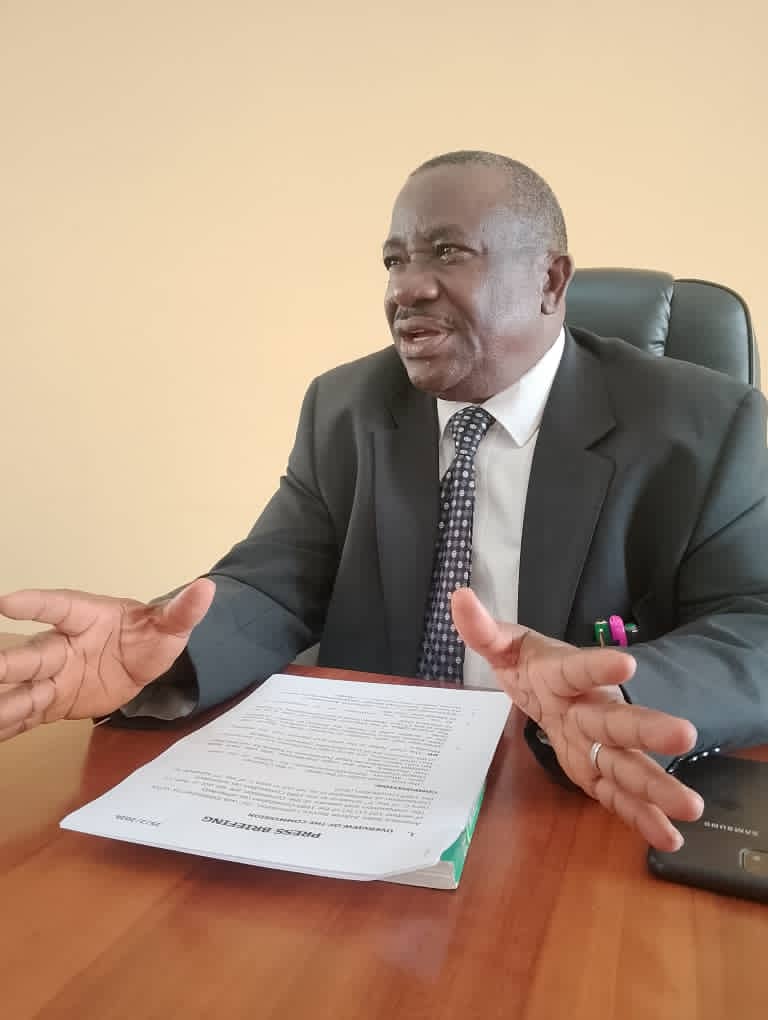
Barr. Stanley Mbanaso
By Raymond Ozoji
When Barr. Stanley Mbanaso assumed office as Executive Secretary of the Anambra State Judicial Service Commission in 2018, he said he inherited an institution in disrepair , a complex engulfed by neglect and stripped of dignity.
Speaking in the Commission’s conference hall during an interaction with journalists, Mbanaso described what he portrayed as a sweeping transformation under his stewardship.
According to him, the premises were once overrun by reptiles and rodents, hidden from public view, and characterized by dilapidated corrugated structures that discouraged both staff and visitors.
“It was practically a bush,” he recalled.
Today, he said, that narrative has changed. The once-deserted facility has evolved into what he described as a modern administrative complex, fitted with air-conditioned offices and situated within a serene, orderly environment. The Commission, he added, has emerged from obscurity and now stands as a visible institutional presence in Amawbia, Awka South Local Government Area.
Mbanaso attributed part of the Commission’s progress to the leadership of the current Chief Judge of Anambra State, Justice Anyachebelu, who chairs the Judicial Service Commission.
Under his leadership, Mbanaso said, the Commission has recorded measurable progress in the appointment, promotion, and discipline of judicial officers.
Providing figures to illustrate institutional growth, the Executive Secretary disclosed that the Commission now has a staff strength of 76 across seven departments.
He noted that the offices are equipped with modern facilities, including a solar power system that ensures round-the-clock electricity a development he credited to the support of Governor Chukwuma Charles Soludo.
According to him, the physical transformation of the complex gained momentum between August and September 2022, months after Governor Soludo was sworn into office on March 17, 2022.
Despite the infrastructural improvements, Mbanaso acknowledged persistent challenges within the state judiciary.
He pointed to a shortage of High Court judges and magistrates, warning that the deficit continues to strain the justice delivery system.
He expressed optimism, however, that once additional facilities are in place, the governor will approve the appointment of more High Court judges a move he said would decongest the courts and accelerate the dispensation of justice.
The situation at the magisterial level, he added, is equally pressing.
Anambra State, he explained, has about 35 magisterial districts spread across its 21 local government areas, yet only 64 magistrates are currently serving , a number he described as grossly inadequate for effective justice administration at the grassroots.
On discipline and accountability, Mbanaso maintained that the Commission has adopted a proactive stance against corruption and misconduct.
In recent years, he said, some magistrates have been compulsorily retired, dismissed, or suspended over unethical practices.
Disciplinary measures, he emphasized, extend beyond judicial officers to all categories of staff within the Commission.
From what he described as a neglected outpost to what he now presents as a revitalized institution, Mbanaso framed the Commission’s journey as one of institutional rebirth — though, by his own account, significant work remains to be done.