



Group Says Community-Led Monitors Now Driving Accountability in Anambra PHCs

Community-led monitors are fast becoming a critical force in strengthening healthcare delivery and accountability across Anambra State, as stakeholders draw attention to their expanding role in improving transparency, service quality, and patient outcomes at Primary Health Centres (PHCs).
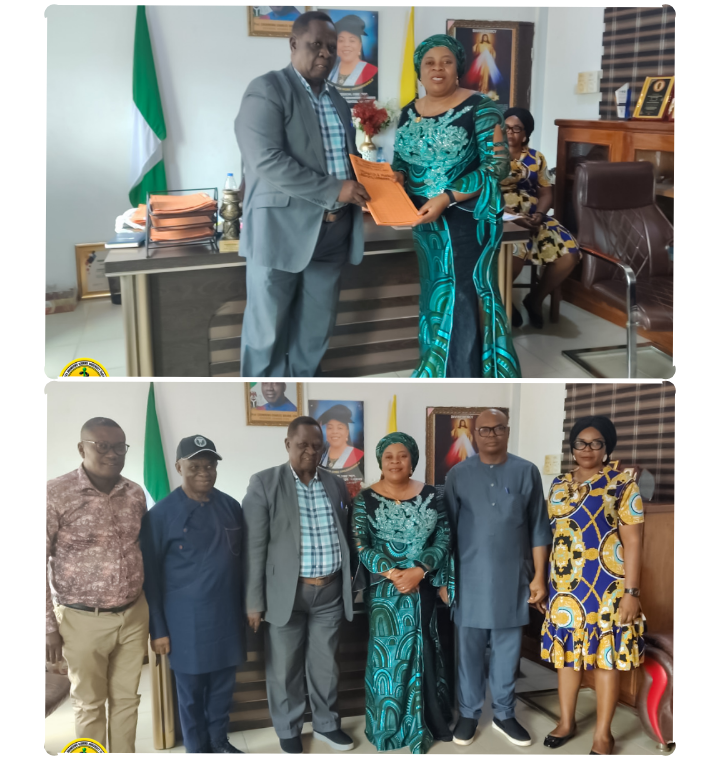
This growing influence formed the centrepiece of an advocacy engagement between the Anambra State Advocacy Team (SAT) and officials of the Ministry of Budget, Economic Planning and Development.
Rather than focusing solely on funding demands, the discussion spotlighted how grassroots actors are reshaping healthcare delivery through the Integrated Community-Led Monitoring (CLM) Project.
Led by Mrs. Ify Unachukwu, the SAT used the meeting to demonstrate how trained Community-Led Monitors (CLMs) are helping bridge longstanding gaps between healthcare providers and the communities they serve.
The monitors, drawn from within the communities, are playing an active role in tracking health services, gathering feedback from patients, and working collaboratively with facility staff to improve care delivery.
According to Unachukwu, the CLM model represents a shift from passive service delivery to a more inclusive, participatory system where communities are directly involved in ensuring quality and accountability. “The strength of this approach lies in community ownership,” she explained.
“When people are part of the process, they are more invested in the outcomes. CLMs are not just observing—they are engaging, identifying gaps, and working with stakeholders to find solutions.”
The Integrated CLM Project, implemented by the TB Network Nigeria with support from the Institute of Human Virology Nigeria (IHVN), focuses on three major communicable diseases—AIDS, Tuberculosis, and Malaria.
“At the PHC level, the initiative is designed to promote patient-centered care, strengthen service utilization, and ensure that health interventions are responsive to the real needs of the population.
“Across several communities in Anambra, the results are becoming increasingly visible. Health facilities supported under the initiative have recorded improvements in operational functionality, attributed in part to consistent monitoring and feedback provided by CLMs.
“In some cases, community engagement has gone beyond oversight, with local philanthropists and leaders mobilized to support facility upgrades and provide essential resources.
Stakeholders note that this model is reinforcing the state government’s Public-Private Community Partnership (PPCP) framework, which emphasizes collaboration between government institutions, private actors, and local communities.
“By positioning communities as active partners rather than passive beneficiaries, the CLM approach is helping to deepen trust and shared responsibility in healthcare delivery.
Other members of the SAT including the State Coordinator, Network of People Living with HIV/AIDS in Nigeria (NEPWHAN), Gladys Ezembu, and State Coordinator, Association of Civil Society Organizations in Malaria Control, Immunization and Nutrition (ACOMIN), Chioma Okeke, reiterated the value of CLMs in their communities and the need for stronger support for grassroots health actors.
Beyond these gains, advocates are now calling for a more structured role for CLMs within government systems.
They argue that formal recognition and integration of community monitors into accountability frameworks would significantly enhance oversight, particularly in areas such as infrastructure development and service quality assurance.
The State Program Officer of the TB Network, Onyekachi Ololo, emphasized that while the Anambra State Government has made notable investments in the PHC subsector, including infrastructure expansion and service improvements, there is a need to ensure that these investments deliver maximum value.
According to him, deploying CLMs as community watchdogs during facility upgrades and service delivery processes would provide an additional layer of accountability, helping to track contractor performance and ensure standards are maintained.
“Integrating CLMs into official monitoring systems will not only improve transparency but also strengthen public confidence in government interventions,” he said.
Responding to the advocacy, officials of the Ministry of Budget, Economic Planning and Development acknowledged the vital contributions of community-based organizations in supporting public health efforts.
Represented by Mrs. Edith Nwachukwu, the Director of Planning, Research and Statistics, the Ministry commended the SAT for its role in coordinating grassroots actors and promoting health awareness.
She noted that such organizations play a crucial role in encouraging positive health-seeking behavior, particularly among vulnerable populations affected by communicable diseases, while also supporting government initiatives aimed at improving overall health outcomes.
Nwachukwu further emphasized the importance of sustained collaboration between government agencies and community stakeholders.
She encouraged the advocacy team and its partners to continue providing regular updates, credible data, and feedback from the field to inform policy decisions and budget planning.
She also assured the team that issues affecting PHCs, especially those requiring financial intervention, would be given due consideration during the state’s budget process, particularly when presented through the appropriate government channels.
As Anambra State continues its push to strengthen primary healthcare, stakeholders believe that the integration of community-led monitoring could prove decisive.
By combining government investment with grassroots accountability, the state may be better positioned to ensure that healthcare improvements are not only implemented but sustained—ultimately delivering meaningful impact to the people who rely on these essential services.