




Reserving judgment on PDP, ADC by Supreme Court keeps Nigerians in “suspended animation”,Okoli-Akirika
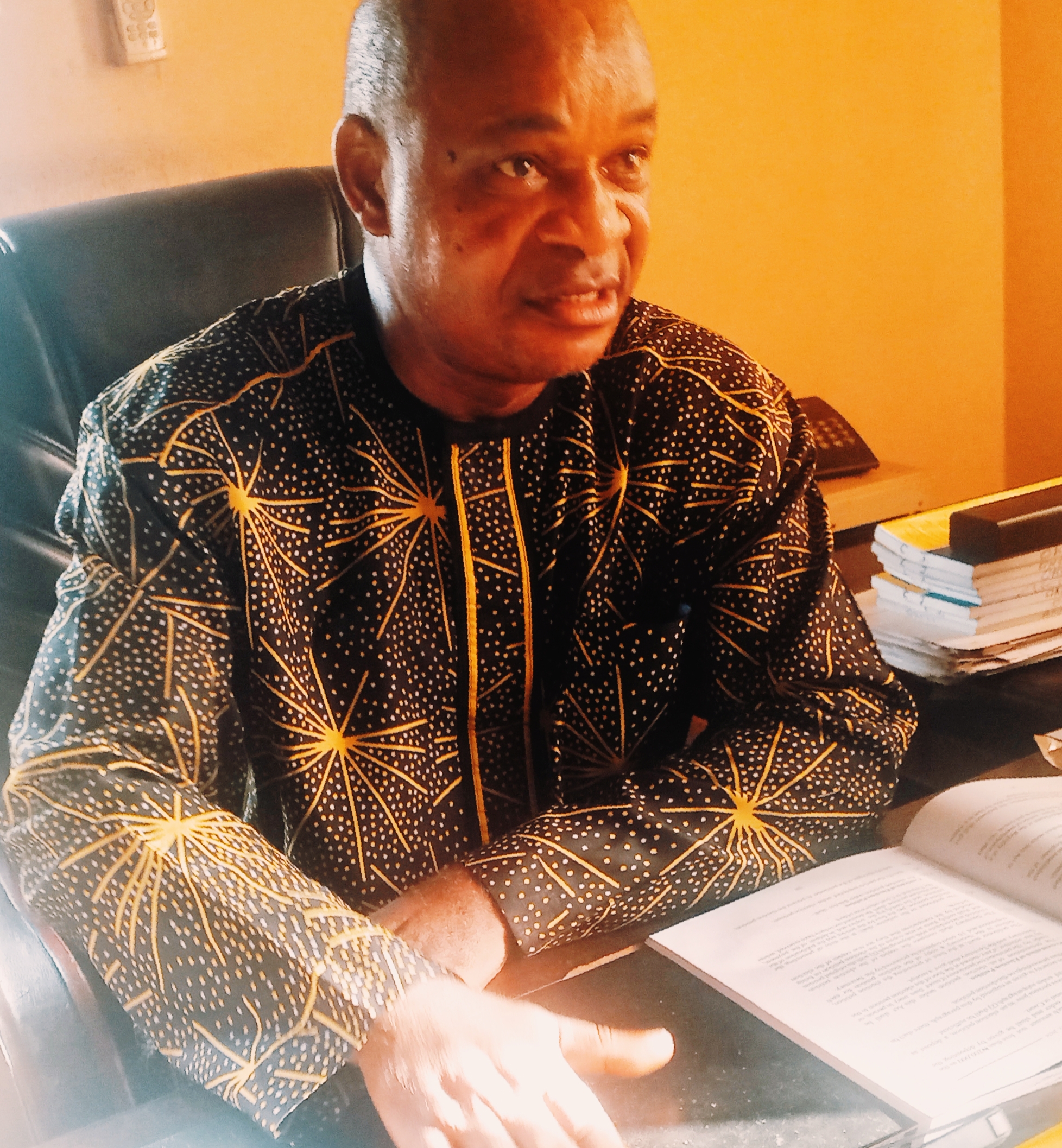
Barrister John Okoli-Akirika
A human rights lawyer and chieftain of the African Democratic Congress (ADC) in Anambra State, Barrister John Okoli-Akirika, has stated that the inability of the Supreme Court to deliver judgment on the leadership crises in both the ADC and the Peoples Democratic Party (PDP) could have far-reaching consequences for Nigeria’s democracy.
Reacting to the Supreme Court’s decision to reserve judgment in the leadership tussles affecting both parties, Okoli-Akirika described the move as “a subtle way to keep the country in a state of suspended animation.”
He argued that the apex court’s decision to adjourn judgment on the pending matters would impact not only the ADC and PDP but also the Independent National Electoral Commission (INEC).
“By that action, the ADC as a party cannot effectively function. Even the Independent National Electoral Commission (INEC), as an electoral body, is constrained by its earlier position. It cannot deal with the ADC, and it cannot definitively say it will not deal with the ADC,” he said.
A five-member panel of the Supreme Court, led by Justice Mohammed Garba, had on Wednesday adjourned judgment on the appeals filed by the ADC and the PDP after counsel for all parties adopted their briefs and urged the court to grant their respective reliefs.
Okoli-Akirika emphasized that the Supreme Court, as the highest court in the land, bears responsibility not just to the litigating parties but to the entire federation.
“The Supreme Court of Nigeria is not the court of the ADC, PDP, or INEC; it is the court of the entire nation. Section 287(1) of the 1999 Constitution makes it clear that its decisions are binding on all persons and authorities throughout the Federal Republic of Nigeria.
“Whatever the Supreme Court does has an expansive, nationwide effect. Its rulings are not confined to the parties before it; they carry authoritative weight across the country,” he said.
He further noted that the court’s decision to adjourn judgment has created a ripple effect across the judicial system.
“What the Supreme Court did by adjourning the matter has a multiplier effect. It has effectively put on hold proceedings at the Federal High Court, which had itself deferred ruling pending the Supreme Court’s decision. Now, with the apex court also postponing its judgment, the entire process is stalled indefinitely,” he explained.
According to him, this chain of delays reinforces his position that the country is being held in a state of uncertainty.
“Everybody is now awaiting what the Supreme Court will say. Until then, political actors, institutions, and processes remain in limbo,” he added.
Citing legal philosophy, Okoli-Akirika remarked that “an American jurist once observed that prophecies of what courts will decide are often the most significant aspect of law,” stressing that uncertainty in judicial outcomes can destabilize governance.
He urged the Supreme Court to seize the opportunity to address the peculiar legal and political issues surrounding the ADC, PDP, and INEC, noting that its eventual decision would have binding implications nationwide.
“The apex court owes a duty not only to the litigants but to the entire federation. The polity is effectively in suspended animation because of the anticipated impact of its decision,” he said.
Okoli-Akirika also questioned why the court did not deliver a bench ruling, particularly since, in his view, the core issue concerns jurisdiction.
“With due respect, I do not see why the Supreme Court could not have issued a bench ruling. The issue at stake is largely jurisdictional—requiring an examination of the processes before the court alongside relevant statutory provisions, especially Section 83 of the Electoral Act, which bars courts from granting interlocutory reliefs in political party matters,” he argued.
He referenced previous Supreme Court decisions, including recent rulings in Labour Party intra-party disputes, where the court maintained that such matters are internal affairs of political parties.
“In light of these precedents, one would have expected the court to deliver an immediate ruling and reserve detailed reasons for a later date. That approach is procedurally permissible,” he said.
However, he acknowledged that the justices may have had reasons for deferring judgment.
“Nevertheless, for reasons best known to their Lordships, the court chose to adjourn its ruling. In the interim, this has a hazardous effect on the polity, as political activities and institutional decisions remain effectively suspended,” he stated.
He further anchored his argument on constitutional principles, citing Section 14(1) of the 1999 Constitution, which provides that Nigeria shall be a state founded on democracy and social justice.
“If opposition politics is subjected to prolonged judicial uncertainty, the Supreme Court has a constitutional duty to act timeously to ensure that democratic aspirations are not undermined,” he cautioned.
He warned that delays in such critical matters could have both direct and indirect consequences on the nation’s political stability.
“Postponing a matter of this magnitude will inevitably affect the entire political landscape—whether directly or indirectly, knowingly or unknowingly,” he said.
Okoli-Akirika concluded by stressing the urgency of timely judicial intervention, particularly in electoral matters.
“The Supreme Court has consistently emphasized the importance of timeliness in election-related cases. It must now give effect to its own pronouncements.
“This is the time for decisive action to ensure that all issues concerning the PDP, ADC, and related political disputes are resolved without further delay, in the interest of the nation’s democracy,” he added.