
Stakeholders Advocate Debt Relief to Unlock Investments in Health, Education
Stakeholders have called for comprehensive debt relief and reforms to the global financial system to enable developing countries, particularly in Africa, to invest more in healthcare, education and other essential public services.
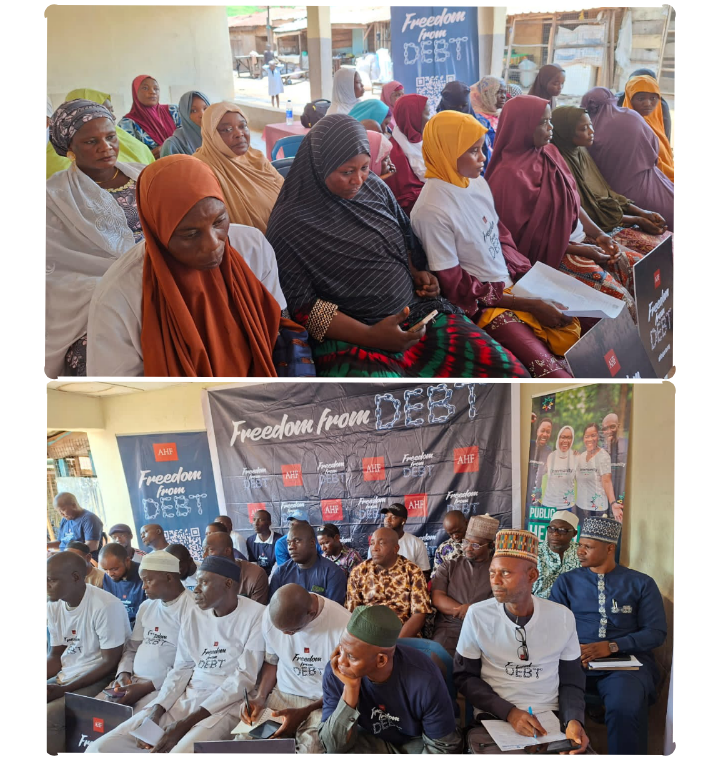
The call was made on Tuesday during the Freedom from Debt campaign organised by AIDS Healthcare Foundation (AHF) Nigeria in Sarkin Noma community, Lokoja, Kogi State.
The participants urged international creditors to suspend debt repayments for developing countries during pandemics and natural disasters, saying such measures would allow governments to channel scarce resources into emergency response and critical social services.
They also advocated lower interest rates on loans to developing nations to free up funds for investments in healthcare, education, water supply and other infrastructure that directly improve the quality of life.
Community leader, Mr. Nasiru Illiyasu, called on governments to implement the proposed Borrowers’ Forum discussed at the Seville Financing for Development Summit and the G20 South Africa meeting to strengthen the negotiating power of indebted developing countries.
Youth leader, Idris Yahaya, urged global financial institutions to adopt mandatory pauses in debt servicing during health and climate emergencies, while the women representative, Asimau Abdulmalik, proposed a one per cent Artificial Intelligence (AI) Solidarity Levy on AI-related capital and profits to finance debt relief and strengthen social protection programmes.
The Hakimi of Sarkin Noma, Mallam Bala Musa, commended AHF Nigeria for bringing the advocacy campaign to the community, expressing confidence that the initiative would contribute to improving the welfare of vulnerable communities across Africa.
Ambassador Idris Muraina described the campaign as timely, urging the World Bank and the International Monetary Fund (IMF) to ease debt repayment obligations for developing countries.
According to him, reducing the debt burden would enable governments to redirect more resources to healthcare, education, social welfare and other development priorities.
Vice Chairman of the Nigeria Union of Journalists (NUJ), Kogi State Council, Mr. Ibrahim Obansa, also praised AHF’s advocacy efforts and pledged the support of the media in amplifying the campaign’s message.
While endorsing calls for debt relief, some stakeholders stressed that African governments must also demonstrate greater transparency, accountability and prudent management of public resources to ensure that savings from debt relief translate into improved public services.
Earlier, AHF Nigeria’s Senior Advocacy and Marketing Manager, Mr. Steve Aborisade, presented a policy brief titled “The Crushing Reality of Sovereign Debt,” in which he argued that the current global financial system places an unfair burden on low- and middle-income countries.
He noted that developing nations pay between two and four times higher interest rates than the United States and up to 12 times more than Germany, limiting their ability to invest in human development.
Aborisade further revealed that about 3.4 billion people live in countries that spend more on debt servicing than on healthcare or education.
He said AHF and its partners are advocating fairer debt repayment terms and reforms that would enable governments to prioritize investments in health, education and the welfare of their citizens.
“No country should have to choose between protecting its people and paying an unfair financial system,” Aborisade said, urging world leaders to act urgently to address the global sovereign debt crisis.