




ASUU-ABSU Declares Indefinite Strike Over Unpaid Allowances, Promotion, Welfare Demands
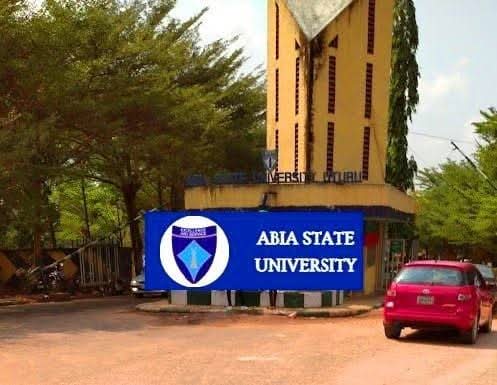
ABSU Gate
The Academic Staff Union of Universities, Abia State University, Uturu Branch (ASUU-ABSU), has commenced an immediate, comprehensive and indefinite strike over the failure of the university authorities and relevant government bodies to address the union’s outstanding welfare demands and grievances.
The strike commenced on Tuesday, August 11, 2026, following the expiration of a 14-day ultimatum issued to the Abia State University (ABSU) Administration on July 22, 2026.
In a letter addressed to the Pro-Chancellor and Chairman of the Governing Council of Abia State University, Uturu, and signed by the ASUU-ABSU Chairperson, Dr. Chidi S. Mba, and the Secretary, Dr. Victor U. Obisike, the union said its members had resolved to embark on the industrial action over several unresolved issues.
Among the grievances listed by the union are:Non-implementation of the 2025 Federal Government of Nigeria/ASUU Agreement.Irregular promotions and what the union described as “obnoxious notional promotions.”Non-remittance of members’ cooperative deductions.
Non-payment of outstanding Earned Academic Allowance (EAA) dating back to 2009.Other outstanding welfare and conditions-of-service issues.
The union stated that the decision followed the expiration of the 14-day ultimatum issued on July 22, as well as the additional period allowed for the university administration and other relevant authorities to address the demands.
According to the statement, ASUU-ABSU said it had demonstrated “uncommon understanding and patience” while consistently pursuing the resolution of the issues through dialogue and negotiation.
The union said that, before issuing the ultimatum and throughout the period that followed, it had engaged extensively with the university management, the Governing Council and the government team in an effort to secure a lasting and amicable resolution to the outstanding welfare issues affecting its members and their ability to effectively discharge their responsibilities.
It, however, said those engagements had failed to produce satisfactory resolutions to the issues.
“At the Congress held today, 11th August 2026, the Union thoroughly x-rayed the outstanding welfare issues, which include:
Non-implementation of the 2025 FGN/ASUU Agreement.
Irregular promotions and the obnoxious notional promotions.
Non-remittance of our cooperative deductions.
Non-payment of outstanding EAA since 2009.
Other outstanding welfare demands.
“After extensive deliberation, Congress resolved that, having exhausted the available avenues of dialogue and negotiation without satisfactory resolution of the outstanding welfare demands, the Union shall embark on this action with effect from today, 11th August 2026.
“This shall remain effective until the satisfactory resolution of the outstanding welfare demands of our members. Consequently, there would be no more lectures, Academic Board meetings, Senate meetings, Convocation and other statutory meetings of academics until these demands are satisfactorily met,” the statement read.
The union expressed regret over the inconvenience the strike might cause the institution, stressing that the action was primarily aimed at addressing issues concerning the welfare of its members and their conditions of service.
“We therefore reiterate our commitment to constructive engagement and remain open to any meaningful intervention capable of bringing about a satisfactory resolution of the outstanding issues.
“Thank you for your understanding,” the union added.
Meanwhile, findings by our reporter around the university indicated that the strike had already begun to generate anxiety among some students.
Some students were reportedly making calls to their parents and requesting transportation fares to enable them return home, while others appeared less concerned about the development.
The indefinite strike is expected to have a significant impact on the university’s academic calendar if it persists, with students likely to bear the consequences of the disruption to lectures and other academic activities.
The development also puts pressure on the university administration and other relevant authorities to engage the union and seek a resolution to the outstanding issues, particularly those relating to staff welfare and conditions of service.