



World Mining Week: Ebonyi Govt Calls for Review of Mining Laws, Greater State Control
From Nabob Ogbonna, Abakaliki
The Ebonyi State Government has called for a review of Nigeria’s mining laws to transfer greater control over mining licences and operations from the Federal Government to state and local governments, as well as host communities, to strengthen accountability and ensure that mineral exploration and exploitation benefit the people.
The state government argued that the existing legal framework, which places mining licences and regulatory powers largely under the control of the Federal Government, undermines accountability, constrains investment, and exposes host communities to environmental hazards and the harmful consequences of irresponsible mining practices.
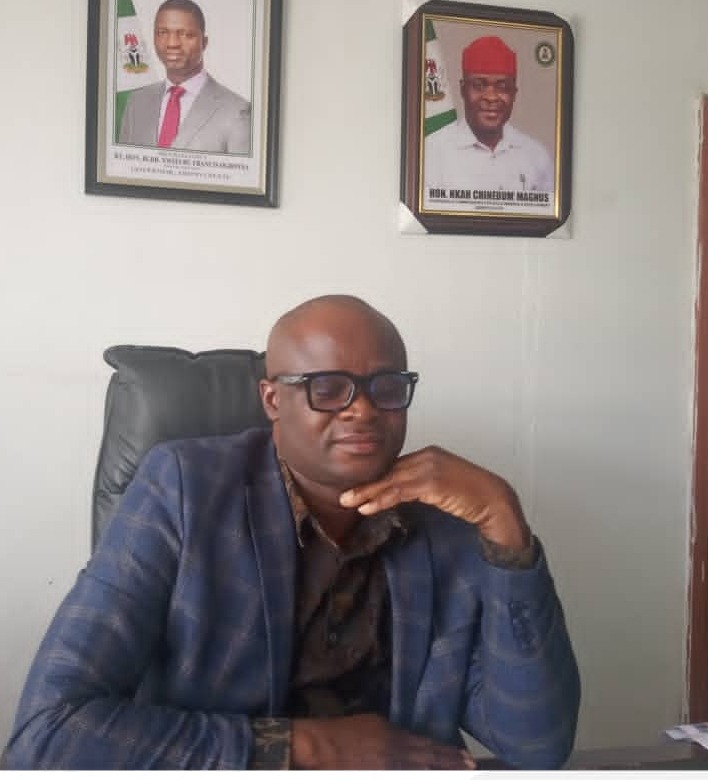
The Commissioner for Solid Minerals Development, Chief Chinedu Nkah, made the call while speaking with journalists to mark the 2026 World Mining Week, observed from October 12 to 14.
Nkah also criticised aspects of the mining licensing regime that allow companies to acquire extensive mineral concessions without necessarily having the capacity to develop all the resources covered by their licences.
He said the practice had prevented other capable investors from accessing mineral deposits, thereby slowing economic growth and development in areas with substantial mineral potential.
The commissioner faulted the existing framework for concentrating mining licences largely in the hands of the Federal Government, arguing that it had weakened the capacity of subnational authorities and host communities to regulate mining activities and hold operators accountable for breaches of environmental standards and social responsibilities.
He, however, advocated a shift in the constitutional allocation of mining powers from the Exclusive Legislative List to the Residual Legislative List.
In his view, such a change would grant states, local governments and host communities greater authority to regulate the sector.
According to him, the existing arrangement allows investors to obtain mining licences through the federal cadastral system without adequate involvement of state and local authorities, thereby creating jurisdictional conflicts and weakening accountability at the grassroots.
“The mining sector needs to be viewed from the community level to the federal level, not the other way round. That is why we insist that the law should be restructured to give host communities a stronger voice in decisions affecting their land, livelihoods and environment,” he said.
He further maintained that a reformed legal framework would make mining operators more responsive to the needs and concerns of host communities, particularly in the areas of environmental protection, workers’ welfare, infrastructure development and compliance with Community Development Agreements (CDAs).
Nkah identified abandoned mining pits as a serious safety concern in some parts of the state, stressing that some operators extracted minerals and subsequently abandoned excavation sites without reclaiming the land.
He said host communities had, over the years, become increasingly disturbed by the activities of mining companies, particularly their alleged failure to restore degraded sites and address the dangers created by abandoned excavations.
“The host communities have, over the years, found the actions of mining firms very disturbing. Many lives have been lost as a result of this negligence,” he said.
The commissioner argued that mining companies would be more accountable to affected communities if state and local authorities were granted stronger regulatory powers and a more direct role in the licensing and monitoring processes.
He also called for reforms to address the challenges confronting artisanal and small-scale miners, including inadequate technical capacity, limited access to finance and difficulties operating within the formal regulatory system.
“Providing legitimate artisanal miners with access to funding, technical support and legal recognition would encourage safer mining practices, reduce fatalities and help bring more operators into the formal economy,” he said.
On relations between mining companies and host communities, Nkah identified inadequate awareness among some community leaders, alleged corruption and the exploitation of local vulnerabilities as factors undermining the implementation of development agreements.
He also accused some community leaders of allegedly accepting payments from mining companies at the expense of projects intended to benefit their communities.
Citing a proposed one-kilometre concrete road as an example, the commissioner said a community development project estimated to cost N400 million could be compromised if a community representative accepted N100 million through a private arrangement instead of insisting on the implementation of the agreed project.
To address some of these challenges, he disclosed that the state government had been inspecting mining sites to assess operators’ performance, particularly in relation to workers’ welfare, operational standards and environmental responsibility.