


Enugu Moves to Break Barriers as WINET, Disability Commission Join Forces
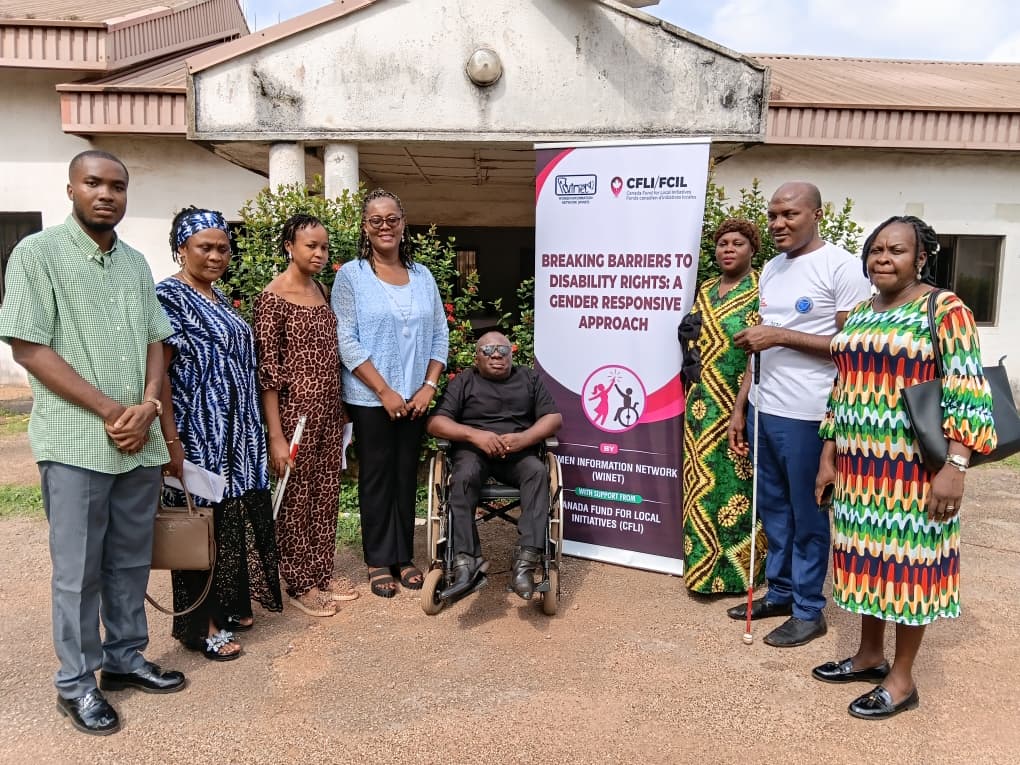
The Enugu State Persons with Disabilities Commission and the Women Information Network (WINET) have pledged stronger collaboration to promote disability rights, improve access to information and advance the inclusion of persons with disabilities (PWDs) in governance and public life.
The commitment was made during an advocacy visit by WINET to the Commission’s office in Enugu on Thursday, November 5, 2026, to seek institutional support for the implementation of the Enugu State Discrimination Against Persons with Disability (Prohibition) Law 2023.
Receiving the delegation, the Chairman of the Commission, Mr. Jude Eze, said addressing the challenges confronting persons with disabilities required collective action, stressing that the responsibility could not rest on government alone.
Eze commended WINET for its sustained interventions in promoting disability rights, describing the organisation as a dependable partner in the campaign for the protection and inclusion of PWDs.
He disclosed that the Commission, inaugurated on November 14, 2025, had faced social and economic challenges since its establishment, making collaboration with civil society organisations and other stakeholders imperative to achieving its mandate.
He also acknowledged the contributions of WINET and other non-governmental organisations to the advocacy that led to the establishment of the Commission, expressing confidence that sustained partnerships would help address barriers confronting persons with disabilities.
The Chairman particularly appreciated WINET for producing the state’s disability rights law in printed and audio formats, noting that the audio version would make its provisions accessible to persons with visual impairments and broaden awareness of their legal rights.
He assured the organisation of the Commission’s readiness to collaborate towards finding lasting solutions to disability-related challenges in the state.
Earlier, WINET’s Executive Director, Mrs. Miriam Menkiti, represented by the organisation’s Monitoring, Evaluation and Learning Officer, Chinelo Dim, said the advocacy engagement was aimed at securing stronger institutional cooperation to promote disability-inclusive governance and empower PWDs to understand, exercise and defend their rights.
She explained that WINET had been implementing programmes to strengthen the capacity of persons with disabilities in Enugu State since 2014, focusing particularly on human rights, access to justice and sexual and reproductive health rights.
Among its previous interventions were sexual and reproductive health rights education and counselling for women and girls with disabilities, supported by AmplifyChange; human and disability rights education funded by the African Women’s Development Fund; and a project empowering deaf youths with information about their fundamental rights, supported by the United States Consulate General, Lagos.
Menkiti also highlighted an initiative supported by Justice for All Nigeria and the United Kingdom’s Department for International Development, which focused on improving access to justice for persons with disabilities through the courts.
She disclosed that WINET was currently implementing a project, Breaking Barriers to Disability Rights: A Gender Responsive Approach, with support from the Canada Fund for Local Initiatives (CFLI), Abuja.
According to her, the project seeks to strengthen inclusive governance and promote the rights of PWDs, particularly women and girls, in response to inadequate awareness of disability rights and limited implementation of the state’s 2023 disability rights law.
Menkiti said the project would deploy institutional capacity building, community sensitisation, advocacy and media engagement to improve awareness of disability rights and promote the meaningful participation of PWDs in democratic and governance processes.
She listed the activities to include a baseline assessment of awareness of the Enugu disability rights law and the United Nations Convention on the Rights of Persons with Disabilities (CRPD), as well as the production of simplified versions of both legal instruments.
WINET will also produce audio versions of the simplified state law, the UN convention and a training manual titled Inclusive Democracy in Action: A Training Guide for Persons with Disabilities to ensure that people with different forms of disabilities can access the information.
Other activities include capacity-building sessions for members of the Commission’s leadership and Joint National Association of Persons with Disabilities (JONAPWD) cluster leaders, alongside community training programmes in Nkanu West and Udi Local Government Areas.
Radio phone-in programmes will also be organised to disseminate information on disability rights, while an endline assessment will measure changes in awareness and understanding among beneficiaries.
The WINET Executive Director identified the Commission as a critical partner in the intervention and sought its participation in the planned training and community engagements, as well as assistance in facilitating collaboration with relevant government ministries, departments and agencies.
She expressed optimism that the partnership would help translate the provisions of the disability rights law into practical improvements in the lives of persons with disabilities.
Also speaking, the Chairman of JONAPWD, Enugu State Chapter, and member of the Commission, Comrade Onyebuchi Mbah, commended WINET for bringing disability rights education closer to PWD communities in the state.
Mbah said the organisation’s interventions had provided opportunities for persons with disabilities in Enugu to benefit from programmes comparable to those available in other parts of the country.
Another Commission member, Mrs. Henrietta Okonkwo, representing the Enugu State Ministry of Labour, also expressed satisfaction with WINET’s efforts to educate and empower persons with disabilities.
The engagement ended with both parties reaffirming their commitment to sustained collaboration in advancing disability rights and inclusion in Enugu State.
As the Commission approaches its first anniversary, the partnership offers an opportunity to strengthen cooperation between government and civil society, particularly in addressing implementation gaps in the state’s disability rights law.
Ultimately, the success of the collaboration will be measured by how effectively it translates existing legal protections into improved accessibility, equal opportunities, protection against discrimination and meaningful participation for persons with disabilities.