
ECOWAS, Anambra to Train 200 Youths in Fish Farming Technology
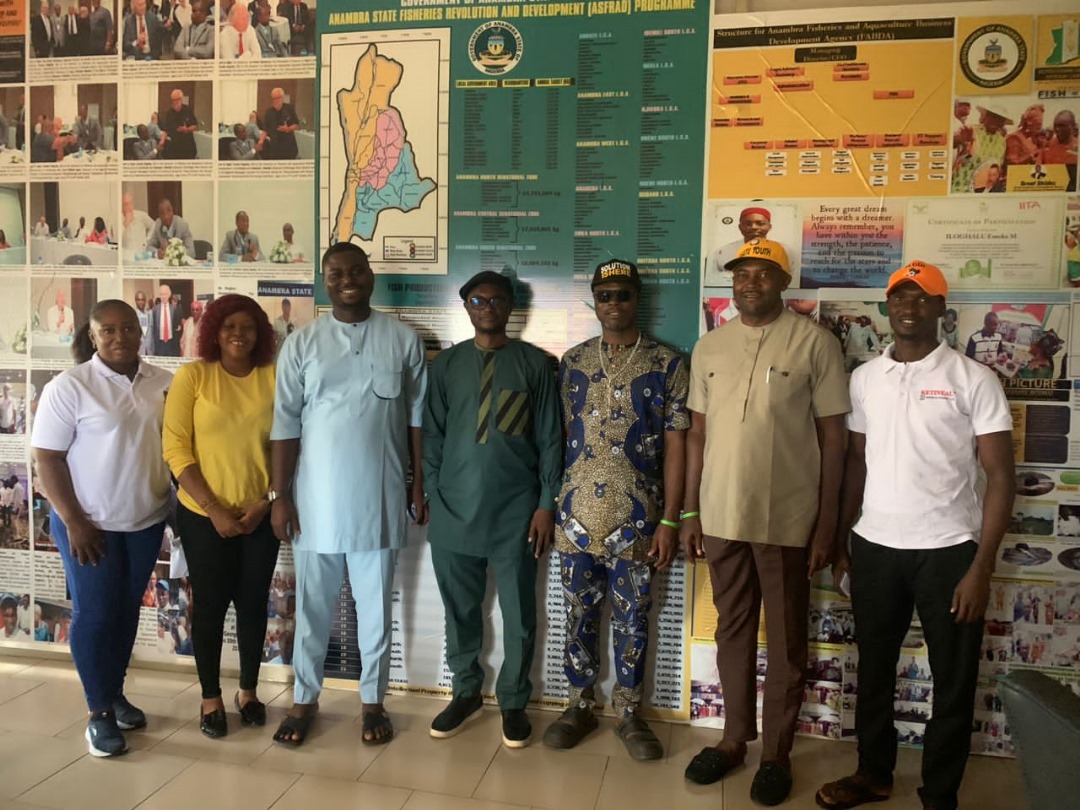
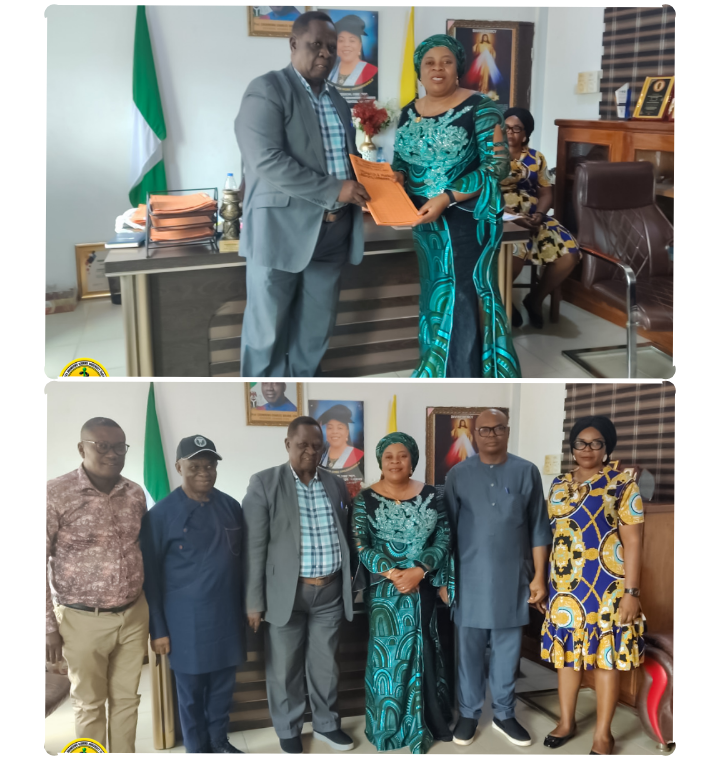
The FABDA MD/CEO, Emeka Iloghalu (center, in green senator attire), with leaders of various youth groups in Anambra State
Kenechukwu Ofomah, Awka
Two hundred youths in Anambra State are set to be trained on the TAENPROWIZ Fish Production Business System and Technology as part of the second phase of a collaborative initiative between the ECOWAS Commission and the Fisheries and Aquaculture Value Chain Business Development Partnership, also known as the Taenprowiz Production System and Technology Partnership Center.
This project is anchored by the Fisheries and Aquaculture Business Development Agency (FABDA) in Anambra State, with operational bases at the Adazi-Nnukwu Fish Production Village Business franchise and Chukwuemeka Odumegwu Ojukwu University, Igbariam.
The initiative aligns with the ECOWAS Commission’s youth employability Programme and complements the youth-friendly environment fostered by the Anambra State government.
It aims to integrate youths into agricultural businesses. In this second phase, the West Africa Secretariat for Ecological and Organic Agriculture (WASEOA) is also involved, coordinating several training centers, including the Taenprowiz Production System and Technology Partnership Center in Anambra State, Nigeria.
This program supports the mandate of FABDA, the state agency responsible for overseeing the fisheries and aquaculture economy in Anambra.
Under Section 5 of the FABDA Law, the agency has set a target to achieve local production of a minimum of 51,000 metric tons of table fish per annum, thereby attaining self-sufficiency in table fish production.
During an engagement and sensitization meeting at the TAENPROWIZ Partnership Centre in Awka, the Managing Director and CEO of FABDA, who is also the Training Coordinator, Mr. Emeka Iloghalu, addressed a cross-section of youth leaders from across Anambra State.
He noted that the ECOWAS-sponsored youth training initiative coincides with the State Government’s strong focus on human capital and economic development centered on youths.
Iloghalu explained that, under the second phase of the initiative, the youths will be trained on an improved fish production system known as the TAENPROWIZ Fish Production Business System and Technology, learning how to apply the model to produce fish professionally and precisely.
He further noted that the approval of the second phase resulted from the significant successes recorded in the first phase.
Regarding the expected outcomes of the ECOWAS partnership, the Training Coordinator stated that it is anticipated that the training center and associated sites will show marked improvements following ECOWAS Commission support. He expressed confidence that the youths will complete the training equipped with new technical skills to manage fish businesses professionally.
“It is also expected that some of these youths will become fish entrepreneurs, while others may work in or manage fish establishments on behalf of third parties. The Commission aims to increase the number of youths engaged in agribusinesses across the ECOWAS region, recognizing agriculture as a strategic sector capable of generating wealth, creating employment, and addressing food security challenges in the region,” he said.
Iloghalu highlighted that, prior to the ECOWAS youth training, FABDA had been actively pursuing its mandate to industrialize the fisheries and aquaculture economy in Anambra, with goals including achieving 51 million kilograms of table fish production annually.
He stated that this is why the agency focuses on training youths in the table fish production business using the only existing business solution for fish production,the TAENPROWIZ Fish Production Business System and Technology.
“With this system, the state can achieve massive production of table fish at an industrial level,” he said. “As we expand production, other value chain components such as seed fish, broodstock production, and fish processing will naturally follow.”
“This strategic direction strengthens businesses along the fisheries and aquaculture value chain, starting from Anambra State, extending to the Southeast region, Nigeria as a whole, ECOWAS, and eventually Africa at large. Though we are currently at the nucleus and pilot stage, we look forward to strengthening the initiative and multiplying the techniques for greater impact,” he added.
At the event, the State Chairman of the National Youth Council of Nigeria (NYCN), Surveyor Ambassador Obi Emeka Chukwudi, described agriculture as the way forward.
He emphasized that fisheries and aquaculture, with their value chains, present significant opportunities to empower youths in Anambra State to become self-reliant and capable of empowering others.
He praised the strategic collaborations forged by FABDA to encourage youth engagement in fisheries and pledged that NYCN would mobilize its members throughout the state to participate in the tpraining.
“At NYCN, we are always ready to partner with any group or organization genuinely committed to advancing the interests of youths. With what FABDA is doing in partnership with the ECOWAS Commission and the TAENPROWIZ Technology, we are hopeful that soon young people will excel in fisheries and aquaculture and be willing to support others,” Obi stated.
Also expressing their support for the initiative were the President of the Youth Wing of the Anambra State Association of Town Unions (ASATU), Comrade Ken Okoli, and the State Youth Leader of the All Progressives Grand Alliance (APGA), Dr. Tochukwu Obiadi. Both stressed the need to do more to adequately empower the youths.
Under this second phase of training, the Taenprowiz Fish Production Business System and Technology is evolving to integrate principles of Ecological Organic Aquaculture.
This includes the agroecological production of crops using nutrient-rich fish wastewater, thereby promoting environmental sustainability alongside food security by advancing food systems driven by fish production and aquaculture.
The training opportunity is open to any youth aged between 18 and 35 years as of June 4, 2025, who is interested in pursuing a successful career or investment in the fish business—as an entrepreneur, investor, or employee in fish production and trading.