





Nigerian Govt Deliberately Pauperising Lecturers to Kill Public Education – ASUU President
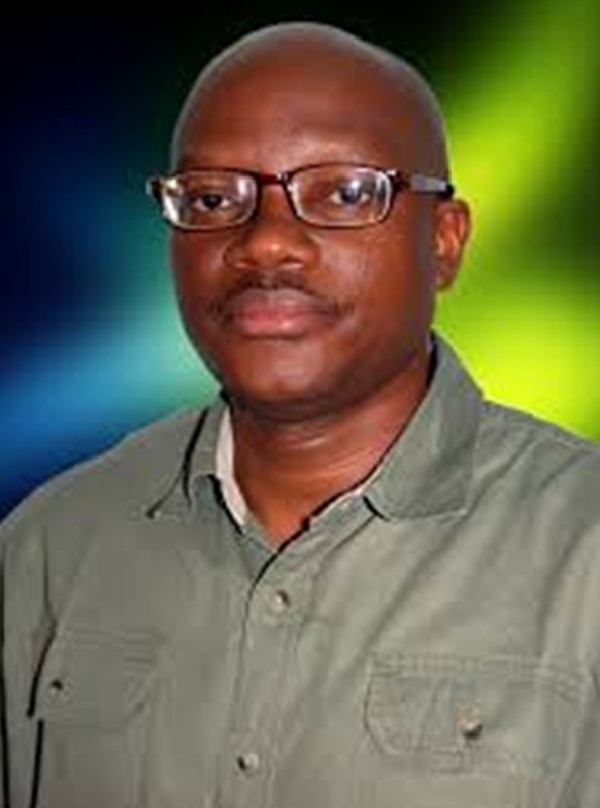
Prof. Chris Piwuna
The President of the Academic Staff Union of Universities (ASUU), Prof. Chris Piwuna, has accused the Nigerian government of deliberately impoverishing university lecturers in a calculated effort to destroy public education.
In an exclusive interview with DevReporting, Prof. Piwuna,a professor of medicine at the University of Jos voiced the deep frustrations of ASUU members over the non-implementation of the 2009 ASUU-Federal Government Agreement. He also addressed other pressing national issues including ASUU’s withdrawal from INEC activities, the emergence of splinter groups like CONUA, and the general decay in the education sector.
Q: What do you believe is fundamentally broken in the relationship between ASUU and the Federal Government that has led to persistent distrust and failed agreements?
A: The agreement signed in 2009 contained three tables for progressive implementation during subsequent renegotiations. That has not happened. Our remuneration, which is peculiar to academics, has not been reviewed since 2009. What we’ve received over time are mere wage awards.
For example, during minimum wage adjustments, they award us N40,000. Even the 25–35% wage increase promised has been outstanding for about 12 months now. Our members across universities are becoming increasingly restless. They can barely afford to feed their families, pay school fees, or meet basic needs. We believe the honeymoon with the government is over.
The decision now lies with the government. If it desires a peaceful relationship, it’s in its hands. If not, it should prepare for turbulent times. Our patience has run out. When this administration came in, over 70% of our branches voted for industrial action, but we chose to give the new government time. Despite our cooperation with both the former Minister of Education, Tahir Mamman, and the current one, Dr. Tunji Alausa, nothing concrete has come of it. We now believe the government is not serious about the renegotiated document before it.
Q: What specifically is ASUU demanding in terms of remuneration, recruitment, and funding?
A: We are not backing down on the issue of lecturers’ remuneration not even at gunpoint. If the government fails to act immediately, we will not entertain any talks about supplementary budgets. The year is winding down, and come October, they will claim the next year’s budget is already closed. We will not accept that.
Q: What percentage increase is ASUU demanding?
A: I can’t publicly disclose salary specifics, but let’s consider the lowest-paid academic staff,graduate assistants. They earn between N130,000 and N150,000. How much is that in dollars? Even retired professors who once led the charge for the 2009 agreement are now in penury. They can’t afford medical checkups or even fuel for their cars.
The exchange rate has shifted from N450/$1 to about N1,500–N1,600/$1. So, do the math—what used to be $500 monthly is now less than $300. Where in the world do professors earn below $300/month?
Q: Does the new minimum wage affect lecturers at all?
A: Graduate assistants used to earn N90,000–N95,000. With the N40,000 added, they now earn around N130,000–N135,000. Senior lecturers may take home N250,000 ,still insufficient. Many owe their cooperative societies and must beg their children’s school administrators for leniency on unpaid fees.
It’s clear the government is determined to pauperise us. They don’t value education or the people delivering it. The systematic impoverishment is pushing capable individuals away from academia.
Q: What is the current status of the 2009 agreement?
A: The fourth renegotiation committee, chaired by Alhaji Yayale Ahmed, submitted its report in December 2024. Every other committee before it had members of proven integrity,except Babalakin, with whom we had major disagreements.
Instead of implementation, the government keeps forming more committees. This delay reflects a lack of seriousness regarding lecturers’ conditions of service, academic freedom, and university funding.
Q: Critics argue universities can’t demand autonomy while relying solely on government funding. Is this criticism valid?
A: Government often reduces “autonomy” to financial independence, ignoring the academic and administrative autonomy that defines universities globally. University governance depends on committee systems. We seek autonomy to uphold this culture not to escape financial oversight. True autonomy ensures transparency and accountability, preventing autocratic leadership.
Q: How would you assess the state of education funding?
A: Budgetary allocations to education have plummeted. The highest allocation 11.7% was under President Yar’Adua. Today, it fluctuates between 5% and 8%. We proposed sustainable funding models to the previous administration, but they were ignored.
This government is no different. It’s not serious about remuneration, university funding, or education in general. The honeymoon is over.
Q: The President pledged to lift Nigerians out of poverty. Can this happen without quality education?
A: Their manifesto claims Nigeria will be a top 20 economy by 2050. But how, when none of our 190+ public universities rank among the global top 1,000? University of Ibadan is 1,163rd, UNN is 1,784th, UNILAG is 1,875th. In Africa, UI ranks 13th, UNILAG 23rd, UNN 25th.
Q: But aren’t private universities performing better?
A: There are less than a handful of private universities doing well and they serve less than 5% of the student population. The government’s disinterest in public universities is deliberate. Many in government own these private institutions. Fix the public system and see if strikes will continue. Match our salaries to the African average and see improvements.
Q: Why is ASUU still protesting after the government released N40 billion EAA?
A: EAA was part of the 2009 agreement. It has been a recurring issue in every ASUU strike since 2013. The government never fully honoured it. In 2021–2022, we proposed mainstreaming EAA into salaries. They agreed, but never implemented it.
We even offered to forfeit over N40–N50 billion to resolve the issue. Yet the public blames us for protesting. We’ve been more than patient.
Q: Has ASUU tracked how many lecturers are leaving?
A: Figures fluctuate. Even vice-chancellors can’t give precise numbers. But it’s real. Professors are leaving for better pay in Ghana and Uganda, where they can earn up to $8,000/month. Compare that to the $300/month here.
In Jos, a department lost seven lecturers in two years. We’ve tried cooperating with the government, but nothing has changed. Those of us staying to stabilise the system are treated with disdain.
Q: Government accuses lecturers of over-engagement and moonlighting. What’s your response?
A: Nigerian law allows lecturers to take visiting appointments within 600 km. It’s legal. Yes, some overstretch themselves, and we discourage that, especially due to security and health risks.
The same government criticising us keeps establishing new universities without planning. We now have universities of Transportation, Navy, Air Force all politically motivated. Meanwhile, the ones we have are collapsing.
Q: Critics say ASUU is silent on corruption and misconduct within campuses. What is your response?
A: That’s not fair. ASUU has taken clear positions on misconduct. Regarding elections, we distanced ourselves after 2011. Participation now is individual, not union-based. Out of 100 members, maybe three misbehave. Focus on the 97 who do well.
On s@xual misconduct or academic fraud, our ethics committee investigates once a petition is submitted. We can suspend or expel members from ASUU, but university authorities are responsible for employment termination. We don’t shield anyone.
Q: Is ASUU willing to reconcile with splinter unions?
A: Absolutely. We see this as a family quarrel. We’re open to dialogue and collaboration. If CONUA believes in our goals of repositioning education, they should return. We’re willing to sit at the table with anyone—even the devil, if necessary.
Q: Does the 2016 recruitment embargo still apply?
A: With our removal from IPPIS, VCs can now act. But most behave like civil servants or political appointees instead of academic leaders. They lack courage and independence.