



Why Does Every Nigerian Politician Suddenly Want to Be a Lawyer?
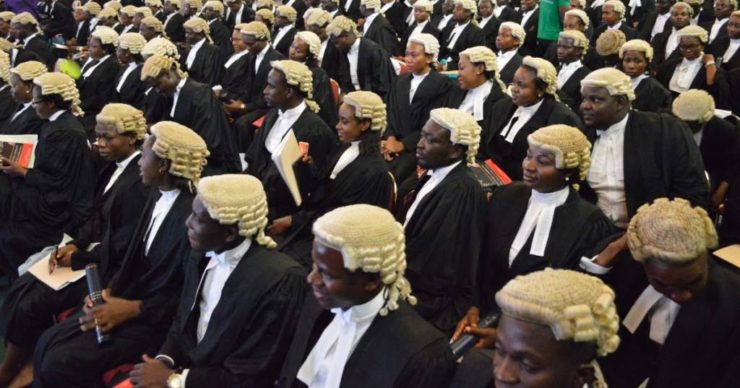
A section of lawyers
In recent times, it seems like everyone in Nigeria,especially those in politics want to become a lawyer. From governors to senators, former civil servants to newly minted political hopefuls, the rush toward law degrees is raising more than a few eyebrows.
On the surface, one might applaud this as a sign of growing respect for the rule of law. But dig a little deeper, and this trend begins to look less like a celebration of legal knowledge and more like a calculated survival strategy.
Let’s be honest: In Nigeria, politics is a high-stakes game. With accusations of corruption, election rigging, and constitutional manipulation never far from the headlines, legal expertise isn’t just an asset it’s a shield.
Politicians are increasingly finding themselves entangled in courtroom battles, and rather than trust their fate to hired attorneys alone, many are deciding to wear the wig themselves.
But is this new love for law really about justice or just self-preservation?
For many politicians, understanding the law isn’t about strengthening the democratic process; it’s about knowing how to bend the system without breaking it or at least not getting caught. Legal knowledge gives power: power to delay cases, file endless appeals, interpret the constitution to suit personal ambition, or even draft bills with cleverly hidden loopholes.
It’s no coincidence that legal gymnastics often play a starring role in our political drama. From impeachment controversies to disputed primaries and tribunal judgments, legal battles are where political fortunes are made or broken. For the average politician, learning the law is fast becoming as essential as learning how to campaign.
Once upon a time, Nigerians pursued law out of a genuine passion for justice, advocacy, or intellectual curiosity. Today, for many in the political class, it’s just another stepping stone to entrench power. The law is no longer just a profession,it’s become part of a political toolkit.
This isn’t to say there aren’t politicians who study law sincerely. But when every other public official suddenly enrolls in law school or announces an LL.B. at the peak of their political career, it’s hard not to be skeptical. Is this about nation-building, or just career insurance.
There’s a risk that law, instead of being a check on power, becomes an enabler of it. If the legal profession is flooded with politically motivated actors, we risk losing the independence and integrity that justice demands. Worse still, it sends a message to young Nigerians that the value of education lies not in what you know or contribute, but in how well it protects your interests.
This trend also highlights a deeper problem: the erosion of trust in Nigeria’s institutions. When politicians feel they must become lawyers to survive in politics, it suggests they don’t trust the system to treat them fairly or they know how much they can exploit it.
Not every politician who studies law is doing so for selfish reasons. But the growing trend does raise important questions about motive, accountability, and the state of our democracy. Law should be a tool for justice, not a weapon for the powerful. If we want a Nigeria where laws serve the people not just the politicians then we must ensure that the legal profession remains rooted in ethics, not ambition.