



Nigeria Tops ECOWAS Member States Ignoring Court Judgments, With 50 Unenforced Decisions
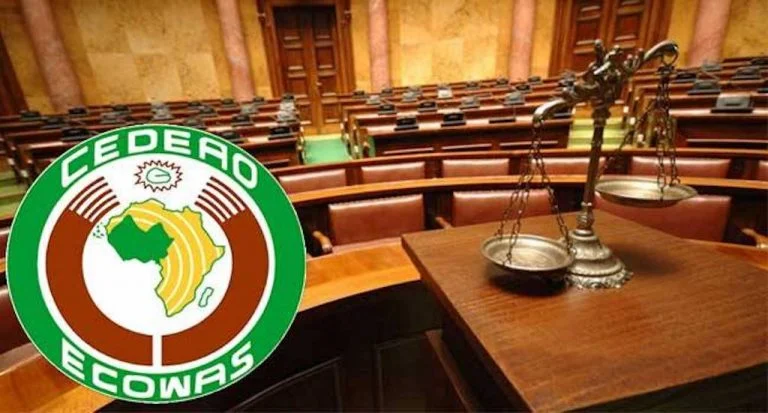
Nigeria has been identified as the ECOWAS member state with the highest number of unenforced judgments issued by the ECOWAS Court of Justice, with 50 decisions yet to be implemented.
The Court’s Deputy Chief Registrar, Gaye Sowe, disclosed this on Wednesday while presenting regional enforcement statistics during the commemoration of World Human Rights Day.
He stated that available data show a persistent pattern of non-compliance among several member states, with Nigeria accounting for the largest backlog.
According to him, Nigeria has recorded 125 judgments, of which 67 were dismissed, 10 enforced, and 48 unenforced.
“Recently, if we add the two latest judgments, the number of unenforced decisions rises to about 50,” he added.
Sowe explained that the Court has delivered 492 judgments involving the 12 currently active ECOWAS member states, out of which 192 are categorised as enforceable—meaning they require a state or institution to take specific measures.
“As of today, a total of 775 cases have been filed before the ECOWAS Court of Justice. When cases from the AES countries are excluded, the number drops to 702. The Court has delivered 492 judgments involving the AES countries and 419 without them. There are currently 136 pending cases,” he said.
Providing a detailed breakdown, Sowe stated,Benin: 19 judgments—13 dismissed, 6 unenforced,Cabo Verde: 3 judgments—2 dismissed, 1 unenforced,Côte d’Ivoire: 28 judgments—19 dismissed, 9 unenforced,Ghana: 13 judgments—6 dismissed, 7 unenforced,Guinea-Bissau: 1 judgment—1 unenforced, Guinea: 25 judgments—7 dismissed, 18 unenforced,Liberia: 15 judgments—10 dismissed, 4 unenforced, 1 enforced,Nigeria: 125 judgments—67 dismissed, 10 enforced, 48 (now 50) unenforced,Senegal: 35 judgments—23 dismissed, 9 unenforced, 3 enforced,Sierra Leone: 18 judgments—6 dismissed, 11 unenforced, 1 enforced,The Gambia: 13 judgments—5 dismissed, 5 unenforced, 2 enforced, 1 struck out and Togo: 58 judgments—26 dismissed, 29 unenforced, 1 partially enforced, 1 amicably settled, 1 withdrawn
Sowe added that the ECOWAS Commission, which also appears before the Court as a respondent, has 36 judgments, including 18 dismissed, 14 enforced, and 3 unenforced.
He further noted that over half of all judgments delivered since the Court’s inception have been dismissed, stating:“Out of the 419 judgments delivered by the Court involving AES countries, 54 per cent were dismissed. This raises concerns about the nature and quality of some applications filed before the Court.”
Sowe said that the Court will intensify sensitisation and outreach activities to encourage more meritorious filings and support enforcement efforts.
He also disclosed that most member states have established competent national authorities responsible for enforcing ECOWAS Court judgments, except Benin and Cabo Verde.
The President of the ECOWAS Court of Justice, Justice Ricardo Gonçalves, expressed deep concern over the persistent failure of member states to implement the Court’s decisions.
He noted that despite delivering several landmark judgments protecting fundamental rights,including freedom of expression, assembly, education, work, and the right to a healthy environment majority of these remain unimplemented.
He stressed that non-compliance undermines the ECOWAS human rights enforcement regime established under the 2005 Supplementary Protocol, warning that:“Without full and effective implementation of the Court’s judgments, the promise of human rights protection becomes a mirage.”
Gonçalves urged member states to comply fully with their enforcement obligations, cooperate with regional and national human rights bodies, and remove barriers that hinder victims’ access to justice.
He also called for stronger protection of civil society organisations, journalists, and human rights defenders.