


Obeagwe Celebrates Heritage in Spectacular Uno Festival,Onoli Masquerade
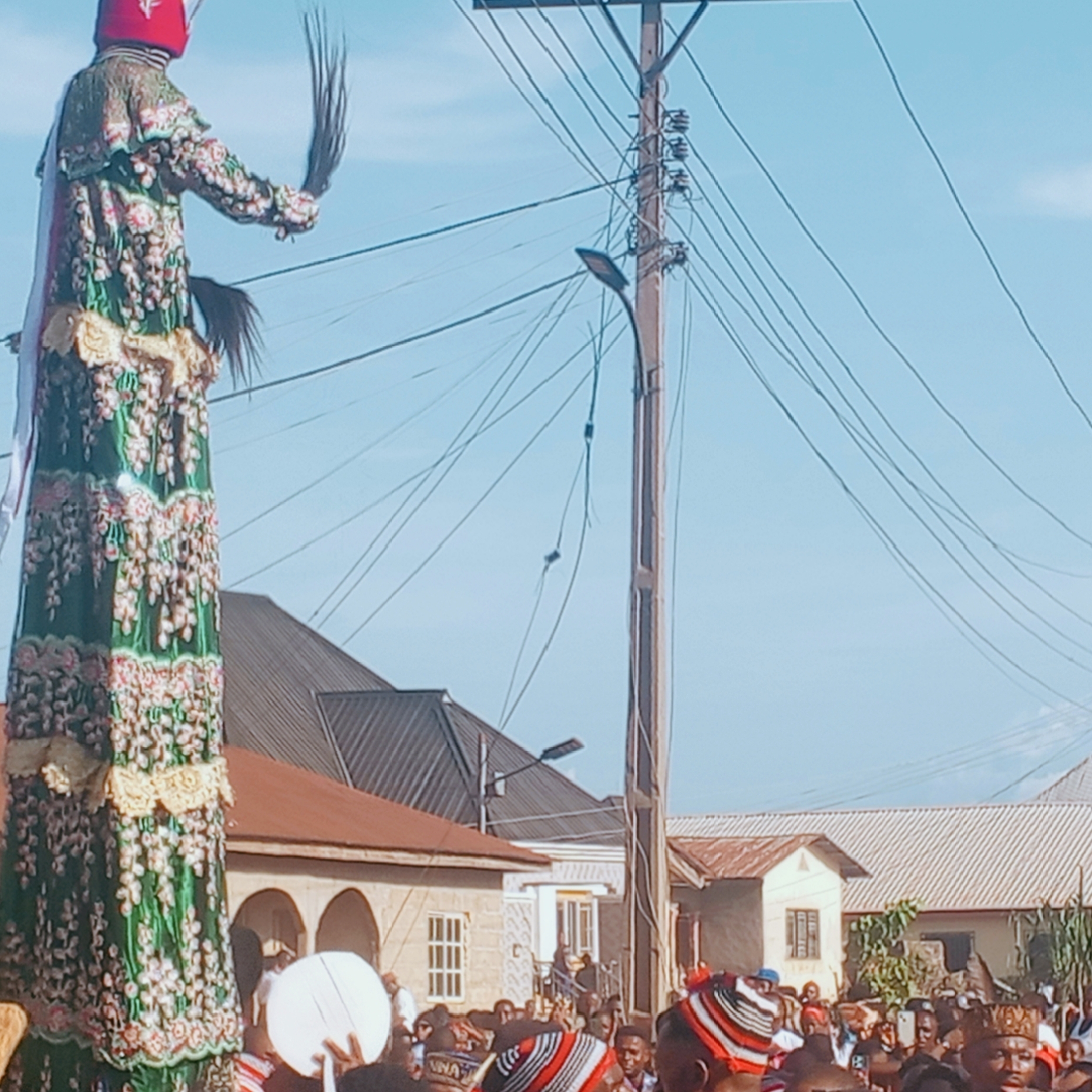
Onoli Masquerade
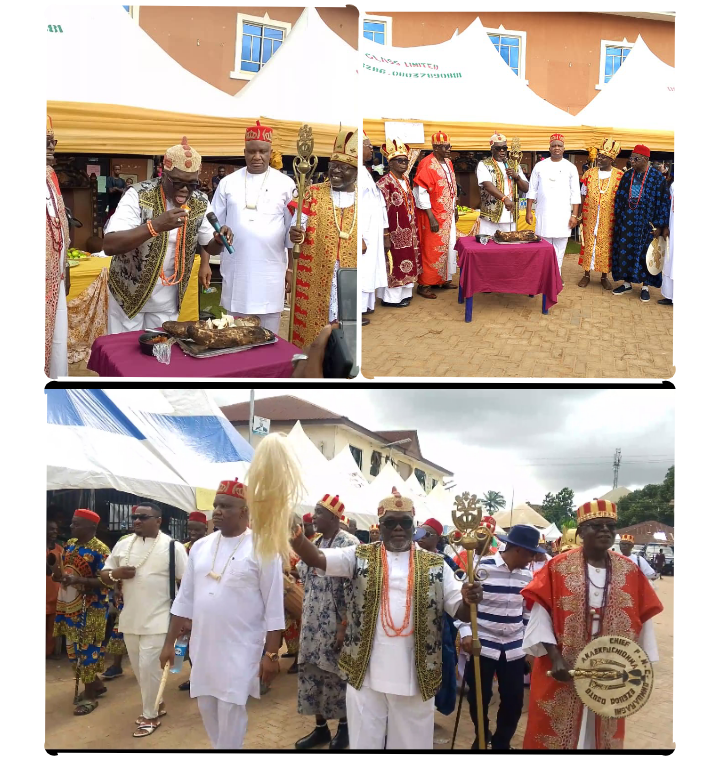
It was a remarkable moment of cultural pride and ancestral reverence on Thursday as the people of Obeagwe in Ogbaru Local Government Area joyfully celebrated their annual Uno Festival alongside the revered Onoli masquerade in a grand and colourful display.
The Uno Festival is an age-old celebration that marks the end of the farming season in the Obeagwe community. Deeply rooted in agrarian tradition, it signifies a period of thanksgiving to the deities and ancestors for protection throughout the planting season, as well as prayers for a bountiful harvest.
In contrast, the Onoli masquerade,held once every two years is a sacred yet entertaining cultural performance.
It also serves as a rite of passage, during which young men who have attained maturity are formally initiated into adulthood and organized into age grades, a vital institution in Igbo traditional society.
This unique festival is both spiritual and social, drawing indigenes and visitors from far and near.
It offers an opportunity for sons and daughters of Obeagwe, including those in the diaspora, to return home, reconnect with their roots, and celebrate their shared heritage.
One of the most striking features of the celebration is the dramatic performance of the Onoli masquerade. Men, often dressed in women’s wrappers, join groups of youths in rhythmic dancing, clapping, and chanting “Onu! Onoli!” in an atmosphere filled with excitement and communal unity.
Contrary to some masquerade traditions, the Onoli is not restricted from public view, and women are free to witness and participate in the festivities.
The agricultural calendar of Obeagwe is shaped by its flood-prone environment. Farming typically begins in November, after the floodwaters have receded, and planting is completed by April. The people, whose primary occupations are farming and fishing, carefully time their activities to ensure crops are well established before the next flood cycle.
Speaking on the significance of the festival, the oldest man in the community, Chief David Nwabueze, explained that the Uno Festival is strictly a celebration marking the end of the farming season, while the New Yam Festival follows later in September. He emphasized that the Onoli masquerade appears only once every two years due to its cultural importance and the large number of visitors it attracts from across and beyond the state.
According to him, the origins of the festival date back to time immemorial, with no precise historical record of its beginning.
He described the Onoli masquerade as unique and awe-inspiring, noting that anyone who witnesses it would immediately recognize its cultural significance.
He also clarified that, unlike some masquerades, Onoli does not forbid women from seeing it, making it more inclusive.
Also speaking at the event, Hon. Victor Afam Ogene, who represents Ogbaru Federal Constituency in the House of Representatives, noted that the festival has evolved over the years while retaining its core traditional values.

Hon. Victor Afam Ogene
He described Obeagwe as the birthplace of the Onoli masquerade in Ogbaru, adding that its appearance marks the grand finale of the Uno Festival.
He explained that the festival symbolizes the end of the planting season, which begins in November and concludes around April due to the area’s flooding pattern.
According to him:“This is a flood-prone area, and we are predominantly farmers and fishermen. By late November, the floodwaters must have receded. By January, we begin planting yam, and by February we tend the crops. The Uno Festival is therefore a time to thank the God of the land for a successful planting season and to seek blessings for a fruitful harvest. We also pray against pests like termites and grass cutters that may destroy our crops, asking for fertility and abundance.”
He further noted that making the Onoli masquerade a biennial event preserves its uniqueness and cultural value.
The festival also provides a structured opportunity for youth initiation, where newly initiated young men form age grades that contribute to community development and cohesion.
Hon. Ogene highlighted the spiritual dimension of the celebration, which begins with supplications to various deities, including Ani (the earth goddess), Osa-Obeagwe, and other ancestral spirits revered in the community.
He noted that these practices are not acts of idol worship but symbolic representations of history, identity, and continuity.
Reflecting on cultural preservation, he lamented the erosion of traditional knowledge due to modernization and poor documentation.
He emphasized the importance of teaching younger generations about their lineage, customs, and ancestral heritage through practices such as libation and symbolic representation.
Chief Emeka Awaogu, Inegedi of Obeagwe also spoke about the festival, recalling how they grew up witnessing their parents celebrate it with dedication. He noted that the land had been preserved through sacrifice and resilience, with spiritual protection attributed to deities like Osa-Obeagwe, which the community still reveres.
He explained that the Uno Festival traditionally begins on Nkwo market day, a significant day in Igbo cosmology.
During this period, families visit one another, share food and drinks, and host their age grades in a spirit of generosity and unity.
According to him, the festival is essentially an expression of gratitude for a peaceful farming season, during which no major calamities occurred.
He added that harvesting would commence in the coming months before the onset of flooding, and that the period of the festival is marked by peace, with no conflicts allowed in the community.
Another elder, Chief Onyia Augustine, described the Uno Festival as a celebration of successful farming, followed later in the year by the New Yam Festival (Okposi).
He reiterated that farming activities cease after the Uno Festival until the next cycle begins.
He also highlighted the spiritual preparations that precede the festival, noting that elders gather at sacred sites such as Osa-Obeagwe to perform rituals and offer sacrifices. These rites are meant to seek divine protection, unity, and prosperity for the community.
“This period is one of joy and hospitality,” “We welcome visitors from all walks of life. It is marked by celebration, love, and togetherness.”he said.
In all, the Uno Festival and Onoli masquerade stand as enduring symbols of Obeagwe’s cultural identity,blending spirituality, agriculture, social structure, and communal celebration into a vibrant expression of heritage that continues to thrive despite the pressures of modernity.