



Prof. Eleazu to FG: Scrapping 6-3-3-4 Won’t Fix Nigeria’s Education Crisis
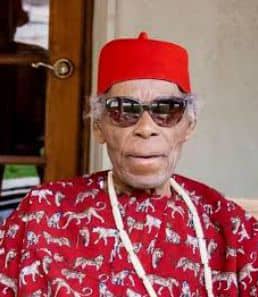
Prof. Innocent Eleazu, former President of the Nigerian Association of Economists
By Ogbonnaya Ndukwe, Aba
A renowned educationist and former President of the Nigerian Association of Economists (NAE), Prof. Innocent Eleazu, has advised the Federal Government to abandon its proposed plan to scrap the 6-3-3-4 education system, warning that replacing it with a continuous 12-year basic education programme would not address the real challenges confronting Nigeria’s education sector.
According to him, there is nothing fundamentally wrong with the existing structure of six years of primary education, three years of junior secondary education, and three years of senior secondary education.
Eleazu argued that the problem lies not with the policy itself but with its poor implementation.
He noted that when the system was introduced, government invested substantial public funds in constructing school facilities, acquiring equipment, computers, laboratories and workshops. However, poor management, inadequate security and the absence of a maintenance culture led to widespread vandalism and theft of these facilities, rendering the system ineffective.
“I have just read that the Tinubu administration is planning to scrap the 6-3-3-4 education system. They want to replace it with a straight 12-year primary and secondary education system.
“Right now, the problem of primary and post-primary education in Nigeria is not restructuring. The real issues are the provision of a conducive learning environment, laboratories, infrastructure, qualified teachers and adequate funding. Most public schools are dilapidated and grossly understaffed.”he said.
The former university lecturer and school proprietor expressed regret that Nigeria lacks a sound economic policy framework that prioritises the efficient utilisation of scarce national resources for maximum public benefit.
He blamed policymakers for allowing political considerations to override sound economic decisions.
Eleazu maintained that, as a former secondary school proprietor and Principal Emeritus in Imo State with extensive experience in education management, he was well-positioned to offer informed advice on the proposed reforms.
He warned that abandoning the current education structure without addressing its implementation challenges would amount to repeating past mistakes.
“I was the proprietor of a post-primary institution and a Principal Emeritus in Imo State.
“Unfortunately, Nigeria does not have a clear national policy that prioritises the efficient use of scarce resources so they can deliver maximum value. Instead, policymakers allow political considerations to overshadow economic realities.
“Under these circumstances, why should the Federal Government embark on another major education reform when the country is battling multiple economic and political challenges?
“Rather than introducing another programme, government should make adequate budgetary provisions to secure existing laboratories, equipment, computers and workshops in our schools. Funds earmarked for the proposed 12-year education system should instead be channelled towards addressing the hunger, poverty and economic hardship currently facing millions of Nigerians.
“Today, an overwhelming majority of Nigerians cannot afford one square meal a day. The country is experiencing hyperinflation—what ordinary people describe as runaway inflation—where the price of goods rises sharply within a very short period.”he added.
He further lamented what he described as the near collapse of government’s primary responsibilities, particularly the protection of lives and property, as well as the provision of essential public services.
According to him, rural water supply and electrification programmes have deteriorated significantly.
“In many rural communities, boreholes are being drilled indiscriminately without proper environmental assessment. Experts have not adequately evaluated the long-term implications of this practice.”
On the proposed reforms of the National Youth Service Corps (NYSC), however, Eleazu expressed support, saying the initiative could enhance skills acquisition, productivity and youth employment if properly implemented.
He said the reforms would create opportunities for graduates to acquire practical vocational skills and become self-reliant after national service instead of depending solely on white-collar employment.
The former NAE President, however, urged the government to retain the military orientation component of the NYSC scheme, describing it as essential for instilling discipline, physical fitness and positive values among corps members.
“I can understand the proposed reform of the NYSC because it is centred on skills acquisition. If properly implemented, it will most likely increase productivity and employment.
“However, I strongly recommend that the military training aspect should not be scrapped. It should be retained because it promotes discipline, good health and positive habits among youth corps members.” he added