


Floods Devastate Akwa Ibom, CSO Demands Proactive Action
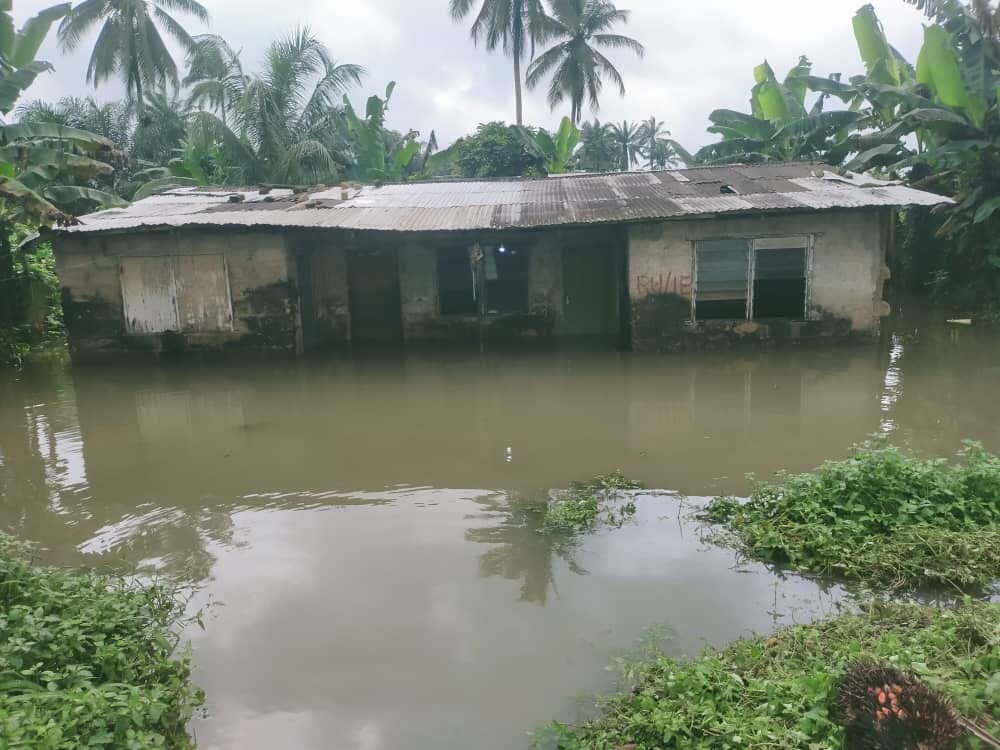
The cities of Uyo, Ikot Ekpene, Eket, Abak, Itu, and several other local government areas of Akwa Ibom State have been submerged by floodwaters following days of persistent heavy rainfall across the state.
Checks by our correspondent revealed that the continuous downpour has rendered many residents homeless and destroyed properties worth millions of naira.
The Nigerian Meteorological Agency (NiMet), alongside other relevant federal government agencies, had earlier identified Akwa Ibom as one of more than 28 states expected to be severely affected by flooding during the 2026 rainy season.
Against this backdrop, the Civil Society Organisation (CSO), Network Advancement Programme for Poverty and Disaster Risk Reduction (NAPPDRR), has called for what it described as “urgent investment in community-led early warning systems and anticipatory action to reduce the impact of flooding across the state.”
Expressing concern over the devastating floods that have wreaked havoc on homes and livelihoods, the Executive Director of NAPPDRR, Hon. Emem Edoho, told journalists at the Victor Attah International Airport, Uyo, upon his return from Nigeria’s National Dialogue on Energy Transition in Abuja at the weekend, that the unfolding humanitarian emergency requires a comprehensive and coordinated response involving government, communities, and other critical stakeholders.
Mr. Edoho noted that the national dialogue reinforced the strong link between climate change, energy policy, and disaster risk in frontline communities.
“Akwa Ibom is already experiencing the realities of climate change. We are witnessing increased rainfall, overflowing rivers, widespread flooding, and the displacement of residents across several local government areas in recent days,”
“NAPPDRR sympathises with all victims of the flood disaster across the state. It is time for us to shift from reactive disaster response to proactive disaster prevention through strategic planning, early warning systems, and community preparedness.”Edoho said.
Speaking on the outcomes of the summit, which focused on addressing the growing climate emergency and promoting a just energy transition, Edoho outlined several recommendations aimed at strengthening flood preparedness and resilience across Akwa Ibom State.
According to him, state and local government environmental agencies should expand real-time flood monitoring systems, deploy SMS-based early warning alerts, and install community sirens to ensure timely dissemination of information to vulnerable riverine and coastal communities.
He also urged relevant authorities to pre-position relief materials, emergency supplies, cash assistance, and evacuation plans before floodwaters reach their peak, using weather forecasts and early warning information provided by NiMet and other relevant agencies.
Edoho further stressed the importance of integrating traditional institutions into disaster preparedness efforts.
“Royal fathers, village heads, chiefs, and other traditional institutions should be fully integrated into disaster planning, risk communication, and the dissemination of early warning messages to ensure that no household is left behind,” he said.
He added that, as a member of the Global Network of Civil Society Organisations for Disaster Reduction (GNDR), NAPPDRR remains committed to promoting sustainable Disaster Risk Reduction (DRR) and Disaster Risk Management (DRM) across Nigeria, with particular emphasis on vulnerable communities in Akwa Ibom State.
According to him, effective climate adaptation strategies must not only address the increasing impacts of climate change but also confront the long-standing environmental and socio-economic consequences of extractive industries on vulnerable populations.
“We congratulate the Natural Resource Governance Institute (NRGI) on two decades of remarkable achievements in promoting transparency, accountability, and a just energy transition in Nigeria and across Africa. Its leadership at the National Dialogue provided valuable insights that should now be translated into concrete actions at the state, local government, and community levels,” Edoho stated.
He reaffirmed NAPPDRR’s commitment to partnering with the Akwa Ibom State Government, local government councils, environmental agencies, traditional institutions, civil society organisations, and development partners to build resilient communities capable of anticipating, withstanding, responding to, and recovering from disasters.
Edoho emphasized that proactive investment in disaster risk reduction, climate adaptation, and community resilience is essential to safeguarding lives, protecting livelihoods, and reducing the recurring economic losses associated with flooding in Akwa Ibom State.