

ACHEBE STATUE:ARE WE JUDGING ART OR CHASING RESEMBLANCE?
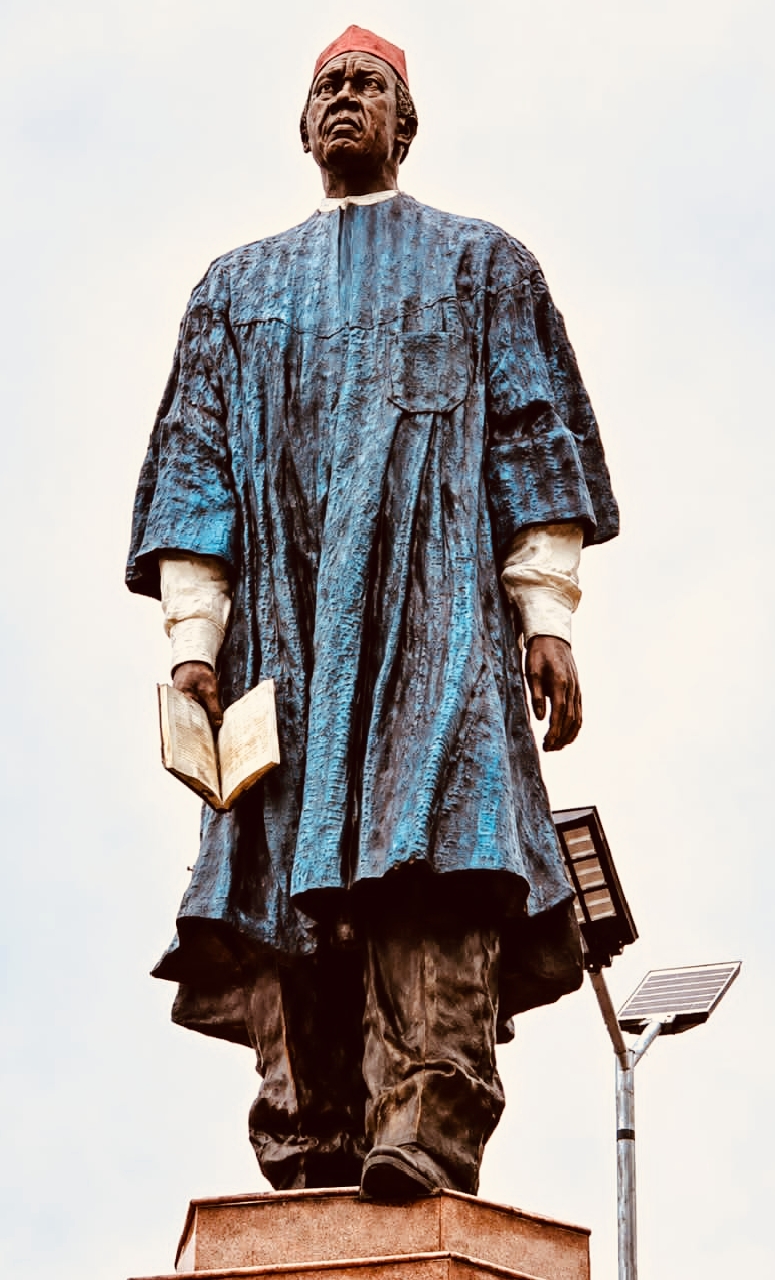
The debate surrounding the newly unveiled sculpture of Professor Chinua Achebe at the iconic Ugwu Nwasike has, unsurprisingly, dominated sections of social media. The central question has been whether the sculpture bears a perfect resemblance to the celebrated literary icon. But perhaps the more important question is this: What if it doesn’t?
Since when has our appreciation of a noble tribute become entirely dependent on photographic resemblance? Across the world, sculptures are artistic interpretations rather than exact replicas carved in stone or cast in bronze. Every sculptor approaches a subject through a unique artistic vision, shaped by philosophy, symbolism, style, technique, and creative expression. Two accomplished artists can sculpt the same individual and produce strikingly different works without either interpretation being inherently wrong.
Criticism of sculpture should therefore be grounded in established artistic principles—craftsmanship, proportion, composition, symbolism, anatomical accuracy, and creative interpretation—rather than in emotional reactions or comparisons with familiar photographs. Art has always invited multiple interpretations, and no serious critique should ignore that reality. While it is entirely legitimate to debate the artistic merits of a sculpture, reducing the entire conversation to “it doesn’t look exactly like him” reflects a narrow understanding of what sculptural art seeks to accomplish. A monument is intended not only to reproduce physical features but also to capture character, legacy, symbolism, and historical significance.
It is equally important to place the facts in their proper context. The Achebe sculpture at Ugwu Nwasike was neither commissioned nor executed by the Anambra State Government. It is a project of the Ogidi Town Union, conceived, funded, and executed by the community to honour one of its most illustrious sons. Governor Charles Soludo merely accepted the invitation to unveil the monument, lending the dignity of his office to a community initiative celebrating a literary giant whose legacy belongs not only to Ogidi or Anambra State but to Nigeria, Africa, and the world. It is therefore unfair to politicize what is fundamentally a cultural and communal expression of remembrance and pride.
Beyond the controversy, one must ask whether this should genuinely be the issue consuming so much public attention at a time when the nation is confronted by far more pressing political, economic, and security challenges. There are weightier conversations demanding our collective attention than prolonged arguments over whether a sculpture perfectly reproduces the facial features of the man it commemorates. A society that loses sight of its priorities risks elevating distractions above matters of genuine consequence.
None of this suggests that public art should be immune from criticism. On the contrary, constructive criticism is essential to artistic growth and public accountability. However, such criticism should be informed, balanced, and rooted in an appreciation of the nature and purpose of art itself. It should encourage higher artistic standards without diminishing the noble intention behind a sincere effort to preserve cultural memory.
Ultimately, the enduring value of the monument lies not merely in its facial resemblance but in the purpose it serves: preserving the memory of Professor Albert Chinụalụmọgụ Achebe, inspiring younger generations, and reminding every visitor that one of Africa’s greatest literary minds emerged from this soil. Noble intentions deserve encouragement rather than needless political point-scoring. We may continue to debate the artistic execution of the sculpture, but we should never allow that debate to eclipse the significance of honouring one of Africa’s greatest literary geniuses. In the end, appreciating the spirit behind a tribute can be just as important as scrutinizing its form.