



Students Drive Climate Solutions as GRENCHI Accelerates Green Skills Campaign
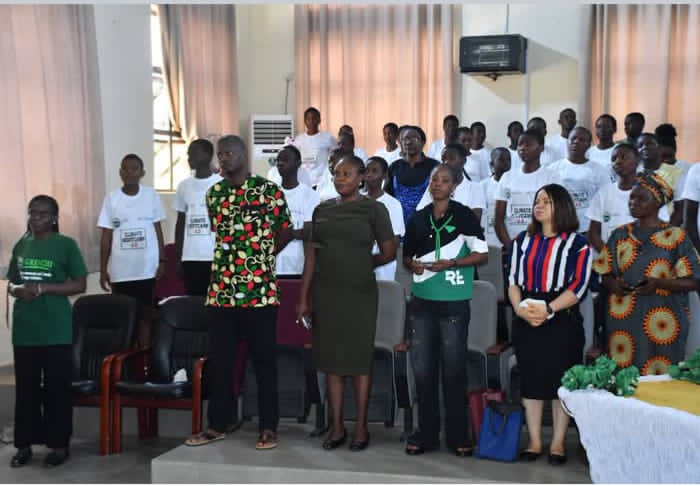
Students from secondary schools across Anambra State have showcased practical climate solutions, including hydroponics, vertical farming, solar energy applications and water conservation technologies, as part of efforts to equip young people with the skills needed to tackle climate change and promote environmental sustainability.
The innovations were unveiled at the Climate Bootcamp 4.0: Green Schools Exhibition, organised by the Green Environment and Climate Change Initiative (GRENCHI), where participating schools presented projects developed after months of practical training and experimentation.
Speaking at the event, GRENCHI Programme Associate, Princewill Okoye, said the exhibition reflected the growth of the initiative from a climate awareness campaign into a hands-on programme that empowers students to develop practical solutions to environmental challenges.
According to him, the organisation started the bootcamp four years ago with the objective of creating awareness about climate change.
However, as the programme expanded, the focus shifted to experiential learning that enables students to apply classroom knowledge to real-life situations.
“When we started Climate Bootcamp 1.0, the primary focus was creating awareness and building foundational knowledge. As the students’ understanding matured, we realised they needed opportunities to move beyond theory and create practical solutions that could benefit their schools and communities,” he said.
Okoye disclosed that in February 2026, GRENCHI organised a three-day intensive workshop where students received practical training in solar energy technologies, biodiversity monitoring, map creation, air quality monitoring and water conservation for agriculture.
“Following the training, participating schools were challenged to design and implement sustainability projects on their campuses.
“The projects showcased today are products of those student-led initiatives. They demonstrate that young people can translate knowledge into practical climate solutions.
“Our goal is to inspire them to become ambassadors for environmental sustainability and leaders of climate action in their communities,” he added.
The exhibition also drew commendation from the Anambra State Government, which described youth participation as critical to building resilient food systems and achieving sustainable agricultural development.
The Commissioner for Agriculture, Dr. Ben Odoemena, represented on the occasion said the state was committed to promoting climate-smart agriculture as a pathway to food security.
The ministry noted that the newly established Green School Exhibition and Climate-Smart Agricultural Transformation Unit was helping to translate national and global climate commitments into practical interventions at the state level.
“As a government committed to food security and agricultural transformation, Anambra State is building food systems that are more productive, resilient and sustainable.
“Programmes such as this complement our efforts by preparing young people to become drivers of environmental sustainability,” the representative said.
Environmental and climate change expert, Mrs. Ifeoma Onuzulike, urged individuals and communities to take greater responsibility for protecting the environment, noting that climate change is largely driven by human activities.
She stressed the need for sustainable forestry practices, environmental education and improved public awareness to encourage responsible use of natural resources.
According to her, investments in cleaner transportation, including compressed natural gas (CNG) buses and electric vehicles, alongside climate-smart agriculture, would help reduce greenhouse gas emissions while improving resilience against changing weather patterns.
Chief Executive Officer of Greenniche Initiative, Mrs. Ifeyinwa Uzoka, said equipping young people with green skills would not only strengthen environmental conservation but also create opportunities within the emerging green economy.
She encouraged students to embrace practical solutions such as rainwater harvesting, biodiversity conservation and sustainable land management, describing them as simple actions capable of delivering lasting environmental benefits.
Also speaking, the Director of Forestry and Wildlife Resources in Anambra State, Mrs. Miriam Achugamonye, represented by Mr. Chidera Elvis, said environmental stewardship should be viewed not only as a conservation effort but also as a driver of economic opportunities.
He pledged the ministry’s continued support for initiatives that promote climate education and environmental sustainability among young people.
The practical projects displayed by students highlighted the impact of the training programme.
Teacher at Holy Ghost Academy, Awka, Theodore Onuchukwu, expressed satisfaction with the level of collaboration and innovation demonstrated by the students, particularly in developing sustainable agricultural technologies.
One of the participants, Victoria Nwankwo of St. John of God Secondary School, Awka, said learning about hydroponics and vertical farming changed her perception of agriculture by demonstrating that crops could be cultivated efficiently with limited land and water resources.
Similarly, Emmanuel Chinedu of Capital City Secondary School, Awka, showcased his team’s circular pyramid-shaped vertical farm integrated with a drip irrigation system designed to deliver water directly to crops with minimal wastage.
The exhibition ended with the presentation of gifts to participating school principals, teachers and students in recognition of their commitment to advancing climate education and environmental sustainability.
Beyond the appreciation the event underscored a broader message – that empowering young people with practical green skills is increasingly becoming an important strategy for building climate resilience, strengthening food security and preparing the next generation to lead Nigeria’s transition to a sustainable, low-carbon future.